
Wire span for spinnaker pole?

Captain Crisp

Well-Known Member
Joined
1 Mar 2015
Messages
414
Visit site
Hi - I'm reactivating my spinnaker set-up and I need to create a couple of wire spans for my pole's up/downhaul.
What sort of fixings, wire and rings should I be getting for this? Boat is 28ft Twister.
Many thanks,
Crisp
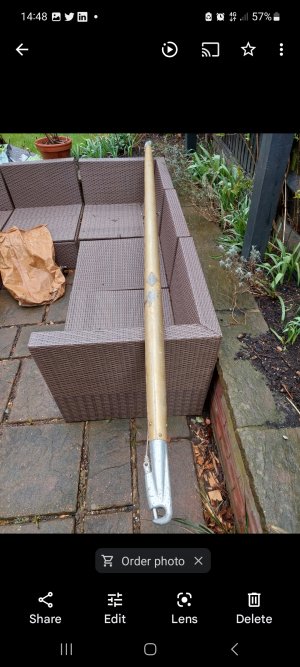
1000015575.jpg
 
Do not do that. Take a down haul to the deck just behind the forestay. The other end goes to the end of the pole just behind the fitting. This takes a lot of the bending load from the pole. It also allows for duck gybes which is safer for the crew, who can do it from the safety of sitting on the pulpit with their legs either side of the forestay. A successful gybe can be completed in 3-4 seconds without the spinnaker collapsing.
An advantage is that one does not have a pole that has to be unhooked both ends & reversed. Sometimes if the sail grabs it can spin the pole round very violently with a central system. This can put a crew, standing on the deck, in an unstable position.
 
Do not do that. Take a down haul to the deck just behind the forestay. The other end goes to the end of the pole just behind the fitting. This takes a lot of the bending load from the pole. It also allows for duck gybes which is safer for the crew, who can do it from the safety of sitting on the pulpit with their legs either side of the forestay. A successful gybe can be completed in 3-4 seconds without the spinnaker collapsing.
An advantage is that one does not have a pole that has to be unhooked both ends & reversed. Sometimes if the sail grabs it can spin the pole round very violently with a central system. This can put a crew, standing on the deck, in an unstable position.

This only works if there isn't a baby stay.
 
Do not do that. Take a down haul to the deck just behind the forestay. The other end goes to the end of the pole just behind the fitting. This takes a lot of the bending load from the pole. It also allows for duck gybes which is safer for the crew, who can do it from the safety of sitting on the pulpit with their legs either side of the forestay. A successful gybe can be completed in 3-4 seconds without the spinnaker collapsing.
An advantage is that one does not have a pole that has to be unhooked both ends & reversed. Sometimes if the sail grabs it can spin the pole round very violently with a central system. This can put a crew, standing on the deck, in an unstable position.
A duck/dip gybe usually needs sheet and guy on each spinnaker clew, so pole can be clipped into slack new guy.


End for end only needs sheets. In my experience (30 years of doing bow), on a boat the size of a Twister, end for end standing in front of the mast is preferable to going right to the bow for a dip gybe.
 
A duck/dip gybe usually needs sheet and guy on each spinnaker clew, so pole can be clipped into slack new guy.


End for end only needs sheets. In my experience (30 years of doing bow), on a boat the size of a Twister, end for end standing in front of the mast is preferable to going right to the bow for a dip gybe.
But you have nothing to hold on to, other than the pole. With a dip gybe one is safe & secure. Having raced a 29 ft boat on the foredeck for several years, before moving up the sizes, I have been through the mill, I do know what happens. Sheet & guy are sensible, for spinnaker trim on a Twister sized boat.
I have been alongside boats that have broken poles in bouncy conditions in races.
But to each his own. It is just a suggestion.
 
Dip pole on a twister? Lol... Not a good idea. For starters the weight of the bowman on the bow is really not what you want in such a small boat. And definitely not where I'd want to be with any breeze.... And I don't think they have pulpits to sit on do they?
Then you need an extra body in the cockpit to ease the pole up, and then raise it again. So at an absolute minimum you have 3 bodies left in the cockpit (Helm, kite flyer and pit), and of course you still need someone at the mast to trip the pole. This is starting to feel like a lot of bodies for a Twister...
Then of course to dip pole you need either a comically short pole, or to be able to raise the inboard end of the pole such that it can clear the forestay, which means you need a car on the inboard end and all the attending gubbins, not just a ring.
For 10 years we raced an Elan 37 which had a dip pole setup, and that was the right setup for that boat. We now have a JPK1010, with an end for end setup, and that is the correct setup for that boat. No doubt whatsoever that end for end is the way to go on something the size of a twister.

To the OP - the 1st reply is spot on. Do that.
 
Dip pole on a twister? Lol... Not a good idea. For starters the weight of the bowman on the bow is really not what you want in such a small boat. And definitely not where I'd want to be with any breeze.... And I don't think they have pulpits to sit on do they?
Then you need an extra body in the cockpit to ease the pole up, and then raise it again. So at an absolute minimum you have 3 bodies left in the cockpit (Helm, kite flyer and pit), and of course you still need someone at the mast to trip the pole. This is starting to feel like a lot of bodies for a Twister...
Then of course to dip pole you need either a comically short pole, or to be able to raise the inboard end of the pole such that it can clear the forestay, which means you need a car on the inboard end and all the attending gubbins, not just a ring.
For 10 years we raced an Elan 37 which had a dip pole setup, and that was the right setup for that boat. We now have a JPK1010, with an end for end setup, and that is the correct setup for that boat. No doubt whatsoever that end for end is the way to go on something the size of a twister.

To the OP - the 1st reply is spot on. Do that.
You sum up the reality of managing dip vs end for end on a Twister sized boat very well.
@Daydream believer - suggestions are all good, they get the discussion going and make us think!
 
Dip pole on a twister? Lol... Not a good idea. For starters the weight of the bowman on the bow is really not what you want in such a small boat. And definitely not where I'd want to be with any breeze.... And I don't think they have pulpits to sit on do they?
Twisters are not dinghies. Believe it or not they do have pulpits :rolleyes:
Bowman, when racing, the crew often get well forward to keep the bow down when going up wind.
As for a bowman going to sit on the pulpit, it is less than 4 ft further forward than a crew standing in the middle of the foredeck. Please do not tell me that hopping about on a rolling foredeck is safer than sitting on the pulpit looking aft with the furled jib between one's legs. The forestay can be grabbed at any time. Unlike when on a foredeck when there is often nothing within reach if standing. . Standing on the hatch, next to the mast, is not always an option, as one has to do a dance up & down the cabin step/deck, so the crew is forced away from the mast anyway. As for sliding the boom end up. Even my Stella was fitted with a track as standard. I would be surprised if the early wooden ones, especially the Tucker Brown ones, did not have adjustable height rings on the mast. I do not know about the Tyler GRP ones.
From memory,the spinnaker pole length on the boats I raced were all circa "J". The Op may have something longer & that would preclude certain manouvers.
However, the ideas are out there & he can decide, as can others reading the thread, which is just as important as answering the OP's question
 
Twisters are not dinghies. Believe it or not they do have pulpits :rolleyes:
Bowman, when racing, the crew often get well forward to keep the bow down when going up wind.
As for a bowman going to sit on the pulpit, it is less than 4 ft further forward than a crew standing in the middle of the foredeck. Please do not tell me that hopping about on a rolling foredeck is safer than sitting on the pulpit looking aft with the furled jib between one's legs. The forestay can be grabbed at any time. Unlike when on a foredeck when there is often nothing within reach if standing. . Standing on the hatch, next to the mast, is not always an option, as one has to do a dance up & down the cabin step/deck, so the crew is forced away from the mast anyway. As for sliding the boom end up. Even my Stella was fitted with a track as standard. I would be surprised if the early wooden ones, especially the Tucker Brown ones, did not have adjustable height rings on the mast. I do not know about the Tyler GRP ones.
From memory,the spinnaker pole length on the boats I raced were all circa "J". The Op may have something longer & that would preclude certain manouvers.
However, the ideas are out there & he can decide, as can others reading the thread, which is just as important as answering the OP's question
When you gybe the pole in end for end you are standing at the mast, not the middle of the foredeck... I agree that standing in the middle of the foredeck is generally a bad idea, but that's not where you stand to gybe the pole... You also require 2 fewer people which for a 28 foot boat is really far more the point...

Either way, I think the smallest boat I've ever seen set up to dip pole was about 35 feet. A twister is very definitely in the category of easier and faster to end for end.
 
I'm going to rivet lacing eyes to either side of both ends of the pole to which I'll attach the 2 dyneema spans with a ring in the middle of each span for the up and down haul snap shackles.

Final question - how long and how loose should the dyneema spans be?

Not too sure of the physics...

Many thanks!
 
It's a fairly stout pole, which looks as if the up/down hauls simply attached in the middle.
This may be less faff than bridles.

My pole has the up/down lines attached at one end.
I don't do a 'dip pole gybe', I take the pole off the mast, off the guy, swing it around and onto the new guy , on to the mast.
It works well for stowing the pole on the boom.
The 'mast' end of the pole runs on a loop of string from the clew end of the boom around the mast and back to the clew.
We used to race 505's like that in the bad old days.
There are many variations on spinnaker pole methods, various pro's and con's.
I like storing the pole off he deck and the fact it's permanently connected to the boat and ready connected to up/down strings..
I'm looking for easiest not fastest as I'm not racing.

I sailed on one boat with a bridle for the downhaul but the uphaul direct on the pole, as there's less load on it.
The length of the bridle would typically give an angle maybe 15 to 20 degrees between bridle and pole?
 
OP can see that many comments here relate to dip pole gybing which I presume is not an option as it needs remote control of pole attachment to mast to permit pole to dip inside forestay and of course guy and sheet ropes to both sides of spinnaker. Usually a set up for larger boats. A 36ft fleet of racing boats here have a simple set up of end for end gybing. Pole is stowed on deck with topping lift let run free so can remain attached. (very desirable to avert pole over board)
They use a bridle (that's what I call it) of wire from each end of pole to a ring in middle. Bridle will stretch up for topping lift by about 40cms for your pole size. More is OK. I suggest OP use dyneema is a loop around end of pole held out by saddle pop riveted to pole near the end. I have tried down haul to centre of fore deck rom pole but found it was not powerful enough to hold pole and spin down on a reach. I use (as do 36fters) a down haul line onto brace via a sheave on gunwhale mid foredeck. I use a ring on the end of the line through which the sheet/brace goes through. This (tweaker) down haul goes back to cockpit.
So gybing involves a cockpit person releasing down haul on old windward side and pulling down the old leeward new windward side. Pole is end for ended using the topping lift to take the weight of the pole in the change over. Plus of course that person also pulling in the old sheet to make it a brace and releasing the old brace. Takes a bit of practice. In fact gybing a spinnaker is one of the trickiest manouvres of sailing. Especially as wind comes up. Incidentally person on pulpit of my little boat is too much weight forward and an invitation to nose, in round up and lay her over under spinnaker and a bit of wind. Ah the adventures and terrors of the past. Took a long time to learn. (and still forgets) ol'will
 
I'm surprised no-one has suggested twin-pole gybing! I can end-for-end my CO32 pole singlehanded, trying to dip-pole a Starlight 35 at the weekend with only 2 crew was not pretty.
The longer the span, the less compression on the pole but that shouldn't be a problem with the pole in the picture. Mine has the downhaul attachment about a metre below the pole and similar for the uphaul. Having the downhaul block attached to the deck forward of the mast allows gybing the pole without easing downhaul or uphaul.
 
I'm going to rivet lacing eyes to either side of both ends of the pole to which I'll attach the 2 dyneema spans with a ring in the middle of each span for the up and down haul snap shackles.

Final question - how long and how loose should the dyneema spans be?

Not too sure of the physics...

Many thanks!
Measuring roughly from photos, it looks like when under tension the bridles are roughly 1/3 of the length of the pole away from the pole, if that makes sense...?
 
I'm surprised no-one has suggested twin-pole gybing! I can end-for-end my CO32 pole singlehanded, trying to dip-pole a Starlight 35 at the weekend with only 2 crew was not pretty.
The longer the span, the less compression on the pole but that shouldn't be a problem with the pole in the picture. Mine has the downhaul attachment about a metre below the pole and similar for the uphaul. Having the downhaul block attached to the deck forward of the mast allows gybing the pole without easing downhaul or uphaul.
I was trying to keep my Merlin Rocket tendencies to myself.
Twin carbon poles, launched by just pulling a string, no need to disconnect any poles from guys.
Ideal.

But the OP has a single pole which is good to go, if he's not looking to put the kite up in half a gale, he probably doesn't even need a bridle.
A bridle allows a lighter pole, or maybe more reliance on the downhaul instead of moving the guy forward on a reach.

Personally I don't like bridles on poles stored on deck, it's string or wire lying on the deck trapping dirt and getting underfoot.
I respect that other people have different priorities.

My first performance dinghy had a pole with just eyes in the middle for uphaul and downhaul, we did indeed snap it clean in half on a windy day. I sleeved it back together and converted to single-ended.

If taking the option to use the eyes in the middle of the pole, do have a good look for corrosion, if there is any, then bridles are IMHO a better option than buying a new pole.
 
Lots of good thoughts here. I need to confess that last weekend I attached the up/downhauls directly to the existing central saddle eyes... It worked beautifully for half an hour, then ripped both eyes off simultaneously... Cue much clanging and general spinnaker mayhem...
 

Other threads that may be of interest

Top