Winterisation questions

Some engine manufacturers do because of the risk of seawater contamination. Yanmar says every 2 years. Hours are not a factor in boat installations because of seawater contamination risk, even with long-life coolant.
Sounds like yanmar don’t have much trust in the integrity of their heat exchangers? Is that actually in their manual ? Incredible
 
Some engine manufacturers do because of the risk of seawater contamination. Yanmar says every 2 years. Hours are not a factor in boat installations because of seawater contamination risk, even with long-life coolant.

If I was getting sufficient SW or other contaminant in my cooling system - I'd want to know pretty d' quick why and fix it.
 
If I was getting sufficient SW or other contaminant in my cooling system - I'd want to know pretty d' quick why and fix it.

The condemning limit for engine coolant is about 20-50 ppm Cl, depending on who you ask. That is 1:1000 to 1:400, or about 4-10 ml. You would never notice without testing the coolant.

A common misconception.

There are test strips that are OKish for monitoring. Or you can pay to have a lab do it right.

(I was active on the ASTM committee that develops US and UK coolant standards for many years. I have also developed and pattented coolant formulations.)
 
I suppose I get what you are saying…but the coolant I use in the two tamd 61’s is expensive VP green stuff. Lots of it too…the AF I use for flushing the raw side is much cheaper (marine friendly if you choose) and less of it required to flush. All that’s required is to test the coolant each year with a manometer really.

You could use a conventional ( ie non OAT) antifreze sold for older vehicles from the automotive market.

It should be changed every year anyway so you might just as well use it for flushing the seawater system and avoid the expense of buying antifreeze just for that purpose.

A manometer is a device for measuring pressure
 
Last edited:
The condemning limit for engine coolant is about 20-50 ppm Cl, depending on who you ask. That is 1:1000 to 1:400, or about 4-10 ml. You would never notice without testing the coolant.

A common misconception.

There are test strips that are OKish for monitoring. Or you can pay to have a lab do it right.

(I was active on the ASTM committee that develops US and UK coolant standards for many years. I have also developed and pattented coolant formulations.)

ASTM .... for a number of years I was involved in ASTM Vol 5 and updates to Petrochem tests. I was chosen to work with ASTM to balance the usual practice of joining IP. This was during the run-up when our Company was being taken over by BSi. Before I finally left and created my own Inspection Company's ..... got fed up creating labs and operations for large corporations ... decided to do it for myself.
 
You could use a conventional ( ie non OAT) antifreze sold for older vehicles from the automotive market.

It should be changed every year anyway so you might just as well use it for flushing the seawater system and avoid the expense of buying antifreeze just for that purpose.

A manometer is a device for measuring pressure
Refractometer.
 
Sounds like yanmar don’t have much trust in the integrity of their heat exchangers? Is that actually in their manual ? Incredible

Not just Yanmar. Google the manual. The change intervals for non-marine installations mirror automotive and truck recommendations.

Part of the problem is that they have no control over installation practices.
 
Not just Yanmar. Google the manual. The change intervals for non-marine installations mirror automotive and truck recommendations.

Part of the problem is that they have no control over installation practices.
I must be out of touch a little perhaps and perhaps blinded by only frequenting mostly VP and mercruiser things. Every 2 years seems a little OTT. Won’t be many cars that have that done, I’d think
 
You could use a conventional ( ie non OAT) antifreze sold for older vehicles from the automotive market.

It should be changed every year anyway so you might just as well use it for flushing the seawater system and avoid the expense of buying antifreeze just for that purpose.

A manometer is a device for measuring pressure
Apologies. Hydrometer would be obviously what I meant…doh!
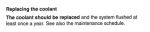
Changing the coolant every year is verging on ridiculous surely. Simply not required, nor called for by the manual.
 
I must be out of touch a little perhaps and perhaps blinded by only frequenting mostly VP and mercruiser things. Every 2 years seems a little OTT. Won’t be many cars that have that done, I’d think
Every 2 years for older cars using a conventional non-OAT antifreeze. Up to 10 years for newer cars using long-life / OAT antifreeze but there very little chance of a car cooling system becoming contaminated with salt water. Depletion of the inhibitors is the consideration
 
Of course, a refractometer is far more accurate, is not interfereed with by oil, reads EG and PG, and reads battery SOC as well. Join the 21st century. ;) I have not used a bulb hydrometer in 30 years.
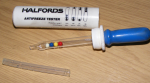
I have not used a refractometer for best part of 60 years, but I have the little Halfords antifreeze tester on the garage shelf
 
Apologies. Hydrometer would be obviously what I meant…doh!
Changing the coolant every year is verging on ridiculous surely. Simply not required, nor called for by the manual.
Sounds like yanmar must have issues with their heat exchanging interfaces! Not so good.

Changing at least every year is specified in the manual for your TAMD61s

1664831533562.png
 
Top