TernVI
Well-Known Member
That is the key. Zero tolerance of rain leaks!Did anyone mention fixing all leaks?
And an eberspacher.

That is the key. Zero tolerance of rain leaks!Did anyone mention fixing all leaks?


My 35 years of experience in keeping cabins fresh , dry and mould free says: 1 ventilation, 2 dry bilges, 3 no rain leaks.Hello again.
We are likely to leave the boat on her river mooring without power supply this winter. I would appreciate any recommendations for keeping mould at bay, please, and indeed other pearls of wisdom!
We have 300W of solar. Would it be worth trying to run a 12v dehumidifer (or two) off the "overflow" from the solar regulator (which is currently unused) - on the basis the batteries will be permanently charged and the overflow should get most of what's available?? Could this be rigged permanently "on" and start automatically whenever power was available?
Alternatively, rig the solar directly to a dehumidifer and send the overflow to the batteries (which have no other demand)?
Or am I barking up the wrong tree entirely? Thanks.
My 35 years of experience in keeping cabins fresh , dry and mould free says: 1 ventilation, 2 dry bilges, 3 no rain leaks.
Www.solocoastalsailing.co.uk
Thanks - could I please trouble you for a photo of your box arrangement?I use the box over the forehatch trick mentioned above.
Thanks - could I please trouble you for a photo of your box arrangement?
Or is it simply....an upturned box strapped down??
I have the Lewmar hatches. In the vent position, with wind from the bow, rain enters in volume.
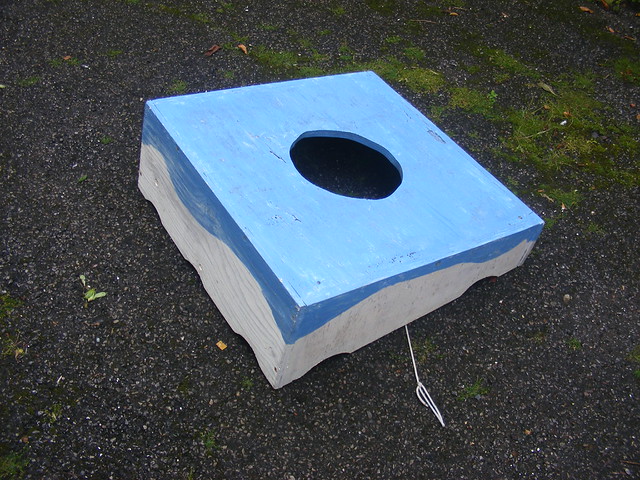 DSCF0064 by OldGoriot, on Flickr
The Meaco DDL8 models are desiccant humidifiers and the manufacturer says you shouldn't disconnect the power whilst they're in use. They should be allowed to go through their own shut down process. Manual: PDFWith that amount of solar then I would use a 240v(Maeco junior) through an invertor and a programmable relay to only come on at 14v or whatever suits your charging arrangement. I’ve done something similar to heat the immersion tank when we are on board.
But the great thing about that model is that it remembers its settings from one power on to the next and spends most of its time shut down in a sealed boat so after the first couple of days it will almost always be in shutdown mode when the power goes off.The Meaco DDL8 models are desiccant humidifiers and the manufacturer as you shouldn't disconnect the power whilst they're in use. They should be allowed to go through their own shut down process. Manual: PDF
Compressor dehumidifiers remove less water per hour but, at most temperatures, remove more water per watt of electricity consumed. They also don't suffer from this shortcoming. I like the dimensions of my Seago dehumidifier, the "Smart Dry 2" model, and it will awake with the same settings after a power outage.


Solid fuel heating. Which has to be combined with ventilation, of course, or it will kill you.

I'm pretty sure they all do that. I think the Meaco DDL8 wins awards for the amount of water it extracts per hour at low temperatures.But the great thing about that model is that it remembers its settings from one power on to the next and spends most of its time shut down in a sealed boat so after the first couple of days it will almost always be in shutdown mode when the power goes off.

People who believe in ventilation have a universal quality which is total denial that their boats pong. They can’t be shifted from that position.
With that amount of solar then I would use a 240v(Maeco junior) through an invertor and a programmable relay to only come on at 14v or whatever suits your charging arrangement. I’ve done something similar to heat the immersion tank when we are on board.
Make sure the boat is totally sealed including hatch and deck vents and as others have said ensure anything at all with salt on it is washed and dried and there are no leaks.
Then leave beds made up, clothes in cupboards and anything else you like to come back months later to everything still fresh. Your ventilated neighbours won’t notice the difference but you, your family and every vistor will.
To assist ventilation I have a solar powered greenhouse fan permanently set in the washboards and I leave the dome type ventilators open..... dry the bilges.....