
Sea Change
Well-Known Member
It was about £10 and I'd bought it months previously, then a relative had flown in to Grenada with it from the UK.I'd have moaned and got a refund if they were DOA.
So I didn't bother chasing it up.

It was about £10 and I'd bought it months previously, then a relative had flown in to Grenada with it from the UK.I'd have moaned and got a refund if they were DOA.
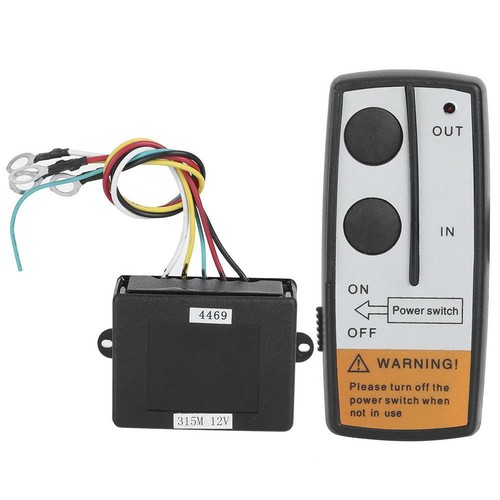
I got one too but discovered they arent water proof. So have bought a second and dug out a mobile waterproof cover. Fingers crossed for this onePaul Rainbow pointed me in the direction of this on ebay for about a tenner. It's in its third year on Jazzcat, and working well.
How much faffing with an old remote would it be worth doing to save a tenner?
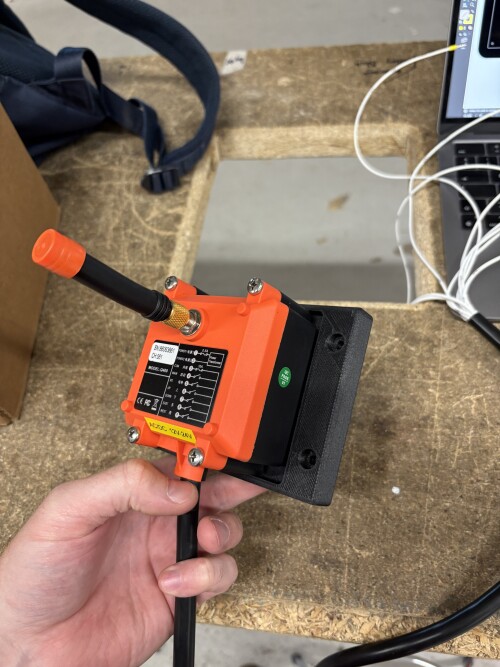
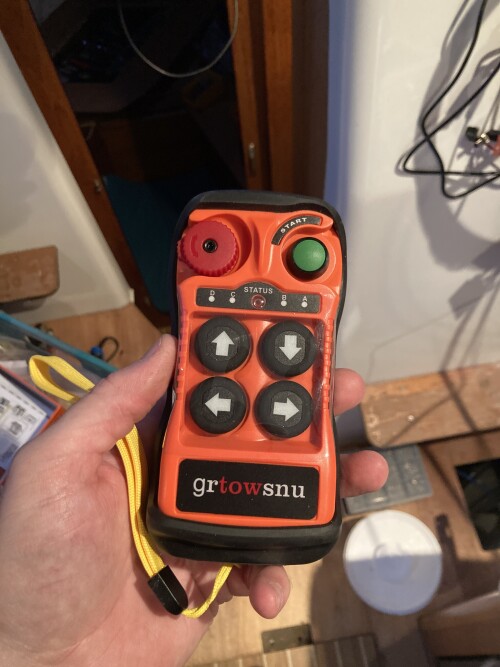

Glad to see I am not the only one using these industrial crane unitsThe crane style one wasn’t much more money but is far better. It has a built in emergency stop so you have to knowingly activate it before you can use it.
 .
.I have one of these which I used in anger this weekend. It was fantastic. I had a wired remote on my last boat but this wireless one was so handy sailing alone.Paul Rainbow pointed me in the direction of this on ebay for about a tenner. It's in its third year on Jazzcat, and working well.
How much faffing with an old remote would it be worth doing to save a tenner?
I do not know the controller and a photo might help. However my guess is that the resistors" are in fact diodes. Diodes are used across the switch contacts or the solenoid coil to soak up back EMF. Back EMF is a voltage spike that occurs when current is stopped going through a coil. (solenoid or motor) The voltage spike is in the polarity of trying to maintain the current. (it is the power behind old fashioned spark ignition on cars) So potent. The diodes conduct the back EMF to minimise sparking a the switch contacts.My wired windlass remote was playing up, so I opened it up expecting to find two microswitches and not much else.
Well, there is a bit more to it than that. There's a few resistors etc in there.
The unit is basically kaput, with lots of cracks in the casing, and I'm not very enthusiastic about paying over £100 for what I thought was simply a box with two buttons on it.
What purpose do the resistors etc serve? What would happen if they weren't there?

This is a super hot tip!!Glad to see I am not the only one using these industrial crane units
More likely diodes. The big relays are inductive loads and may need flyback protection.. . . No idea what the resistors do unless they are capacitors to stop the current surge when the solenoid engages?
Another reason I've not bothered to pursue a wireless controller is because it would have a small parasitic power drain. So I'd have to remember to turn the breaker off, and back on again every time I needed to anchor. Just another thing to get in the way when the guy in front is dragging in to you at 2am.The Side Power remotes are encrypted..at a huge cost. Are the industrial ones? I've put a cheap as chips Chinese one on but I keep the windlass control off at the panel to stop local taxis etc triggering an unexpected drop!

 ).
).