what about this?

3.5Kw "theoretical maximum". Ah! The weasel words start right at the top, don't they? As we know from bitter experience of the alternative energy brigade count on a third of that for a third of the time. You ain't going to do much with 1Kw (ie one horsepower ish) for 20 minutes out of the hour, are you? And when the battery's flat? Does it have a proper engine? Hope the ground tackle is up to scratch. Aerospace technology lightweight aluminium anchor rubber coated to be ragworm friendly and attached to a carbon free natural homeopathic hemp line anyone?

The cost of such complexity will be enormous.

30KWh of batteries!!! Lightweight??? Carbon neutral! - how, with all that lead???????

Brilliant innovation on sail technology too. A double-skinned jib - wow! No one's ever thought of that before, have they?

Looks and grace to make a Westerly Centaur seem elegant - ugh.

Cocaine fuelled "designer" brainfart if you ask me.

But the real question must be - Why?
 
man, this was at the front of the queue when they were handing out the ugly pills!

It's ugly on steroids.

Made me think of the ugliest car in the world ...

top-ten-ugliest-cars-multipla-03.jpg
 
Another dose of ugly pills

It's ugly on steroids.

Made me think of the ugliest car in the world ...

top-ten-ugliest-cars-multipla-03.jpg

That's a minger sure enough, but even Mr Clarkson said it was the most practical car he had ever driven......Makes me think of the humble Mirror Offshore.....butt ugly, but tough as old boots and extremely well designed for purpose ........over to you Mr Winter ???...

BTW, the car was based on the concept of the original 60's 'Fiat Multipla'.............. all things to all men........... infinately adaptable......but like todays Mini or VW Beetle...it bears no relationship to the original.......

Progress?.......of course......a 'classic' in 50 years time.......does it have soul & style?.........(rhetorical)..
 
Better late than never. :)

I've never been to the Croatian Palagruza islands as they are so far distant from the usual chain of Croatian islands. In fact, closer to Italy than Croatia. Interesting to see them.

Richard
 
Last edited:
Hi,


Here you can read the story and news about this concept boat. I spent lot of energy, money and time to make my dreamboat. Now I am busy with renovation of our old house in Croatia. Several years I did not touch hreko’s web site. It needs to be updated after I take some rest of tired last 6 years and getting to know more about the boat.
This letter I write back to people who ask me about price, sail testing and delivery time. (about 50 such requests so far)
Dear Mr………..
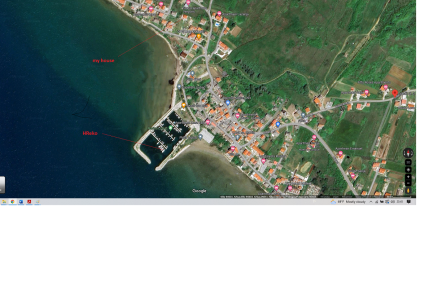
Since 2017 I am retired (last 20 years I was working as anaesthesiologist in the Netherlands) and HReko1ooo is the concept of the boat I would like to have for the rest of my life. The boat is now situated in a small harbour of my born place, the village Ljubač in Zadar area.
Unfortunately, I am the only one who still stays behind this project (one Man Company). I am looking for partners, shipbuilders and investors.. HReko1ooo is prototype of an all-round hybrid cruiser intended to live on the boat and go everywhere. It is still a prototype; no other boat have been built yet. The whole concept is my idea.
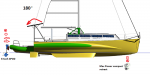
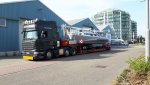
The biggest worth of Hreko concept lies in its versatility. With its extremely small draft, long displacement twin keels, light weight, pleasant stability, plenty of comfort and electric energy, 1000 L fresh water storage, up to 450 L fuel storage, folding mast etc. this project owns great potential in all round inland and blue water cruising. Just because of its versatility can be arranged as a performance sailing boat all the way to cruise motorsailer, fishing boat or even motorboat, depending on which area will be sailed and which component should be more emphasized. It's really a lot of possibilities with this concept, and I have plenty of ideas to continue because now the prototype is finished I know what needs to be improved. If we use aluminium alloy as a building material of the hull, with half inch thick under plates of bilge keels this boat can aground virtually on all kind of bottom. The biggest Hreko model should be HReko12oo, supposed to sail blue waters, built in aluminium/composite. HReko12oo should be 12 m long (14,40 with tender), 4,8 m (4,5m) wide, 55 cm draft, 7,5 t light load displacement, with composite deck & superstructure. HReko 8oo should be trailer able (in tilt position) model 10 m long with tender; 3,6 m BOA; 2,8 t full displacement / 1750 kg light displacement.
In this moment, I do not know much about the price, options and build times. One shipyard build in Al and another in foam sandwich composites. Of course, the hull can be made of aluminium and deck & superstructure of composites. For the prototype I spent about 400 000 EUR. The Netherlands has very expensive labor force. The boat should be produced in some other country like Croatia, Turkey, China, Poland etc. but arrangements are not made.
Mechanical propulsion should be 4 kW outboard pod electro motor (regeneration & electro sailing on the bow of tender instead of actual two 10 kW pod motors) along existing D1-30 Volvo diesel engine with shaft and folding propeller. I think that typical price should lie between 240 and 320 thousands Euro, depends of model and equipment. The basic model can be 180 000 Eur?
Hreko has only four sails: Modified Top Square full batten main, self-taking deck stay sail, storm jib and double code zero with furling gear named “Bizero” that can easy convert into symmetric ‘butterfly’ spinnaker.
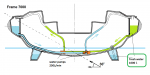
Sumer 2016 we did a first sailing test. In the meantime, I changed some things. Open diagonal salt-water ballast has been replaced with horizontal fresh water ballast concept. Now we have fresh water supply of more than 1000 L without significant compromising of stability though all the water is consumed. Because the boat own a lot of energy (total Wp solar panels is 1740) one 60L water maker is good option for long distance cruising.
After two seasons of sailing with Hreko, I realize a few things that belong to concept and I was not aware. Pod motors with permanent large screws provide a relatively large drag with 1.5 kn average speed reduction. Normally we used maximal 20% (4 kW) of pod motor power it means we do not need 20 kW. Two pod motors placed so wide on one monohull are not reliable when you are close to shore with big waves and no sails, because they come frequently out of water. Hreko is not a catamaran. We have concluded that for docking (especially with crosswind), the best solution is an electric pod motor (outboard 4POD drive from E-Tech?) on the bow of the tender in combination with a common bow thruster (retractable Max-power compact?). The boat can move aside if necessary.
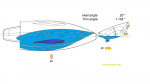
The boat is a monohull with a very high initial stability. Sailing into the wind conventional sailing boat normally has 15-20 degrees tilt and this is basically a disadvantage, but with Hreko +/- 20 degrees tilt is mandatory, to get an 'ideal' underwater profile, and about 40% less drag. (Windward keel and rudder are out of water).
The relatively small sail area (48-m2 main & high aspect jib) is deliberately chosen (long distance solo/couple sailing). At light wind condition (< 10 kn) water ballast must be pumped on leech and electric motor is used in place of “10 m2 high performance sail” (cc 0.8 kW or 1 hp, in principle, shall be received, directly by solar panels). The electro sailing philosophy is the following: sailing into the light wind, you use no big sail surface (main and code zero) but main and jib with electromotor.

2017. I decided instead of generator to place a marine diesel engine with shaft drive and folding propeller. Now the Hreko has a direct motor drive just like any boat of its category. That’s the matter of safety and feeling, I do not want to be depend only on 'electrical and electronics', the boat is intended to be long distance cruiser, to visit deserted places on Earth. Existing two oversized pod motors will be replaced with outboard 4 kW pod motor on the bow of tender that can be used for electric propulsion of mother boat, stern thruster and in reverse as tender trolling motor. The batteries are charged with strong alternator of 3 cylinder/21 kW Volvo (besides solar panels, regeneration and shore power). I already have a plan in terms of changes in electrical diagrams and total battery capacity is 19,2 kWh.(14,4 kWh /48 V – propulsion and 4,8 kWh /12V- service battery)

This is a prototype! Some things should be still defined and improved and lot of things can be custom made. Now for 2 years I am testing the boat in all-weather condition, summer and winter on Adriatic Sea. So I already know that boat is fast, very steady and pleasant with huge initial stability. I have feeling that I am on 50 feet boat and not 33 (40 with tender).

If you are still interested in such boat, please stay in contact. I can provide you with more information if you have specific questions. There are certain details that should be changed. For example, cockpit should be about 12 cm higher, also the seats in the cabin but these are typical problems of one prototype.
Diesel motor boat speed is 6,5kn/2200rpm, 7,2kn/ 2800 rpm, 7,6 kn 3200 rpm.
Electric speed: 4 kn/2kW, 5kn/4kW

Best regards,
Joso Perković

( 2’.05” and 2’.25” hreko in small Ljubač harbour)

More videos you can find on You tube channel: maspok1950
 

Attachments

  • water ballast  frame 7000.png
    water ballast frame 7000.png
    65.1 KB · Views: 47
  • Vatro 1.png
    Vatro 1.png
    96.5 KB · Views: 45
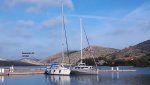
  • HReko and Bavaria 37 cruise.jpg
    HReko and Bavaria 37 cruise.jpg
    183.4 KB · Views: 50
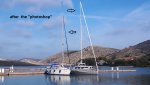
  • after masts switching.jpg
    after masts switching.jpg
    188.5 KB · Views: 45
  • Giornale dela Vela.png
    Giornale dela Vela.png
    283.2 KB · Views: 42
Last edited:
Is that the same one that was banned couple of times from boat design forum.

Just do not push him too far otherwise shit will hit the fan.
 
Last edited:
I have to admit that I am one of those 'traditionalists' that adopt the theory that if a boat looks good on land it will almost certainly be good on the water, (OK doesn't always work but it's a good rule of thumb), I'm sorry but this just doesn't IMHO look good.
I do find it difficult to relate a GRP construction with being near carbon neutral and I still have reservations about water ballast.
 
I have to admit that I am one of those 'traditionalists' that adopt the theory that if a boat looks good on land it will almost certainly be good on the water, (OK doesn't always work but it's a good rule of thumb), I'm sorry but this just doesn't IMHO look good.
I do find it difficult to relate a GRP construction with being near carbon neutral and I still have reservations about water ballast.

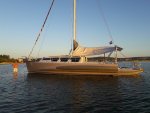
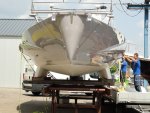
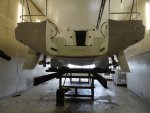
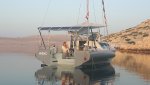
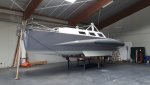
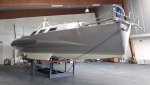
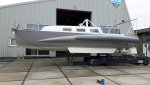
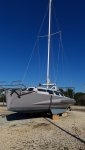
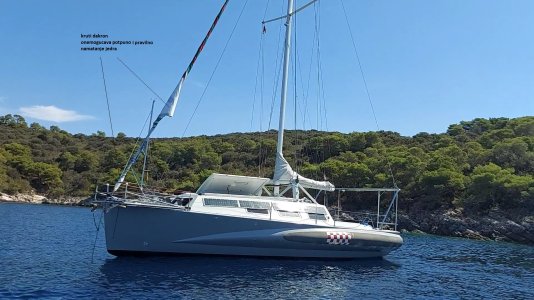
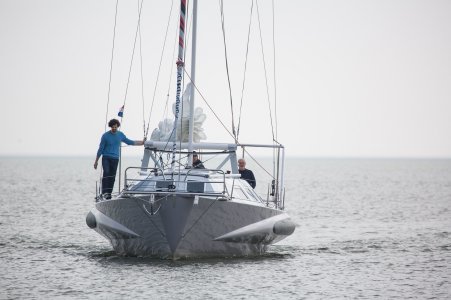
Here you have some photos of the boat on the land and sea so you can complete your impression.
Thumb is good in the early childhood if you do not have soother. When you grow up you have to have something more concrete and reliable. Common sense. Think about albatross on the land and in the air, or penguin, sea dog on the land and in the sea.
To produce GRP construction of the boat means emission of huge amount of CO2. To build wooden boat means less emission of CO2. To maintain wooden boat in a 50 years means huge amount of emission of CO2. To maintain GRP boat for 50 years means less emission of CO2.
GRP (or sandwich glass/carbon/foam/epoxy) construction is much lighter than wooden construction. 1 m3 displacement needs 1-2 kW propulsion force. The philosophy behind hreko is simply. Instead of 2 t lead (average ballast of 40 feet sail boat with low draft). hreko can carry 1000 l fresh water, 400 l fuel and 600 kg useful cargo and not be 1 gram heavier than comparable conventional 40 feet cruising sailboat.
There is no carbon neutral cruising sailboat. Its only percentage what depends strongly of area,boat type, mode of sailing, source of alternative energy etc. An average person produce 1, 5 kg CO2per day or 40 tons for the entire life.;)
About water ballast you have to solve the prejudices yourself, Water ballast on hreko is not very important because of its great inherent stability and short mast (the first reef is already incorporated)
 

Attachments

  • hrko na traileru 1.jpg
    hrko na traileru 1.jpg
    242 KB · Views: 40
  • damir 1.jpg
    damir 1.jpg
    222.3 KB · Views: 41
  • ybw2.jpg
    ybw2.jpg
    197.6 KB · Views: 41
  • ybw3.jpg
    ybw3.jpg
    217.4 KB · Views: 39
  • ybw5 (2).jpg
    ybw5 (2).jpg
    201.3 KB · Views: 38
  • prvo jutro na jugu Zuta.jpg
    prvo jutro na jugu Zuta.jpg
    152 KB · Views: 40
  • ybw7 (2).jpg
    ybw7 (2).jpg
    144 KB · Views: 40
  • ybw8 (2).jpg
    ybw8 (2).jpg
    149.2 KB · Views: 38
  • ybw10.jpg
    ybw10.jpg
    165.6 KB · Views: 34
  • kratke noge al ne laze.jpg
    kratke noge al ne laze.jpg
    505.3 KB · Views: 39
Last edited:
After a few years of testing the boat (my wife and me), I am increasingly delighted with the concept so that we enjoy the ship. Now I have no money for crazy projects anymore, but I still have crazy ideas and imagination.😁

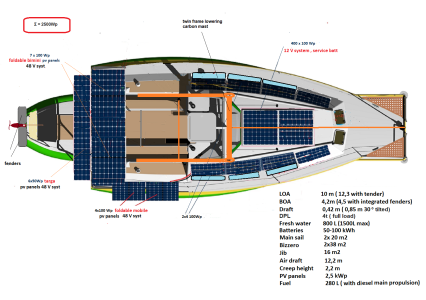
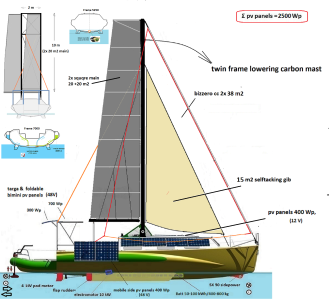
What is the opinion of ybw experts about tandem square sails, 4 rudders, 2.5 kWp PV panels, potential 1500 L fresh water stock on this ugly 10 m long sailing boat?;)


Attachments

  • tlocrt 1.png
    tlocrt 1.png
    823 KB · Views: 31
  • side  view 4.png
    side view 4.png
    1.5 MB · Views: 32
I'll be brief.

4 rudders means that something is wrong with the relationship between the underwater/keels profile and the sails/cabin structure. For the centre of lateral resistance to require 4 rudders is a pretty serious design problem.

The need for 4 rudders exposes you to lack of resilience, in that if one rudder jams or breaks you have directional stability issues.


Your PV panel layout seems to be designed

1 to catch the sun from wherever the boat is pointing or heeling relative to the sun. You would be better having adjustable panels, and less in number as any heavy wave will tear off some of the more eccentrically placed panels

2 to cope with an enormous and excessive battery. Are you going to be using the boat only at night ?

Reduce the battery size will mean smaller panels.


1500l of fresh water on 10m length is too variable a load and too heavy given the loading of the crew and other equipment. Have you done a TPI (tons per inch) displacement calculation ? That quantity of water will also need multiple interconnected tanks, and that means constant management of "store" tanks and "use" or "day" tanks. Get that wrong and the boat's stability is compromised. A complicated valve control system is again looking for trouble. Why do you need so much water ? Have you considered a watermaker ?
 
I think that we should not be critical of experiments, until they have been seen to fail. Many do. But there is, sometimes, a small part that works.This can later be adopted elsewhere. That is how innovation works.
But if Dylan really wants an off the cuff opinion---I think the whole thing looks ugly & would not touch it with a barge pole :rolleyes:
I am just glad that someone else is mad enough to invest & give it a go. As pointless as all this green c..p is.
 
Electric propulsion is old hat really.
The limitations of solar can be worked out on paper easily enough.

So that leaves a 'radical' hull and a 'radical' rig.

Biplane rigs have been tried before, all sorts of stuff was tried in the 60s on catamarans, and before that on model boats.
Maybe there is a big question 'what do you want from it?' until you define that, you can't say if it's better than conventional.

The hull .
Things like Dart catamarans work adequately with no keel or centreboard.
Water ballast has been done before, plenty of work has been done in Transat racing and a few cruising boats have used it.
But the general form of the hull doesn't look like it will be much good other than on flat water.
It looks like a lot of wetted area.
It looks like when it's heeled, even a small wave will hit the windward keel with interesting effects.

The rudders.
Every boat has evolved to deep rudders for a reason. The small rudders behind the props like a powerboat, fair enough.
But for sailing you will want one or two deep rudders that stay in the water when the boat heels or goes over waves.

Why not just have a catamaran?
 
Sort that mainsail out. It is set like $%^£
Yes, this is true, I have never perfected sailing. I am self -taught and of course limited. I have been looking for years in Croatia some known competitive sailors to test Hreko and teach me some things but no one responds. Hreko is not thoughtful for the competition, but it would still like to get the most out of the sail. I live in smaal village Ljubač near Zadar ( 35 km from international airport) I can host 4 sailors one weekend or a week, they need to pay drink and food so we can improve Hreko's sailing performances. I live alone.
 

Attachments

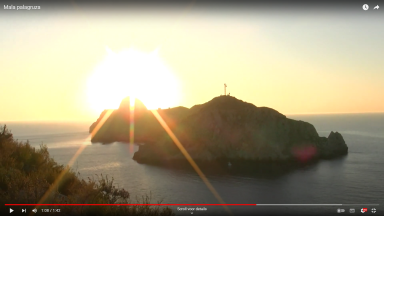
  • The sun in the lens of the Palagruza lighthouse.png
    The sun in the lens of the Palagruza lighthouse.png
    1.3 MB · Views: 11
  • dakron u roglju najlonskog jedra.jpg
    dakron u roglju najlonskog jedra.jpg
    614.9 KB · Views: 11
  • YC Hreko.jpg
    YC Hreko.jpg
    382 KB · Views: 10
  • HReko i kuca.png
    HReko i kuca.png
    1.5 MB · Views: 9
Electric propulsion is old hat really.
The limitations of solar can be worked out on paper easily enough.

So that leaves a 'radical' hull and a 'radical' rig.

Biplane rigs have been tried before, all sorts of stuff was tried in the 60s on catamarans, and before that on model boats.
Maybe there is a big question 'what do you want from it?' until you define that, you can't say if it's better than conventional.

The hull .
Things like Dart catamarans work adequately with no keel or centreboard.
Water ballast has been done before, plenty of work has been done in Transat racing and a few cruising boats have used it.
But the general form of the hull doesn't look like it will be much good other than on flat water.
It looks like a lot of wetted area.
It looks like when it's heeled, even a small wave will hit the windward keel with interesting effects.

The rudders.
Every boat has evolved to deep rudders for a reason. The small rudders behind the props like a powerboat, fair enough.
But for sailing you will want one or two deep rudders that stay in the water when the boat heels or goes over waves.

Why not just have a catamaran?
Electric propulsion is old hat really.
The limitations of solar can be worked out on paper easily enough.

Electric propulsion is old but technology ( batteries) changes every minute under influeces of car industry. The batteries are the ( only) weak point in electric propulsion.

So that leaves a 'radical' hull and a 'radical' rig.

Hreko's hull (without massive bige keels) is so called 'performace hull'. Large longitudinal structures (Keels & Sponsons, below /above water) that make the hull extremely firm and lightweight change that performance hull into a radical hull. That is the point. Whats new if nothing changed?. The boat have 42 cm draft (one 'big man's foot' ;)), huge stabiliti ( up to 4500 kg/m RM25) and 4000 kg fuul load weight. From our testing and experience the boat is not slower than typical modern Cruiser/Racer mono category 40 feet.


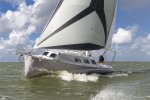
This is broad reach sailing
WITH NO DROP WATER in keels and ballast tanks wit fuul sails lined up. "Normal" cruisers in background have first reef:)
(Apparent wind speed is 17,5 knots, boat speed 8,1 knots, app angle 65 and true angle wind 85)


Biplane rigs have been tried before, all sorts of stuff was tried in the 60s on catamarans, and before that on model boats.
Maybe there is a big question 'what do you want from it?' until you define that, you can't say if it's better than conventional.

60 years ago there was no epoxy/carbon, there was no 'ugly'😁 AC40 and AC37. Until I define that tandem frame rigging , you can't say if it's worse than conventional :)

The hull .
Things like Dart catamarans work adequately with no keel or centreboard.
Water ballast has been done before, plenty of work has been done in Transat racing and a few cruising boats have used it.
But the general form of the hull doesn't look like it will be much good other than on flat water.
It looks like a lot of wetted area.

Watted area is about 2 m2 bigger than conventional 40 feet cruiser and about the same by 25 degrees boat tilt.


It looks like when it's heeled, even a small wave will hit the windward keel with interesting effects. There is no interesting efects so faar i know. The effect of sponsons is that they brakes and distract the waves and the deck get no water, but spray

This boat needs waterballast in special occasions, it means water ballast is not very important for Hreko. What is specific for that kind of hull, the deck is dry even wit high close hauled seas. On the other side it is huge comfort index because 90 % of the waves do not interfere with the hull and huge bilge keels are working against rolling.


The rudders.
Every boat has evolved to deep rudders for a reason. The small rudders behind the props like a powerboat, fair enough.
But for sailing you will want one or two deep rudders that stay in the water when the boat heels or goes over waves.

Try to think free, between powerboats and one rudder performance racer there is all kind of boats. “Can't see the forest for the trees” and my diagnosed and confirmed limited communication ability was the biggest problem to find people that can help me solving problems round Hreko concept. This boat is searching, an experiment to improve some our nautical things, nothing must, if can it’s welcome. The project Hreko was largely created as a reaction to the crisis in my relationship. I wanted to have something that is mine and would not betray me if I put energy and love in it. There is no commercial purpose behind the project, just a desire to share the pleasure of cruising with people who love it as I do. Anglo-sdaxons anarchists ignore me. They find the boat ugly. " The boat beauty" is far more important than comfort, safety and performance. AS hypocrisy.😏

Why not just have a catamaran? Because of its width:) .The story lasts already 500 M yeas. I love and envy the birds but I got more genes from Pisces and Amphibia.


SARABANDE I come to you with one not brief post👋
 
Last edited:
Top