Wansworth
Well-Known Member
Centuries old use of water


Yes cloth caps have protected the workingman seemingly for ever!When you've got a cloth cap, what would you want a hard hat for?

Leather gloves have been worn from at least early Egyptian times.Yes cloth caps have protected the workingman seemingly for ever!
Handy with all that stone to be manhandledLeather gloves have been worn from at least early Egyptian times.


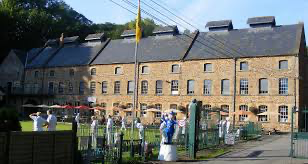
In the naval museum in Madrid they have a model of a tidal mill powering something like Ten saw blades and thereis a tidal mill here in Muros that powers a mill that I have forgotten what,still it was restored recentlyThere is a paper making place in Amalfi, Italy, entirely water powered. There was some electric conversion but the paper making process from cloth was superseded. The machinery could have been junked but eventually it got saved and is now a working museum. The water wheels turned shafts where large pegs in the shaft lifted a series of huge beams with a hammers on the end that dropped and pounded the cloth to pulp.
It was such a simple but fascinating process.
Museo della Carta
The OPs video reminds me of the Dutch saw that revolutionised shipbuilding in Holland, at the start of their “Golden Age”, also water powered. Hedrick Hendricks, IIRC invented the mechanism that inched the wood into the reciprocating saw blade.
Which reminds me that I got drawn into the Tally Ho project with the ship saw reconstruction: Restoring a HUGE vintage Ship Saw _ BandsawThere is a paper making place in Amalfi, Italy, entirely water powered. There was some electric conversion but the paper making process from cloth was superseded. The machinery could have been junked but eventually it got saved and is now a working museum. The water wheels turned shafts where large pegs in the shaft lifted a series of huge beams with a hammers on the end that dropped and pounded the cloth to pulp.
It was such a simple but fascinating process.
Museo della Carta
The OPs video reminds me of the Dutch saw that revolutionised shipbuilding in Holland, at the start of their “Golden Age”, wind powered. Google Search Invented the mechanism that inched the wood into the reciprocating saw blade.
Edit
Name corrected and wind powered not water.
Thanks,interesting how the economy functioned!….Here in Galicia there are many small water ills,one hamlet we lived in over one winter there was a small water mill about the size of two garden sheds.Eachresident had a fixed time to use the mill to grind their grain,Cornor maize is still grown for personal use as feed for chickens and cooking……not far from where we live now is a water powered blacksmith shop were the water works a hammer and various belt driven gizmos……now a restaurant,still it’s maintainedWe live in an ex-Water Mill - about 250 year sold. It is unrestored but the mill ponds, races, sluices and machinery are still there in sufficient quantities to work out what was what (the machinery is roughly the same size as the sawmill in the video).
The mill building (now our living room) is about 40 feet high to allow the water sufficient drop and to accommodate the water wheel. The upper road (originally a farm track) allowed the horse and cart to pull up to the top level and offload the grain which would work its way down as it was processed - only to be collected by the same cart which had been taken down the track (now our drive) to the bottom.
All of the mills locally were owned and run by either royalty or, more often, the Bishops. There farmers had to rent the fields and tend / cut the crops, they would then be instructed to take them to a particular mill at a specified time / day. Any crop losses were shouldered by the farmer even though it was the Bishop's grain being sown on the Bishop's land.
The grain price was determined by the Bishop after cutting and after milling and once land rents had been deducted.
Restoration is an ambition.
Water-driven tenderising?Thanks,interesting how the economy functioned!….Here in Galicia there are many small water ills,one hamlet we lived in over one winter there was a small water mill about the size of two garden sheds. Each resident had a fixed time to use the mill to grind their grain, Corn or maize is still grown for personal use as feed for chickens and cooking……not far from where we live now is a water powered blacksmith shop were the water works a hammer and various belt driven gizmos……now a restaurant, still it’s maintained
We live in an ex-Water Mill - about 250 year sold. It is unrestored but the mill ponds, races, sluices and machinery are still there in sufficient quantities to work out what was what (the machinery is roughly the same size as the sawmill in the video).
The mill building (now our living room) is about 40 feet high to allow the water sufficient drop and to accommodate the water wheel. The upper road (originally a farm track) allowed the horse and cart to pull up to the top level and offload the grain which would work its way down as it was processed - only to be collected by the same cart which had been taken down the track (now our drive) to the bottom.
All of the mills locally were owned and run by either royalty or, more often, the Bishops. The farmers had to rent the fields and tend / cut the crops, they would then be instructed to take them to a particular mill at a specified time / day. Any crop losses were shouldered by the farmer even though it was the Bishop's grain being sown on the Bishop's land.
The grain price was determined by the Bishop after cutting and after milling and once land rents had been deducted.
Restoration is an ambition.
So much of our conservation area property was built before present day planning controls existed. Owning protected property has been made anightmare. The result is that it's not unknown for them to be destroyed by fire and development of the site can then take place. Building a new watermill would take a decade to acquire necessary approvals and be financially impossible.All of the mills locally were owned and run by either royalty or, more often, the Bishops.

A new watermill...Building a new watermill would take a decade to acquire necessary approvals and be financially impossible.
There is a paper making place in Amalfi, Italy, entirely water powered. There was some electric conversion but the paper making process from cloth was superseded. The machinery could have been junked but eventually it got saved and is now a working museum. The water wheels turned shafts where large pegs in the shaft lifted a series of huge beams with a hammers on the end that dropped and pounded the cloth to pulp.
It was such a simple but fascinating process.
Museo della Carta
Edit
Name corrected and wind powered not water.