Volvo Penta 2003t Coolant Disappearing

long_ben

Member
Joined
19 Apr 2020
Messages
38
Visit site
Hi everyone,

Just wanted to tap the hive mind regarding some MIA coolant. I'm not entirely incapable on the mechanical front, but I am relatively new to marinised Diesel engines. Now, I have a Volvo Penta 2003t in my Trident Voyager 35. Of late, the coolant seems to be vanishing into... well... somewhere. I suspect it's crossing over from the 'sealed' coolant side to the raw water side somewhere as I see no sign of Volvo Green in the bilge - the question is where? I'm just about to embark on a yearly service of the engine - filters, fluids, impeller - and I've added a service of the heat exchanger onto the menu - not least of all as I'm on the South coast and the chalky waters here are pretty well renowned for clogging stuff up. I'm guessing that - or maybe hoping that - the seals have given up in the exchanger and this is the cause of the issue. Is there anywhere else that I could be losing coolant into the engine?

Thanks in advance... Ben :-)
 
Is there anywhere else that I could be losing coolant into the engine?

One possible cause might be a head gasket leak, which would lose coolant. Unlikely to be the oil cooler. Could be the heat exchanger.

When you've got the heat exchanger off, there are two potential reliability issues which are worth checking very carefully. Firstly, the alloy oil cooler is prone to corrosion; if it corrodes right through, the engine empties its sump into the bilge, with major consequences. The second potential issue is the external steel pipe which takes high pressure oil to the turbo; if this corrodes, pinhole leaks can develop which will empty the sump and, well, you know the rest. Again, worth looking carefully at this pipe.

Whenever you disturb the plumbing on a 2003T, it's well worth fitting new rubber sealing rings. These come in different sizes which are almost indistinguishable, so it's best to look at the parts diagram and note exactly which rings are needed for each bit.
 
Hmmm... thats interesting. It does seem a little more sluggish to start than it has been previous. Possibly worth investigating the head gasket. Thank you.

I've not seen any sign of oil in the bilge at any point but I'll definitely have a look into the oil cooler situation. And the pipe as well. I seem to recall reading somewhere there are some aftermarket fixes for this - certainly the oil cooler anyway...

I'll start with the heat exchanger and check up on the oil cooler and turbo feed at the same time. Amazing. Thanks again.
 
As the engine is new to you (and you're not mechanically averse, as you say!) there's a few general things to try (before you start taking it apart):
- Compression test
- Check the oil (extract a little and look for emulsion - you can even send it off for a lab test, although that's more trendy in the States than here!)
- Pressure test (if you can do that easily - might help identify a leak or confirm the extent?)
- etc.

I don't actually know the engine, so take @pvb's advice as authoritative... But I'm always of the mind that, while everything is still working, may as well conduct the most thorough 'health check' that your tools will allow, if anything just to build some familiarity with the engine and its systems. Then obviously start taking bits apart and a bit of 'diagnosis by replacement' with seals, etc...
 
Don't know about this model, but pretty common on VP engines is that the exhaust elbow starts to become blocked, causing back-pressure to push raw water back into the heat exchanger, thus corroding the aluminium away resulting in a hole between the coolant system and the exhaust manifold.
 
Really silly, but based on experience. Have you checked the cap on the header tank. If it is not pressure tight then it can allow the fluid to boil away - or coat the engine compartment with evaporated fluid.
Replacing ours bought respite. But the Volvo goblins had more excitement planned for us.

Do you still have the Volvo heat exchanger? The one with the funny rubber gaskets?
It is probably the gasket at either end of the HE body.

We had this, umpteen crises and near misses. It eventually died catastrophic ally.
Real and final event was having to motor overnight from Milford to Falmouth. Smell of hot fluid and steam. Limped to Newlyn

On the internet got a new more conventional heat exchanger and fittings couriered to us.
Replaced it with the conventional heat exchanger. Never looked back.
 
Okay... so... thats quite a bit of information. It looks to me like I might want to consider aftermarket oil cooler and heat exchanger at some point regardless of the outcome of this. Can anyone who has done this point me in the direction of a supplier for an aftermarket oil cooler or heat exchanger?

I will be compression testing the engine while I'm rooting around in the compartment. Pressure testing I hadn't considered but thats a good plan. Will see if I can source a pressure tester to hire locally or a friendly mechanic.

In an ideal world, its going to be the seals in the HE. But I have been warned previous that there are some known issues with the 2003T, so I'm prepared for whatever might come of this.
 
Do you use the cold start procedure?

I don't. Or haven't yet. I wasn't actually aware that there was one. I couldn't find any obvious signs of a preheat so I tend to leave the ignition on for a short while before starting. Once it's been started once, it starts every time with no labouring whatsoever. The more I think about this, the more likely it seems that its a HE issue. I've had head gaskets go on other vehicles and it doesn't seem to be behaving like it's lost compression. If I hadn't kept checking the fluid levels then I doubt I would have noticed until the engine overheated and the head gasket did blow or worse...
 
I can confirm that the cold start procedure has eliminated any sign of sluggishness... thats quite remarkable. Very effective indeed...
 
  • Like
Reactions: pvb
Presumably as there is no sign of it in the bilges or expansion tank so heat exchanger would be a reasonable culprit

If you are not finding any contamination of the normally which is indicated by an increase in oil level and or oil going milky this would also confirm heat exchanger
The copper pipes are held in compression so loosen both ends before removing and order new seal rings
A compression test requires removing the injectors involving special tools and access to workshop manual
 
Okay... so... thats quite a bit of information. It looks to me like I might want to consider aftermarket oil cooler and heat exchanger at some point regardless of the outcome of this. Can anyone who has done this point me in the direction of a supplier for an aftermarket oil cooler or heat exchanger?

In my view, that's absolutely the last resort. As long as Volvo Penta replacements are available, go that route.
 
I also own a 2003T and had lots of problems, had the internal cooling system several times apart.
So did you vent your cooling system, the vent screw is next to the turbo. it the screw almost in the middle on top of the engine next the turbo.
Do you have an immersion heater? You could loose fluid there. Did you see any bubbles in the header tank? open the cover of the header tank and look for greeze.
The previous owner of my boat dropped the gasket under the thermostat into the cooling system and it was milled by the water pump....little tiny pieces . The pipe which goes on top of the engine has a shim inside, to reduces the 15mm diameter down to about 3 mm., just for info. The system takes almost 6 liters of antifreeze . If it was not proper vented you get all kinds of problems. (air in the system)
Because of all the problems I changed the temperature switch to a digital sensor. The temperature is 74 plus minus 2 degrees, unbelievably stable, even by motoring 10 hours.
The pressure of the cooling system is much lower then the oil pressure, that means oil gets into the cooling not the other way around.
To fix my problem I took off the thermostat and connected a dive bottle with 200bar and blew air into the engine and had at the output a filter. There I collected all the little rubber pieces and pieced the pieces together. By that I figured the size of the gasket....
In case you take it all apart you need new rubber rings, be aware y two types of rings which are looking the almost the same.
The previous owner glued with epoxy one of the injectors, that fix was ok for a number of years. When steam came out I had to take the head off ....by this exercise the valves were grinned. My engine doesn't smoke anymore. It´s a fairy tale that VP´s smoke.
Keep your fingers away from the injectors, The injectors are in a cooper sleeve and you have good chances to pull the sleeve. There are no spare sleeves at Volvo anymore.
If you really want to take them out do it with a Volvo Penta specialist.
B...dy stupid to give somebody the advice which is not a VP diesel mechanic to take the injectors out in a Vp2003...if you really want to do it, you have to drain the cooling water first. I did the job together with a 60 year old polish VP mechanic in Poland....that guy is great, but he has fixed all his live diesel engines. He also fixed my cylinder head. He had special tools to take out the injectors....at the end we removed the head. He had a milling tool to clean the sleeves....The head was overhauled by him. He is the official service mechanic of VP in Szczecin. I keep my boat in Szcecin in the saling centre.
 
Last edited:
Keep your fingers away from the injectors, The injectors are in a cooper sleeve and you have good chances to pull the sleeve. There are no spare sleeves at Volvo anymore.
If you really want to take them out do it with a Volvo Penta specialist.
B...dy stupid to give somebody the advice which is not a VP diesel mechanic to take the injectors out in a Vp2003...if you really want to do it, you have to drain the cooling water first. I did the job together with a 60 year old polish VP mechanic in Poland....that guy is great, but he has fixed all his live diesel engines. He also fixed my cylinder head. He had special tools to take out the injectors....

So much rubbish here! Spare injector sleeves are still available (at least they are in the UK!). There's no need to drain the coolant before removing an injector - I know, I've done it. And you don't have to have special tools to remove the injectors.

Link to spare injector sleeves here - https://www.volvopentashop.com/vols...eDieselEngines/7726000/7726000_21/7726000_059
 
So much rubbish here! Spare injector sleeves are still available (at least they are in the UK!). There's no need to drain the coolant before removing an injector - I know, I've done it. And you don't have to have special tools to remove the injectors.

Link to spare injector sleeves here - https://www.volvopentashop.com/vols...eDieselEngines/7726000/7726000_21/7726000_059
[can’t think of a better way to say than
If you really want to take them out do it with a Volvo Penta specialist.
B...dy stupid to give somebody the advice which is not a VP diesel mechanic to take the injectors out in a Vp2003...if you really want to do it, you have to drain the cooling water first. I did the job together with a 60 year old polish VP mechanic in Poland....that guy is great, but he has fixed all his live diesel engines. He also fixed my cylinder head. He had special tools to take out the injectors....at the end we removed the head. He had a milling tool to clean the sleeves.

The OP has asked for advice not a a lecture on disregarding the correct procedure just because you were lucky once
 
In my view, that's absolutely the last resort. As long as Volvo Penta replacements are available, go that route.

I think you've popped up on every question I've raised here with regard to my 2003T, so I definitely trust your judgement on this one. I did have a look into the idea earlier and discovered that its a fairly easy job with the oil cooler but possibly less so with the HE. I was wondering why, given your concerns about the relative fragility of the OEM one, you wouldn't go - for instance - with a preemptive move to a bowman oil cooler?

My current plan for diagnosis is as follows... proceed with oil and fuel filter change. Check oil when changing that for any sign that there has been an escape of coolant into that side of things. Replace impeller also. Strip and descale HE, and check for damage at the same time.

From there, I kind of anticipate two possible routes. One, where the oil gives cause for concern and I end up doing a top end rebuild. Not the end of the world and I can regrind the valve seats at the same time. I was almost considering a top end rebuild earlier just while I was in the process of taking things apart. But I'm going to stick with an if it ain't broke approach on that one. It seems like the compression is fine anyhow so I'm pretty sure that the gasket is okay.

And the other route is a HE issue. The HE is the one with two O rings and paper gasket for the end of the housing. I'm hoping one of those rings has given up. Failing this I suppose it's a case of sourcing a new (possibly second hand) HE matrix.

I forgot to mention earlier that I already have a drip coming from the raw water system which is doing a stunning job of dissolving one of the engine mounts. So I have included a full set of water pipe seals into this as I need to resolve that problem as well and I think this is just my engines way of giving me a gentle prod into giving it the love it so desperately needs. Poor thing only gets used to get in and out of the marina, but having sailed in here on one occasion in higher winds than I'd have liked after a fail to start... I think I'd like it in fine fettle even for it's limited duties.
 
Had similar issue with same engine but the non turbo version. Was a very long time ago so may have some of the details wrong.
Off up west coast on holiday and expansion bottle levels all over the place. At times it was over full but mostly went low then empty. Was told to expect cylinder head issues but it was not that in the end.

Turned out to be the heat exchanger. Depending on engine revs water was going either way between sealed and raw cooling. Seemed to be that depending on revs which system had the highest pressure at any point but mostly it emptied the sealed system. Hope that makes some sense !

If I remember correctly there can be issues with rubber seals but in my case it was an internal failure of the exchanger. The HE, in my case, consisted of a larger outer casing filled with small bore tubes. A failure of 2 of the tubes allowed a transfer of water from sealed to raw water side. Visited local engineer up near Oban who had a brand new exchanger on his desk just delivered that morning for another customer! Was quite a common issue I was told. Cost then a long time ago was over £500 for new one! As I didn't want to pay that nor wait for one to come from wherever I had the failed tubes blocked up so eliminating them from the system. Never saw any further issues and it remained that way permanently !
HE was checked by placing it (the barrel) in bucket of water and testing each small bore tube with airline while sealing off other end. Failed tubes then had solid steel rod forced in then ends also sealed up with some kind of high temperature glue. Hope this helps
 
The OP has asked for advice not a a lecture on disregarding the correct procedure just because you were lucky once

I was correcting, for the OP's advice, the incorrect information given by Frankklose.

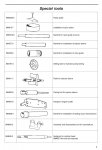
Replacement injector sleeves are available. I've no idea what you believe to be the "correct procedure" for removing injectors, it's not detailed in the workshop manual. And there are no special tools needed to remove the injectors; here's the workshop manual page listing special tools - do you see an injector removal tool?

tools.jpg
 
I think you've popped up on every question I've raised here with regard to my 2003T, so I definitely trust your judgement on this one. I did have a look into the idea earlier and discovered that its a fairly easy job with the oil cooler but possibly less so with the HE. I was wondering why, given your concerns about the relative fragility of the OEM one, you wouldn't go - for instance - with a preemptive move to a bowman oil cooler?

My current plan for diagnosis is as follows... proceed with oil and fuel filter change. Check oil when changing that for any sign that there has been an escape of coolant into that side of things. Replace impeller also. Strip and descale HE, and check for damage at the same time.

From there, I kind of anticipate two possible routes. One, where the oil gives cause for concern and I end up doing a top end rebuild. Not the end of the world and I can regrind the valve seats at the same time. I was almost considering a top end rebuild earlier just while I was in the process of taking things apart. But I'm going to stick with an if it ain't broke approach on that one. It seems like the compression is fine anyhow so I'm pretty sure that the gasket is okay.

And the other route is a HE issue. The HE is the one with two O rings and paper gasket for the end of the housing. I'm hoping one of those rings has given up. Failing this I suppose it's a case of sourcing a new (possibly second hand) HE matrix.

I forgot to mention earlier that I already have a drip coming from the raw water system which is doing a stunning job of dissolving one of the engine mounts. So I have included a full set of water pipe seals into this as I need to resolve that problem as well and I think this is just my engines way of giving me a gentle prod into giving it the love it so desperately needs. Poor thing only gets used to get in and out of the marina, but having sailed in here on one occasion in higher winds than I'd have liked after a fail to start... I think I'd like it in fine fettle even for it's limited duties.
If you are getting water in oil you may see increase in level and depending on how bad the oil goes milky and feels thinner
Sea water pump is usually shaft seals and/or worn shaft.but face gasket and retaining screw for cam are both known
The H/E is not the same as non turbo as you may already know and eye watering expensive if available
 
Top