VHF & AIS without an antenna?

Tim Good

Well-Known Member
Joined
26 Feb 2010
Messages
2,888
Location
Bristol
Visit site
For the last month my boat has been without a mast. The VHF antenna goes up the mast so the connector is just sat unplugged in the bilge.

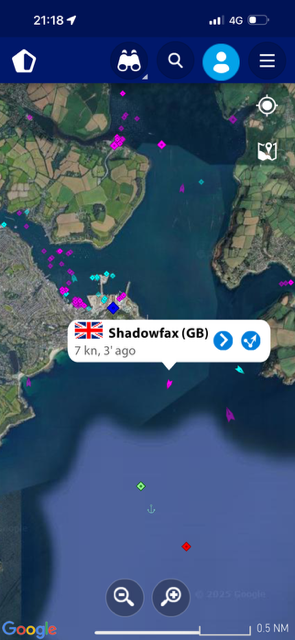
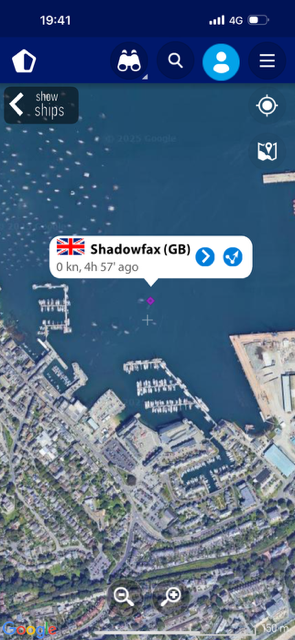
However I was out fishing the other day and a large super yacht spoke to me over VHF and I am appearing clearly on VHF and receiving AIS signals on my plotter.

Surely I’m not getting a decent enough transmission / signal purely via the cable running through the boat? But I am.
IMG_7086.png
 
quarter wave lenth is about 18 inch , so yes your coax from the back of the radio is acting as an efficient antenna
 
quarter wave lenth is about 18 inch , so yes your coax from the back of the radio is acting as an efficient antenna

Well I learn something new every day! And somewhere reassuring should I look my antenna or mast! Now motoring to Helford and still be received. IMG_7088.png
 
Hopefully you've not blown the PA. Any power that doesn't get radiated gets reflected back to the radio and causes heating.
 
Just goes to show that a minute amount of power or tiny receive sifgnal can be useful. I am not sure the portion of coax can be regarded as an antenna as described by jimmcgee however clearly some is getting out. (and in) However a piece of wire 18 inches long connected to the inner of the coax or output plug can work as an antenna. ol'will
 
When i fitted my onwa chart plotter ais transceiver i turned it on before connecting the ais antenna and the unit was on receive only. I discovered i could pick up vessels up to a mile away.
 
The coax will allow some radio waves to be transmitted, but not much. And, as @Refueler says, a lot of power will be reflected back into the output stages of the transmitter.

However, radio waves (like all electromagnetic waves) diminish in power as the inverse square of the distance from the transmitter. The power received 25 miles away is a 625th of the power received at 1 mile. Any properly installed VHF should reach 25 miles easily. So even if the set is radiating less than 1% of what is required to reach 25 miles, it will still be readable at a mile or so. Probably the bare antenna socket can radiate that much; VHF courses that use real equipment have to take great care with attenuators and interconnections to ensure that nothing is radiated.

As @William_H says, even a bare bit of wire about 18" long attached to the core of the coaxial cable will vastly improve the range. Stripping the shield off the coaxial cable would achieve that. It will also help if the wire is held vertically, as the radiation from a wire is perpendicular to the wire.
 
Just do not press to talk at 25W ..... you risk blowing the RF secion of the radio.
Indeed!

A disconnected feed line might radiate a little RF power, might transfer some RF energy through inductance somewhere, but not likely enough to prevent blowing up the finals or toroid coils unless the radio is designed with really responsive SWR foldback.

This is why you want a dummy load connected if there's no antenna.
 
Indeed!

A disconnected feed line might radiate a little RF power, might transfer some RF energy through inductance somewhere, but not likely enough to prevent blowing up the finals or toroid coils unless the radio is designed with really responsive SWR foldback.

This is why you want a dummy load connected if there's no antenna.
Or just switch it off!
 
Top