Varnish , Paint or Oil ?

Capt Popeye

Well-Known Member
Joined
30 Sep 2011
Messages
18,850
Location
Dawlish South Devon
Visit site
Well I have just sanded then Olied some timbers above the Water Line , first time that I have ever used an Oil , as have used Varnish or Paint for such applications ; Might say that the two timbers are looking most well after two days , very easy to apply and a One Coat with out Undercoats or Primer necessary .

I am now a Oiled surface geek now , its great stuff to use and one Bottle goes on and on , the brushes have not Dried up on me , the Paint Pot with its cover on still has Oil foating in it = very nice stuff to work with , I have found out ; can wipe any Oil thats gone onto the GRP off easily , no need for Thinners (so far) ; happy near end of season Skipper these days
 
Within a few weeks it will all have disappeared leaving your nice timber looking grey and miserable. Complete waste of time a you will become a slave to constantly refreshing it whereas if you used a suitable coating for external use such as Cetol 7 or International Woodskin you could admire it and forget about any further work for a few years.
 
Within a few weeks it will all have disappeared leaving your nice timber looking grey and miserable. Complete waste of time a you will become a slave to constantly refreshing it whereas if you used a suitable coating for external use such as Cetol 7 or International Woodskin you could admire it and forget about any further work for a few years.

Hi so guess thats a no no from you then for using Oil ; my timbers are quite dried out , bleached and grain raised a tad , so the Oil soaked up into the Timbers well and as you state will keep an eye on them , over time ; thanks for the advice and recomendations though {:-)#
 
Hi so guess thats a no no from you then for using Oil ; my timbers are quite dried out , bleached and grain raised a tad , so the Oil soaked up into the Timbers well and as you state will keep an eye on them , over time ; thanks for the advice and recomendations though {:)#
Have to agree with Tranona. I applied Deks Olje to my toe rails one weekend and on the following weekend could barely tell they had been treated. These had previously been varnished. At the same time I treated some new teak and that lasted far longer, presumably as the wood soaked the oil to a greater depth.

Since then I use Woodskin, which gives me a full season of protection and decent appearance in Greece.
 
I believe that Deks Olje is good at looking after bare wood, but isn't an aesthetic solution, however I've never used it.
There are plenty of varnishes that do a good job, my choice being Le Tonkinois.
The subject can be as divisive in some quarters, as a chat concerning anchors..........:cry:
 
I believe that Deks Olje is good at looking after bare wood, but isn't an aesthetic solution, however I've never used it.
There are plenty of varnishes that do a good job, my choice being Le Tonkinois.
The subject can be as divisive in some quarters, as a chat concerning anchors..........:cry:

Ha! Yes, it can be as divisive, although some people consider different opinions to be "argument" rather than discussion.

I used Deks Olje on the cockpit chart tables of my old Hallberg-Rassy 352. It looked OK for a while, then started to deteriorate, and in the end I stripped the whole off with Nitromors and simply treated it with Boracol to deter the algae and mould.
 
Would woodskin be hard wearing enough for the untreated teak leaves on my cockpit table?
Nope.. Its actually no better than varnish as give it 5 years regardless of how many coats and it flakes off , and that was on an easy to deal with wood - sapele.
the only way to deal with it then is to remove the whole lot.. If you chip a bit and apply more the colour will never match..
I think woodskin gets to the point where you have so many layers it loses its supposed flexibility and falls off.
Teak oil and other oils can be worse for the wood as they contain solvents which remove the natural oil, the pith wears away, the high bits get worn off and suddenly you have even less teak than if you left it grey..
Even cetol ends up with black dots under the coating, staining the teak.
Its grey wood or chose another wood ?
 
Would woodskin be hard wearing enough for the untreated teak leaves on my cockpit table?
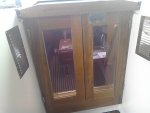
Based on my teak veneer cockpit table yes, although for the first 4 years I oiled it. However it is always covered as it is fixed and I have a cover that does the wheel, binnacle and table. 2 years ago I cleaned off the teak companionway doors which had also been oiled, but are exposed and coated in Woodskin Looked good so I did the table as well. Although the table is not exposed the doors are and still look good.

First photo shows the doors and second the cover. In the winter I have a full cover over the cockpit. Covers are to my mind one of the best investments you can make , particularly if you have teak seats and cockpit sole as well as bright finished wood.
 

Attachments

  • IMG_20201208_083321.jpg
    IMG_20201208_083321.jpg
    485.2 KB · Views: 29
  • IMG_20140101_014032.jpg
    IMG_20140101_014032.jpg
    956.9 KB · Views: 29
Have to agree with Tranona. I applied Deks Olje to my toe rails one weekend and on the following weekend could barely tell they had been treated. These had previously been varnished. At the same time I treated some new teak and that lasted far longer, presumably as the wood soaked the oil to a greater depth.

Since then I use Woodskin, which gives me a full season of protection and decent appearance in Greece.

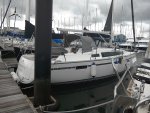
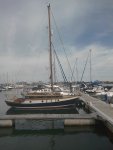
I used Deks Olje D1 nd D2 on the wooden mast of my Eventide - lovely Douglas Fir. Took ages and 2 tins of each to build up the recommended film thickness. Lasted a year, so stripped back to bare wood and used a Sikkens Novatek/Top 2 part woodstain which lasted over 15 years with one refresh, although in the last couple of years when the mast was in a rack the upper exposed part broke down. Before I sold the boat I stripped it back again and used Cetol Filter 7 over HLS Plus which looked great and should last around 10 years with maybe one reccoat.

Most of the rest of the brightwork on the boat is Woodskin, most well over 10 years old when these photos were taken, but it had been out of the water and under a polytarp
 

Attachments

  • IMG_20140101_020449.jpg
    IMG_20140101_020449.jpg
    779.6 KB · Views: 21
  • IMG_20190717_171849.jpg
    IMG_20190717_171849.jpg
    702.1 KB · Views: 22
Well many thanks for all the comments and suggestions , re the Oil ; guess that I will have to just see how my Oiled timbers fare ; might mention that they are cockpit rails so are under the cockpit cover unless boat in use ; thanks again CP
 
I am a supporter of oil but it depends on how you do it and what you do and the quality of the oil. Last year I used the 3 x Part Starbrite system for teak: 1. Teak Cleaner, 2. Teak Brightner and 3. Teak Oil on the cockpit teak trim, which had been bare teak for many years. The teak cleaned up very well with the first two products. The Part 3 Teak Oil took about 4 coats applied by wiping on with a rag. I have touched up once this summer with the rag and teak oil. It still looks great and is not sticky, very dry to the touch.

On a previous Rival 41C I used Dek Olje on the gunwale cap rail. It too was wiped on with a rag and allowed to soak in and wiped on again until it did not soak in and then the excess wiped off. That did produce a sticky residue in some places where I guess the excess was not sufficiently wiped off or it was left too late to wipe off. The Deks Olje did require top up every two months or so.

The difference between the cockpit trim and the toe rail is that the cockpit is mostly shaded by the cockpit cover as the boat faces south in the marina. The cap rail was always exposed and subject to the weather. This winter I will restore the teak finish on the cap rail on my boat and use the Starbrite system again.

In principle, I prefer teak oil and if you are happy to reapply regularly by wiping on with a rag until saturation and then wiping off excess before it starts to dry, then it can be a good solution if grey teak, varnishing and the Woodskin colour is not to your liking. One thing I have noticed is that a new tin of teak oil has less viscosity than older tins. Perhaps when the viscosity increases it impacts the ability of it to soak in or be more prone to pooling on the surface and therefore more likely to be sticky. Its certainly not apply and forget.
 
Last edited by a moderator:
Within a few weeks it will all have disappeared leaving your nice timber looking grey and miserable. Complete waste of time a you will become a slave to constantly refreshing it whereas if you used a suitable coating for external use such as Cetol 7 or International Woodskin you could admire it and forget about any further work for a few years.
I have a preference for Le TONKINOIS still for me the best varnish ever made.
 
There are some lovely varnished boats in the marina but they are like flowers that bloom only for a short while . They are covered up winter and summer.
 
I have a preference for Le TONKINOIS still for me the best varnish ever made.
Nothing wrong with that. However, the boat in my second post was bought in 1980 and for the first few years I used "traditional" varnishes but none of them were satisfactory unless constantly redoing. I changed after a major refit in 1992, first trying Deks Olje which as I said was a disaster in exposed areas although OK if protected such as under a cockpit cover. At about that time Richard Hares published the results of long term tests in Classic Boat and later PBO which showed the superiority of porous woodstains over conventional varnishes. Durability cannot be questioned. I have sheds, doors and bargeboards at my house coated in 2 part woodstains that were done in the 1980s that have never been recoated and are still sound. Downside is that older formulations are mostly heavily tinted and flat finish. However this has changed in the last few years and Woodskin now has only a light tint and the latest Cetol (as I used on the mast) is even better although more work to apply. These developments have come about because of the vast amounts spent on R&D for the construction market as a result of the increased use of non durable timber in buildings, particularly for external cladding compared with little specific development for the yacht market which is not only small but declining. all the new formulations aimed at boats coming from Hempel, Epifanes, International are spin offs from their construction businesses.

The trade off for the lack of glossy furniture finish of traditional varnishes is superb protection for the wood and long life. For me, no contest
 
Well many thanks for all the comments and suggestions , re the Oil ; guess that I will have to just see how my Oiled timbers fare ; might mention that they are cockpit rails so are under the cockpit cover unless boat in use ; thanks again CP
Will survive better under cover, in which case put plenty in and when dry and hard burnish with 1200 wet and dry. That is what I did initially with my cockpit table before changing to Woodskin.
 
Nothing wrong with that. However, the boat in my second post was bought in 1980 and for the first few years I used "traditional" varnishes but none of them were satisfactory unless constantly redoing. I changed after a major refit in 1992, first trying Deks Olje which as I said was a disaster in exposed areas although OK if protected such as under a cockpit cover. At about that time Richard Hares published the results of long term tests in Classic Boat and later PBO which showed the superiority of porous woodstains over conventional varnishes. Durability cannot be questioned. I have sheds, doors and bargeboards at my house coated in 2 part woodstains that were done in the 1980s that have never been recoated and are still sound. Downside is that older formulations are mostly heavily tinted and flat finish. However this has changed in the last few years and Woodskin now has only a light tint and the latest Cetol (as I used on the mast) is even better although more work to apply. These developments have come about because of the vast amounts spent on R&D for the construction market as a result of the increased use of non durable timber in buildings, particularly for external cladding compared with little specific development for the yacht market which is not only small but declining. all the new formulations aimed at boats coming from Hempel, Epifanes, International are spin offs from their construction businesses.

The trade off for the lack of glossy furniture finish of traditional varnishes is superb protection for the wood and long life. For me, no contest
The durability of Le Tonkinois is legendary, very hard wearing, used it as others have on cabin soleplates,.

Would recommend the OP checks out the spec. which surpasses modern copies.
The French Navy specified it for use on all their boats. (I know I know)
 
The durability of Le Tonkinois is legendary, very hard wearing, used it as others have on cabin soleplates,.

Would recommend the OP checks out the spec. which surpasses modern copies.
The French Navy specified it for use on all their boats. (I know I know)
You can't get the St. Tropez mirror finish (which comes with 10 plus coats of varnish each year) with Le Tokinois.
But for normal mortals, a couple of coats gets a very good finish - but no way will you ever get a perfect mirror finish however many coats you use.

It makes my varnish work look very good for the cack handed amateur I am.
 

Other threads that may be of interest

Top