Use of inverters on boats?

The highest current relay Victron make is 220a, not enough for a 3kw inverter load.

If that's a Battery Protect you're referring to, Victron specifically say not to use them to shut off an inverter. I can't remember exactly why, possibly back EMF?

I quite like the idea of shutting down on the AC side- a 13A 240v relay is only about £30. The idea would be to trigger it from the BMS. But I don't know enough about this stuff yet to actually make sure the parts talk to each other.
 
If that's a Battery Protect you're referring to, Victron specifically say not to use them to shut off an inverter. I can't remember exactly why, possibly back EMF?

I quite like the idea of shutting down on the AC side- a 13A 240v relay is only about £30. The idea would be to trigger it from the BMS. But I don't know enough about this stuff yet to actually make sure the parts talk to each other.

Victron do say it's best not to interrupt the high current DC side. So the inverter should be connected to the battery side of the battery protect. The battery protect has a set of relay contacts, which could indeed be used to trigger a 240v relay to isolate the AC input. If it was a Lithium installation the BMS can operate the battery protect too, so presumably the BMS would open the battery protect, which would in turn operate the relay to disconnect the inverter AC output. It would certainly be neater and easier to control everything with a Victon only system, but that does come at a price.
 
If that's a Battery Protect you're referring to, Victron specifically say not to use them to shut off an inverter. I can't remember exactly why, possibly back EMF?

I quite like the idea of shutting down on the AC side- a 13A 240v relay is only about £30. The idea would be to trigger it from the BMS. But I don't know enough about this stuff yet to actually make sure the parts talk to each other.
The relay I have is 250A and it going to be wired to the BMS to do just that . But not to shut off the inverter but to stop all loads , there never going to be a time when I be using a load big enough to reach 250A and I won't be using the inverter while under way so there not going to be a case when the batteries will shut down and I lost control of instrument.

Basically my V+ from the batteries will be going to the rely first then to a busbar and all loads will come off the busbar.
the relay live and ground will be connected to the BMS , if any of the cell go above V max or below v min it open the relay.
The charge from MPPT, shore charge and the B2b will be wired in another relay which will work the same .
I sure there other ways of doing it , but I think my way will work well with my system.
 
As Paul says it's best not to interrupt the high current DC side due to the back EMF and the arcking of the contacts.

What can be done is to cut the AC side first so the inverter will only be drawing the standby current then interrupt the low current draw DC side.

This is what I do manually by switching off the AC first before switching off my inverter using a DC supply relay
 
The relay I have is 250A and it going to be wired to the BMS to do just that . But not to shut off the inverter but to stop all loads , there never going to be a time when I be using a load big enough to reach 250A and I won't be using the inverter while under way so there not going to be a case when the batteries will shut down and I lost control of instrument.

Vic, if the inverter has a remote connection, you can also connect the relay to that circuit. It will put the inverter into standby. You'll want an alarm to tell you the relay has disconnected too, but you've probably already thought of that.
 
Vic, if the inverter has a remote connection, you can also connect the relay to that circuit. It will put the inverter into standby. You'll want an alarm to tell you the relay has disconnected too, but you've probably already thought of that.
Thanks Paul ,
will that a look at that if I buy a new inverter my old one doesn't , I just add when using any type of load through the inverter it only be used when we have plenty of power in the batteries and I be watching it constantly as I do now and always have done , real big
Lads will still be going through our inboard Gen ,
 
As Paul says it's best not to interrupt the high current DC side due to the back EMF and the arcking of the contacts.

What can be done is to cut the AC side first so the inverter will only be drawing the standby current then interrupt the low current draw DC side.

This is what I do manually by switching off the AC first before switching off my inverter using a DC supply relay
Interesting - I may have to reconsider my inverter to hot water element setup where the relay does switch the inverter on and off on the DC side
 
Also worth looking at the Cerbo GX and a GX touch 50 display, so you can monitor and control everything.
+1
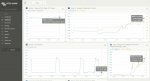
went the diy route on this and now have a raspberry pi 3b+ running Venus (Victron OS) and can get info from BMV, MPPT and Multiplus, nicely integrated for 70euro + three cables (two VEDirect-USB and a VEBUS-USB) OK, cables cost more than the raspberry with the touch screen, but still a fair amount less than the Victron kit.
Working for 2months now as of last week, data online (via a wifi repeater on boat) so I know what's happening onboard without walking the 500metres to the boat :cool:

V.
MiToS_Venus-29-12.jpg

and the analytics below (different screen fully configurable):
MiToS_Venus-29-12_analytics.jpg
 
Last edited:
Victron do say it's best not to interrupt the high current DC side. So the inverter should be connected to the battery side of the battery protect. The battery protect has a set of relay contacts, which could indeed be used to trigger a 240v relay to isolate the AC input. If it was a Lithium installation the BMS can operate the battery protect too, so presumably the BMS would open the battery protect, which would in turn operate the relay to disconnect the inverter AC output. It would certainly be neater and easier to control everything with a Victon only system, but that does come at a price.

OK now I'm a bit confused.
I thought the BP just sat between the battery and the load, and would cut that connection if it hit either the selected pre-set voltage, or was externally triggered by a BMS, depending on how it is configured.
Could you elaborate on what you mean by "the inverter should be connected to the battery side of the battery protect"?
 
OK now I'm a bit confused.
I thought the BP just sat between the battery and the load, and would cut that connection if it hit either the selected pre-set voltage, or was externally triggered by a BMS, depending on how it is configured.
Could you elaborate on what you mean by "the inverter should be connected to the battery side of the battery protect"?

Two reasons. We were discussing a 3kw inverter, which could draw 300a or so, more than the biggest BP is rated for (220a), but more more importantly, you don't really want to interrupt a 300a load if you can help it. Better to use the BP to shut the inverter down. It actually depends on what other equipment is fitted, as there may be other, possibly better, methods of shutting the inverter down.

If a Victron BMS is used there is no need for the BP, the BMS will protect the batteries, including from inverter discharge.

Looking back at some of Vics posts above, i see he's talking about a BMS and the BP, i have to wonder exactly what system he has planned and who designed it ?
 
Two reasons. We were discussing a 3kw inverter, which could draw 300a or so, more than the biggest BP is rated for (220a), but more more importantly, you don't really want to interrupt a 300a load if you can help it. Better to use the BP to shut the inverter down. It actually depends on what other equipment is fitted, as there may be other, possibly better, methods of shutting the inverter down.

If a Victron BMS is used there is no need for the BP, the BMS will protect the batteries, including from inverter discharge.

Looking back at some of Vics posts above, i see he's talking about a BMS and the BP, i have to wonder exactly what system he has planned and who designed it ?
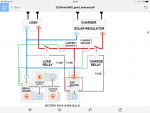
I going to use the 123smart BMS , it's not cheap , it as sensors to connecting relays to the BMS to open the relay if any of the cells go beyond what they are set at .
 

Attachments

  • IMG_3275.PNG
    IMG_3275.PNG
    277.2 KB · Views: 7
you could turn the inverter off using it's power on-off switch with a possible bit of hacking and soldering (did that on my previous Mobitronic) or using a dedicated remote connector (doing it on the Multiplus)
 
Two reasons. We were discussing a 3kw inverter, which could draw 300a or so, more than the biggest BP is rated for (220a), but more more importantly, you don't really want to interrupt a 300a load if you can help it. Better to use the BP to shut the inverter down. It actually depends on what other equipment is fitted, as there may be other, possibly better, methods of shutting the inverter down.

If a Victron BMS is used there is no need for the BP, the BMS will protect the batteries, including from inverter discharge.

Looking back at some of Vics posts above, i see he's talking about a BMS and the BP, i have to wonder exactly what system he has planned and who designed it ?

Ah OK- you were talking about using a BP instead of a BMS.

There are so many different approaches you can take, no wonder people get confused (me included!). Maybe over time a sort of standard installation will emerge?

I am going to go with a very low tech approach of having a set of four voltmeters- one per cell- in a prominent position, so that I can be my own BMS. I will have other safeguards as well of course, but for a few quid it seems a sensible precaution.
 
Ah OK- you were talking about using a BP instead of a BMS.

The thread has wandered off in a few different directions, so it's got a little muddy here and there.

There are so many different approaches you can take, no wonder people get confused (me included!). Maybe over time a sort of standard installation will emerge?

Absolutely, we're a World apart from the usual 1-2-B switch and VSR thread here :) I don't see a standard installation coming along though. It's tricky talking about a single component in isolation, because its usage can vary from one setup to another, or even not be required.

For instance, you could specify a Victron system with inverter, charger, two battery banks etc and specify a couple of Battery Protects but how to shut the inverter down will depend on the inverter, to some degree. If it is a Victron inverter you can have it shut itself down or you could trigger the remote from the BP. Add something like a Cerbo GX and the whole dynamic changes. Change the batteries for Lithium and fit a BMS and it's all different again, no need for the BPs for a start.

I am going to go with a very low tech approach of having a set of four voltmeters- one per cell- in a prominent position, so that I can be my own BMS. I will have other safeguards as well of course, but for a few quid it seems a sensible precaution.

Given the cost of the batteries, isn't it worth spending just over £200 on a proper BMS ? The Victron one will look after the Lithium batteries, the engine battery, act as a battery combiner, protect the alternator etc
 
That's pretty poor Richard, much worse than the documentation states, have you spoken to Sterling about this ?

I'm not sure whether I have spoken to them specifically about this Paul.

I gave up on Sterlings after sales service shortly after I bought it from them in 2011 as a refurbished model. Within 6 months a couple of capacitors burned out and Charles Sterling agreed to provide completely new internal s for £125. For an "easy life", I agreed to this, despite the fact that it should have been for nothing. Then, having confirmed my agreement, I was told that Sterling should not have agreed this with me and they wanted £700 or so. I threatened them with legal action, and they agreed to honour what he had agreed.

I have actually mentioned this 4A useage a few times, and have come across a few people who have experienced similar, so I put it down to sales guff, and havent believed a word sterling say since.

I did buy their Pro Charge Ultra charger, as it was the only one at the time that had the custom setting that suited my situation. You may recall my debacle a month or so ago when a fuse blow. Yet again Sterling spouted bollocks in his after sales service, but I avoided believing him and, between yourself and others here, and some on the canal forum, it was a simple solution, and it continues to perform.

I have started to buy "Blue", and will probably do so from now on :)
 
I'm not sure whether I have spoken to them specifically about this Paul.

I gave up on Sterlings after sales service shortly after I bought it from them in 2011 as a refurbished model. Within 6 months a couple of capacitors burned out and Charles Sterling agreed to provide completely new internal s for £125. For an "easy life", I agreed to this, despite the fact that it should have been for nothing. Then, having confirmed my agreement, I was told that Sterling should not have agreed this with me and they wanted £700 or so. I threatened them with legal action, and they agreed to honour what he had agreed.

I have actually mentioned this 4A useage a few times, and have come across a few people who have experienced similar, so I put it down to sales guff, and havent believed a word sterling say since.

I did buy their Pro Charge Ultra charger, as it was the only one at the time that had the custom setting that suited my situation. You may recall my debacle a month or so ago when a fuse blow. Yet again Sterling spouted bollocks in his after sales service, but I avoided believing him and, between yourself and others here, and some on the canal forum, it was a simple solution, and it continues to perform.

I have started to buy "Blue", and will probably do so from now on :)

Thanks for sharing that Richard. "Back in the day" Sterling equipment was probably as good as the competition and you could phone up and speak to Charles snr, seemed decent enough. Those days are behind us now i'm afraid. I cringe a little when i read most of their sales blurb, it's just a load of bollox. I've also got a Pro Charge Ultra fitted to my boat, it's a few years old and has performed well <touch wood>, but i won't be replacing it when it dies, it'll be a Victron unit.
 
Top