Upper cylinder lubricant - worth using or just a con?

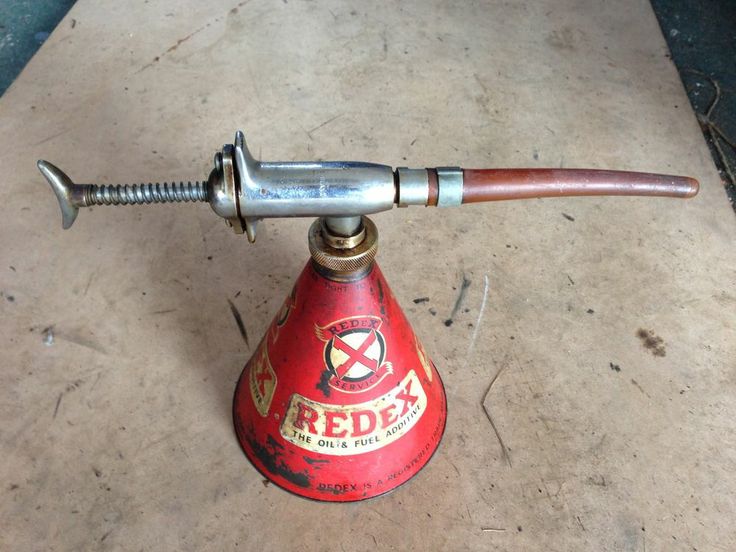
Used to be popular in olden times. Anyone remember the conical squirty cans of Redex at petrol stations?

277d83dfda4de4fb2776ccc349096f5b.jpg
 
It does what is says on the tin. I don't think it is as necessary today as it was 30 or 40 years ago when tolerances on engines were not as good and fuel additives were not used. Although with the removal of lead.....
But when did you last hear a car engine pink :)

My dad always bought an extra squirt of UCL when he filled up in the 'old' days
Regards
Donald
 
But the Op is asking about using UCL in his diesel engine.

Unnecessary, I d think, but whats available these days seems to be a UCL and injector cleaner. Some merit perhaps in adding it as an injector cleaner now and then ??????


I'd think looking at treatments/ preventatives for diesel bug might be more worthwhile than UCLs
 
It does what is says on the tin. I don't think it is as necessary today as it was 30 or 40 years ago when tolerances on engines were not as good and fuel additives were not used. Although with the removal of lead.....
But when did you last hear a car engine pink :)

My dad always bought an extra squirt of UCL when he filled up in the 'old' days
Regards
Donald

I think you're confusing petrol and diesel engines.

You wouldn't hear a modern car engine pink for several reasons, one being that many are diesel, another that all the petrol engines have ECU's that control ignition timing extremely accurately, not something that could be said of the old mechanical advance dissy's with badly set points of old.

To the OP, upper cylinder lubricant is quite unnecessary in any engine newer than about 30 years old.
And even in older engines than that, it's extremely debatable whether there's any benefit.
Certainly in diesel engines any such lubricant just becomes fuel the first time the piston rises on its compression stroke.
 
When I first joined the research company of a major oil company I was working in a laboratory next door to a man who assessed every product that was supposed to improve upon the standard fuel or lubricant's properties. This was a full time job for him as in those days there were hundreds of them, often featured in news documentaries and suchlike with the assertion that the oil companies were going to buy the company and shut it down as the effect upon their sales was going to be so drastic. Many of these were UCL types such as Redex, Slick 500, STP etc. As ever with the company the job was done properly, using test cars that would be assessed internally before and after the tests. All gasoline engines as far as I know. In some cases the products reacted with additives in the lubricant and had a harmful effect.

He told me that he only ever found one product that made any positive difference, although in a modest way. That was a small fitting that held a metal gauze across the inlet between the carburettor and manifold, supposed to improve 'atomisation' of the incoming fuel mixture. It seems this thing did improve economy at low revs but was quite a restriction at higher throttle openings, which impacted quite severely on top speed.

Those days are long gone, unfortunately, and the research centre along with them.
 
When I first joined the research company of a major oil company I was working in a laboratory next door to a man who assessed every product that was supposed to improve upon the standard fuel or lubricant's properties. This was a full time job for him as in those days there were hundreds of them, often featured in news documentaries and suchlike with the assertion that the oil companies were going to buy the company and shut it down as the effect upon their sales was going to be so drastic. Many of these were UCL types such as Redex, Slick 500, STP etc. As ever with the company the job was done properly, using test cars that would be assessed internally before and after the tests. All gasoline engines as far as I know. In some cases the products reacted with additives in the lubricant and had a harmful effect.

He told me that he only ever found one product that made any positive difference, although in a modest way. That was a small fitting that held a metal gauze across the inlet between the carburettor and manifold, supposed to improve 'atomisation' of the incoming fuel mixture. It seems this thing did improve economy at low revs but was quite a restriction at higher throttle openings, which impacted quite severely on top speed.

Those days are long gone, unfortunately, and the research centre along with them.

I'm sure I saw that gauze atomiser thing on Tomorrow's World! There was also a gadget that sprayed a water mist into the carburettor that was supposed to work wonders. It also seems to have never come to anything.

Anyway, thanks to you and the others. I think I'll save my money!

What brought it to mind was that on big marine diesel engines (eg Burmeister & Wain) we had a system to inject some kind of lubricating oil directly into the cylinders above the piston. It was a long time ago but I seem to remember this was not the same oil as used for general engine lubrication and I think it was a reddish colour. Made me think of Redex.
 
What do you think?

My engine is a BUKH DV10, in case that makes any difference.

Not for UCL but worth adding a little 2 stroke oil (500:1) to diesel to provide lubrication in the fuel system; lubrication which many believe is lacking in modern low sulphur diesel fuel especially if road diesel is used.
 
I put 1/4 tank of petrol in my diesel car then realised what I had done. I filled up with 3 l if engine oil and the rest diesel. The car did another 100000 miles with no probs. So the previous point about adding lube to diesel may have merit
 
The Albin / AilsaCraig /Volvo C5/10 side valve engines All benefitted from UCL directly to the valve guides to prevent valves sticking when run at idling for longer periods but that was 50 years ago
 
When I first joined the research company of a major oil company I was working in a laboratory next door to a man who assessed every product that was supposed to improve upon the standard fuel or lubricant's properties.
Those days are long gone, unfortunately, and the research centre along with them.

In the early 70s I worked for Shell Research in Egham although I don't think anyone there was doing research on fuel. It was at the time of the miners' strike and the 3 day week and for a few weeks my working days were Friday, Saturday and Sunday because the site had no leccy during the rest of the week. :)

Richard
 
Last edited:
I put 1/4 tank of petrol in my diesel car then realised what I had done. I filled up with 3 l if engine oil and the rest diesel. The car did another 100000 miles with no probs. So the previous point about adding lube to diesel may have merit

Adding engine oil to fuel is not recommended as unlike 2 stroke oil it does not readily burn and leaves a residue.
 
Not for UCL but worth adding a little 2 stroke oil (500:1) to diesel to provide lubrication in the fuel system; lubrication which many believe is lacking in modern low sulphur diesel fuel especially if road diesel is used.


I've got loads of 2-stroke oil; more than I'll ever need. I'll give it a try.
 
Adding engine oil to fuel is not recommended as unlike 2 stroke oil it does not readily burn and leaves a residue.
A diesel engine will burn anything that can go through the pump and injectors! Simplistically speaking, engine oil is just thicker fuel oil! A hydrocarbon is a hydrocarbon!
S
 
Used to be popular in olden times. Anyone remember the conical squirty cans of Redex at petrol stations?

277d83dfda4de4fb2776ccc349096f5b.jpg

Yes. When I were but a slip of a lad around 1970 I worked on a garage forecourt serving fuel. 2 star was 32p/gallon - 3 star 34p - 4 star 35p - and 5 star a whopping 36p! (ish). Each squirt of Redex was 1p extra unless you regularly gave me a tip, in which case I would let you off.
Common users of the ucl were motorbikes and an old Gent with a Princess 4 litre R who always parted with, "Keep the change".
Most enjoyable job I've ever had. Before Esther Rantzen taught everyone how to abuse people in retail.
 
Yes. When I were but a slip of a lad around 1970 I worked on a garage forecourt serving fuel. 2 star was 32p/gallon - 3 star 34p - 4 star 35p - and 5 star a whopping 36p! (ish). Each squirt of Redex was 1p extra unless you regularly gave me a tip, in which case I would let you off.
Read more at http://www.ybw.com/forums/showthrea...using-or-just-a-con/page2#r50gSlo7DOmFoUUX.99


+1 - I remember the forecourt Redex 'squirter' and my last memory of such was a bit before that when petrol was 6sh. and 8p per gallon ( or 8p per litre equivalent)- which roughly converts to 33-34p per gallon :)
 
Top