Under mattress dampness

  • Thread starter Thread starter KAM
  • Start date Start date
It's a very dry boat normally. 2 mushroom vents and two venti lites and vented wash boards. I can leave cushions and bedding aboard all winter. It's wood lined and has a grp headlining with air gap. There's sometimes a bit of condensation on hatches and frames, spring and autumn, in the morning but overall very dry.

Here's a rather off-beat possibility.
I experienced condensation under a mattress in the forecabin. After using pipe insulation, and that not solving the problem, I realised there was a very slow-dribbling leak from one of the fixings of the pulpit.
 
Haven't got a lot of head room so just cut a camping mat into strips and glued to the locker tops. It seems to have cured the condensation or sweeting I used to get. Just gives enough space for the air to flow I assume
 
Best and cheapest way to sort the problem that we found is to use the interlocking foam floor tiles that are about 10-12mm thick and 2’ square. Cuts easily to shape and allows easy access to lockers underneath.
 
Just to clarify for readers tha may not understand the OP's issue.

Ventilation alone is generally enough when the boat is unoccupied, but when living on the boat, you breath, cook, perspire and so forth. In addition to that, when you sleep, perhaps a 0.5-1 pint of water vapor enters the mattress. Some goes up, but some goes down and can condense on the cold base under the mattress, which has un-heated air under it. This is far different from you home, where there is warm, dry, moving air under the bed.

The solutions are:
* ventilation between the mattress and bunk (moves the moisture)
* sealed insulation under the mattress (eliminates the cold surface)
* sealed matress (moisture must go up)

Each method has fans. They all work.
 
Would a dehumidifier unit not assist running when on board to remove moisture when on board on basis mattress not in use when crew ashore and mattresses can be left on side? Would taking some mattress home to dry out assist or changing mattresses with newer version ?
 
I fitted wooden slats which have rubber end couplers which allow the slats to stand off. It came from Compass24 but the current one looks a little different. Anyway, it works a treat https://www.compass24.com/comfort/s...350/bedflex-marine-single-bed-system?c=108408

We fitted these when we bought the boat in our cabin but used the dry mat stuff in the other two cabins. The slats are excellent, they improve comfort and prevented condensation even when we were living aboard full time. Not cheap but if I were doing it again and had time, I’d make my own using Ikea slats and rubber blocks.
The secret is getting enough space between the locker top and the mattress: you need 2.5 - 3 cm to allow overnight perspiration to escape. Less than that in a winter environment with low temperatures and high humidity and you’ll get condensation.
Stop gap is, as others have said, is to prop the mattress up during the day.
 
Thanks for the opinions. It's clear it would be a bad idea to cut the bunk sides and increase ventilation from below. I think insulation and sealed hatches is the way to go. I'll try slats if that doesn't work.
 
The OP does not mention if the boat &/or cabin are themselves well ventilated. Clearly, such devices are unlikely to be a solution if the moisture has nowhere to go.

My early sailing experiences were exclusively on Glenans courses, where every berth was filled, so plenty of bodies to exude water vapour. There were three solutions to condensation:
1. The mattresses were vinyl-covered
2. Scuttles and hatches were opened on "ventilation setting" where possible, and
3. The washboards were never put in.
 
Thanks for the opinions. It's clear it would be a bad idea to cut the bunk sides and increase ventilation from below. I think insulation and sealed hatches is the way to go. I'll try slats if that doesn't work.

Yes, I was thinking of buying a few of these https://www.amazon.co.uk/Bodypower-...ocphy=9044925&hvtargid=pla-700041135748&psc=1 bonding them down with contact adhesive after cutting around the lifting hatches. I assume they are closed-cell foam so would insulate and not absorb any moisture.

Www.solocoastalsailing.co.uk
 
1" PIR foam from a builders stuck underneath the base of the beds has made a major difference on my boat. Just buy the sheet, cut it into small pieces to fit the shape of the bed base and so you can get it through the locker hatches, strip the aluminium foil off one side and just use any of the sealant gun adhesives (Stick like sh1t). Cover the locker hatches as well. Condensation occurs when warm air meets a cold surface, so just get rid of the cold surface.
 
Just reporting back. This year I tried a waterproof membrane on top under the upholstery. Seems to work very well and a bit obvious really. Preventing body moisture contacting colder air. I bought some waterproof mattress covers from IKEA. Sounds like it might be sweaty but very nice to sleep on and much more effective than the mesh or anything else I've tried.
 
You are asking the right question!

This depends on the boat. Cored hulls have a big advantage here; my last boat never sweated, my new one does, and the difference is core thickness. Condensation happens when you have more humidity (sleeping--evaporated moisture goes through the mattress) or a lower temperature.

My last boat had vinyl covers on the mattress, with a foam topper over that. As a result, moisture did NOT go through the mattress and there was zero condensation under the mattress, down to 0F (and the bunk was on a cat bridge deck, with outside air under it!). The interface between the topper and the mattress was too warm for condensation. The topper provided all the breathability I needed.

I'm more of a believer in controlling the temperature of the interface and avoiding dew point surfaces than in ventilation. You ever try to prevent a glass of ice water from sweating by blowing on it? Good luck. But an 1/8" of insulation works. So insulate the cold surface, being certain to seal the insulation so that air does not get under it.

Well you give me some hope that I won't have this problem as I have a cored hull (Airex) and cored deck (Divinycell)

I also have X6 dorade vents' I'm wondering if I should leave one for'd and one aft open when I'm not on the yacht. (I'm in Australia so I don't expect to have the problem you guys have)
 
Well you give me some hope that I won't have this problem as I have a cored hull (Airex) and cored deck (Divinycell)

I also have X6 dorade vents' I'm wondering if I should leave one for'd and one aft open when I'm not on the yacht. (I'm in Australia so I don't expect to have the problem you guys have)
Sadly living in Australia does not solve the problem - the sea can be cold and some yachts uninsulated, no foam in the hull.

Just go to IKEA and buy some 'bent' bed slats and introduce ventilation between the void created by the slats so that moisture laden air can be removed.

We had the self same problem and solved it with IKEA's bed slats for the 2 queen berths. So successful that we bought some more about 4 weeks ago for a double berth and I'll be fitting them tomorrow. Our berths are queen sized except at the foot where it narrows (so simply cut to fit) and the double is not quite a double, We bought 2 packs, meant for a double and will 'intertwine' them to fit (or that is the current plan).

Jonathan
 
Last edited:
The IKEA bed/mattress slats are not cheap.

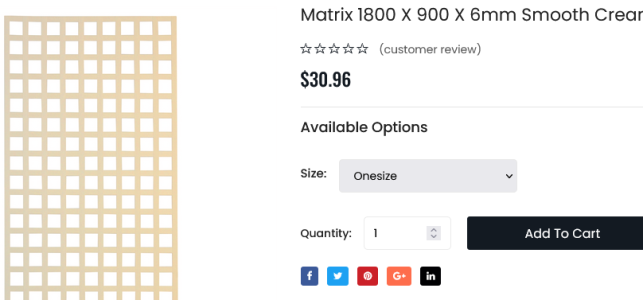
What about using this plastic "lattice" with some plastic strips glued to it. (I can get plenty of plastic strip out of a recycle skip)Screenshot 2023-05-07 at 20-06-42 Matrix 1800 x 900 x 6mm Smooth Cream.png
 
The IKEA bed/mattress slats are not cheap.

What about using this plastic "lattice" with some plastic strips glued to it. (I can get plenty of plastic strip out of a recycle skip)View attachment 155980
It should work.

The strips need to be glued 'randomly' or intermittently or with an ability to move the air freely. I drilled big holes in the ply underside of the berths and added vent holes along the side, which I filled with a series of little vents (which I recall came from Bunnings - so they look as if they are meant to be there. The holes in the ply wood base I cut with a large hole saw. If you still get condensation - drill more holes.

I did not notice that the IKEA slats were expensive but considered them as part of the mattress - as they add some 'spring' being curved. The slats are bit like an anchor - expensive until you consider you will use them (the slats and the anchor) every night you are on board and the cost per night is then peanuts. Other expensive items you never use, LJ nor LR in anger (and hope not to).

Jonathan
 
Thanks for your advice.

I was thinking rather than gluing plastic strips I could use plastic shims. (Probably home made)

I can drill holes in the three ply below the mattress but not the top of the chain locker or directly above the aluminum fuel tank.

I can see vent holes on the side of the bed (mattress retainer) would be needed. (They needn't look ugly)

FURTHER THOUGHT (UPDATE.)
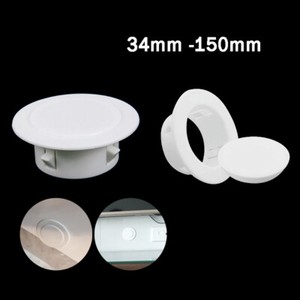
I think a long ¼ inch slot cut with a router would be more appropriate for side vents.(y)


40-100mm Decorative Wall Hole Cover Protective Vents Decor Cap Plastic Plug | eBay

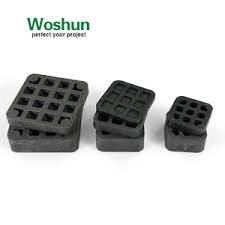
s-l300.jpg

1683506054761.jpeg
 
Last edited:
I tried many solutions including ventilation holes and expensive dry mat, foam insulation etc. The IKEA covers are cheap and seem to have given the best result so far.
 
I tried many solutions including ventilation holes and expensive dry mat, foam insulation etc. The IKEA covers are cheap and seem to have given the best result so far.
You say you put the cover "under the upholstery", do you mean under the bedding, or under the mattress.
 
Top