Tying my anchor rope to the boat...

I think expecting 3-5 metres of rope to absorb the energy of 100m of chain and anchor in free fall is very optimistic. Of course I have never tested this and don't intend to do so in future :).

I think the idea of the rope tail is the best solution. Make it long enough so that it reaches on deck and can be cut if want to release the anchor, but my suggestion would be to make this rope weaker than fitting it attached to, so in the worst case the rope snaps rather than ripping out fittings and damaging the structures.

This is no different to driving a car with airbags, it is safety feature that I hope to never use.

The other suggestion is consider using a longer length of floating rope (say 20m) before using a slightly weaker rope as the final attachment point. As an alternative a longer length of conventional rope with a suitable float ready for rapid attachment is a good option. The advantage is if you do need to cut away your anchor (for example if another boat becomes tangled in your rode) the floating rope will act as a marker so the anchor can be retrieved later.

A lot of good points. I can't see my chain lock, windlass, and lashings all going, but I can see that.

I disagree on the amount of rope required. I'm sure any engineer could do a calculation that would show that the terminal velocity of the chain and anchor in free fall is not all that high. This is water, not air. I doubt it ever passes 3 M/s on a recreational yacht, which looks fast, but in reality is not.

I disagree with the idea that the rope should be weak. Make the fittings stronger. But if a boater is unwilling to do that, yes, weak is better. But the bitter end anchor should be able to hold a few tons (perhaps 2-3x the wind load). Enough that if the boat drifts back on it in strong weather it will hold. My anchors would pass that test.
 
I disagree with the idea that the rope should be weak. Make the fittings stronger. But if a boater is unwilling to do that, yes, weak is better. But the bitter end anchor should be able to hold a few tons (perhaps 2-3x the wind load). Enough that if the boat drifts back on it in strong weather it will hold. My anchors would pass that test.
Yep.

I think there might be a couple of crossed wires in this thread though... there are 2 questions that might be beings seen as one...

Preventing accidental overrun on dropping.
So something to just stop a daft mistake as you're laying out the anchor. The two approaches seem to be (1) a weaker sacirficial rope attached to the bitter end in the anchor locker (2) a small buoy attached to the bitter end for retrieval.

A concern brought up in this thread with accidental overrun is... what if it's due to being an uncontrolled drop in water deeper than your line... at which point the concensus seems to be that you don't want it attached to your boat if a lot of chain and heavy anchor, as the attachment just won't be strong enough to instantly stop the momentum. It's not really applicable to me... 5kg anchor, 6m chain, 50m rope... I'll not be dropping in >10m depths so it's never going to reach a devastating momentum.

Securing the deployed anchor.
Which is what I think you're discussing with holding a few tons. I totally agree, when deployed, I'd secure it to my front-most cleat, which seems to have that purpose in mind.
 
Last edited:
^^ An I think my point has been missed. What is the terminal velocity of an anchor falling through the water? It is not >200KPH, as it would be if you dropped it through air. It is not the great speed we see multi-ton ship anchor gain falling through water. I very seriously doubt it is over 20 KPH (imagine towing an anchor submerged, at 20 KPH--I know from load cell testing that the drag exceeds the weight of the anchor around 6-10 knots, depending on the anchor). And the length of chain is not going to push it faster. Friction up out of the locker will slow it more. Thus, this great momentum we are concerned about is probably similar dropping the anchor and chain less than 10 feet. This on the order of arresting a falling person, and climbers arrest those sorts of falls all the time with modest lengths of ropes.

I've shown my math, please show me yours. I think it is clear that an anchor does not freefall all that fast, and that 5-10 meters of rope could arrest the drop with an impact force on the order of storm loadings. I admit that 3 meters is too short. I originally had 15-20 feet in my head and typed the wrong figure. Such a rope will stretch about 4 feet, resulting in just a few Gs of stopping force. Do the math. Without the rope, I agree, the jolt would be major.
 
To add to this debate - the free fall might occur as result of beating into a fresh breeze and the clutch slipping - you might be in 40m of water and I really don't see a buoy at the end of the chain being of any value. it will not pass through the windlass anyway, so its not a very clever idea. Our windlass a Maxwell RC 8-6 has a static load limit of 1.2t and as Thinwater says the tension is not likely to approach this so if you stop it somehow before the bitter end of rope or chain passes through the windlass then the windlass will take the load, whether its attachments to the yacht will take the load might be another issue. Most people would simply attach the last link of the chain to a 'U' bolt - I see it on lots of newly commissioned yachts. Most 'U' bolts I look to have sufficient reinforcement to take a 1t load. Splicing in 10m of nylon does not seem disadvantageous - in the extreme you have another 10m or rode.

But securing the anchor when on passage would be sensible, 'buckle up every trip' and checking the clutch every time you use the windlass would be good practice.
 
you might be in 40m of water and I really don't see a buoy at the end of the chain being of any value. it will not pass through the windlass anyway, so its not a very clever idea.

The purpose of a longish floating line (say 20m) attached to end of the chain is if the anchor needs to be cut away, usually because another boat has becomes tangled in your anchoring chain. In these situations the best solution is sometimes to release the anchor rode and retrieve the anchor later. The depth inside the anchorage is likely to less than 20m so the floating will reach the surface and the anchor can therefore be retrevied easily.

Sometimes it is important to be able to release the chain quickly and this is where a floating line is the best solution. An alternative is having a longer length of conventional sinking rope attached to end of the chain, together with a float or fender ready to attach to the cut end. The float of course will not generally pass through the hawsepipe on most boats which is why I posted "a suitable float ready for rapid attachment".

This is a real problem experienced by cruising sailors. I have participated in retrieving a few anchors that have been cut away in this fashion. The skippers felt there was not enough time to attach a rope to the chain end. One anchor was very difficult to find and took two of us with scuba gear over an hour to locate. There was a 100lb stainless anchor and 100m of 12mm stainless chain so it would have been an expensive loss. A long floating line already attached would have saved a lot of effort.

Anyway, it just an option for those with an all chain rode to consider when attaching the chain inside the anchor locker.
 
Last edited:
Anyway, it just an option for those with an all chain rode to consider when attaching the chain inside the anchor locker.

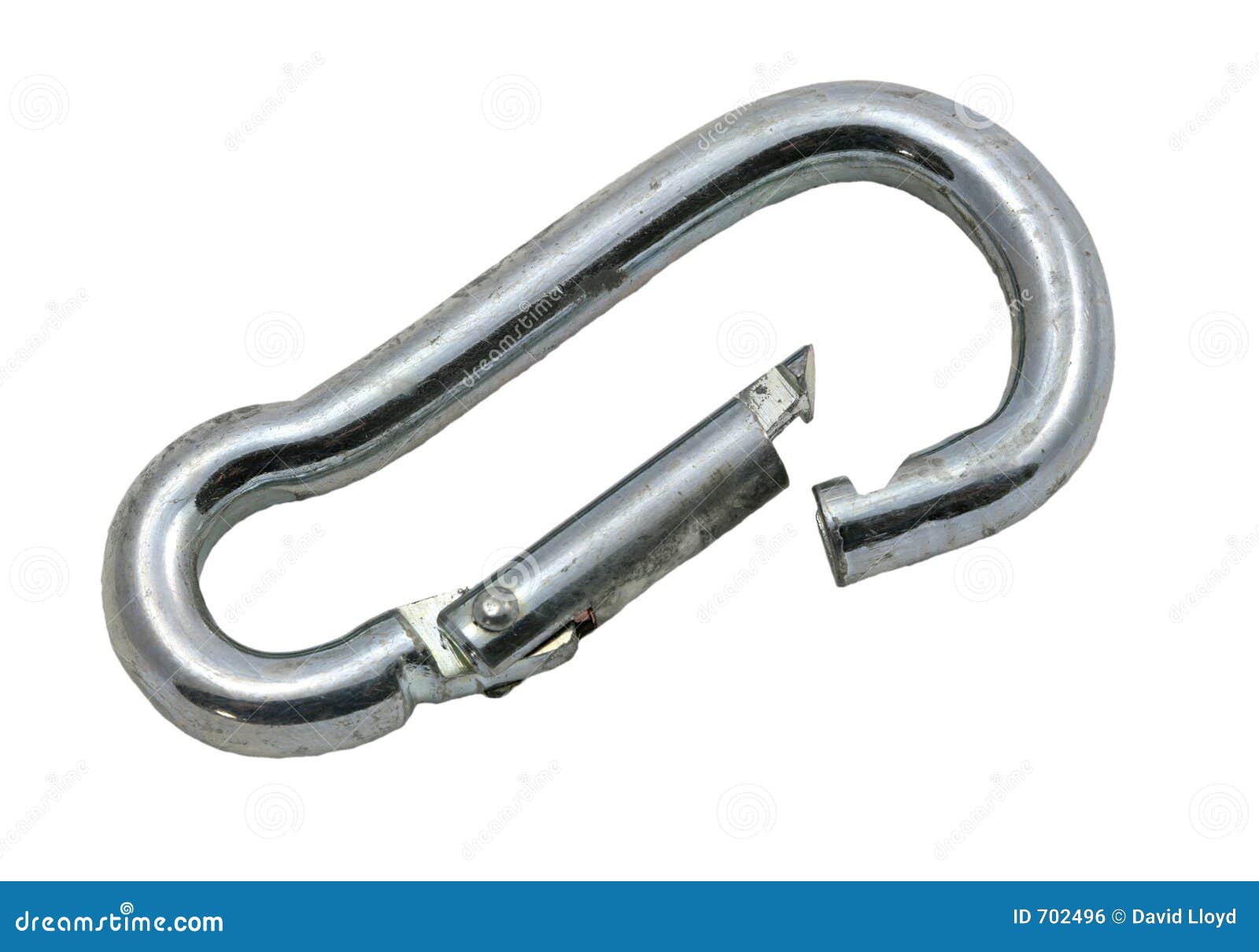
All it takes is a simple snaplink spliced onto the end of the line for the wandering ball fender. Keep it handy near the windlass, ready to be clipped onto the chain before letting go.

snap-link-702496.jpg
 
All it takes is a simple snaplink spliced onto the end of the line for the wandering ball fender. Keep it handy near the windlass, ready to be clipped onto the chain before letting go.

Yes, that is slightly slower but a reasonable solution. As long as you think about the problem and have some equipment handy you are doing better than most.

If you are going to attach the float directly to the chain, or only a short length of rope, make sure it has enough buoyancy to support the weight of the chain. In deeper anchorages the chain weight from the bottom to the surface can be significant. A large fender should be OK, but some fenders will not have enough flotation.

You dont want to loose an anchor, chain and a fender :).
 
Last edited:
I tried this once (testing anchors--not an emergency) and found that even a light tide easily pulled the PP floating line under. It only takes a tenth of a knot to lay Amsteel on the bottom.

I doubt PP has the shock absorption properties I want.

It may come down to which is more important. Since I have avoided both cases, for me it is conjecture.
 
A large fender should be OK, but some fenders will not have enough flotation.

You dont want to loose an anchor, chain and a fender :).

Very true. The wandering fender that I suggested is usually spherical and, to be of practical use, is usually around 50cms diameter. This gives a displacement of around 65,5 litres when fully submerged, which, in sea water would translate into just over 68 kilos. That's quite a lot of chain for the sizes that we normally use. In my case that would be some 48 metres, not allowing for the fact that the 8mm chain will weigh less in sea water than it would in air.
 
None of this helps when you lose your rode due to a loose clutch at sea - having an elastic line, as Thinwater is trying to suggest answers all of the queries, keeps the rode on the yacht in any circumstances, offers an extra length of rode but still allow for it to be cut free if necessary. As Thinwater mentions any current will negate the fact that the line floats - so that's a bit of a non-starter (and simply offers a false sense of security) - you need a buoy and few have buoys of the correct size in bow lockers - the lockers are too small. This means you will need time to pull one from the lazarette.

I do recall a member of this forum who was making the big leap to live aboard and was then heading for the Med lost his Spade anchor and rode off (from memory) the Needles, loose clutch, unsecured anchor.

My view is - I'd rather pull the 'U' bolt out of its reinforcing and it jamb in the windlass than lose the rode and anchor. I would have nylon of the correct strength (though our chain locker 'U' bolt is well reinforced). I can repair any damage easily and cheaply - buying a new rode and anchor would be, sometimes , very difficult and expensive.

So - add 10m of appropriate nylon to your rode, and secure the nylon to a 'U' bolt. Secure your anchor every time you sail, anywhere.
 
Top