Topsail Renewal

I have just had my renewal from topsail good price but I asked about being on anchor , and they said we must have someone on anchor watch or have an alarm , does anyone else have this in their policy
What policy….the underwriters as there are very few players left in this market .Plenty of brokers .

Craftsure s N+ G ( Zurich) has this ….
They will pay out if you leave the boat unattended on a

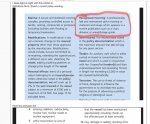
“Recognised mooring: A professionally laid and maintained yacht mooring or sheltered anchorage which appears in a marine publication such as a chart, almanac or area/pilotage guide.”


It’s been done to death on here guilty as charged guys by me ! :)
I think in summary there are polar arguments .
Some think “ all risks “ covers everything except what’s in the exclusions and are happy , bliss sleep tight safe in the knowledge if it’s not excluded its covered .

So I asked them , the underwriters via the brokers in this case Amlins about a few certain specific points like the unattended @ anchor question .Although it’s not mentioned in exclusions they came back with good seamanship/ common sense compromise of having to keep line of sight and be within 1/2 hr time wise of returning .Other than that they would refute a claim .
Thats doesn’t work for my particular Med boat usage pattern so I declined there policy .

A huge blazing row erupted on here …..essentially the more written down the less cover in terms of you weaken your all risks other forum members told me .But the under writers said they could not mention every scenario and just because it’s not written in exclusion s or any where else in the wording does not automatically mean it falls in the all risks .This is because of the good seamanship/ correct timely maintenance cop outs .

What you have discovered is at the moment of your enquiry although it’s not written ( there point they can’t write everything) they consider bumming off leaving it unattended bad seamanship and you should do as they suggest re “ anchor watch “ etc .
It’s imho erroneous to expect punters to to think “ all risks “ to be the dustbin for this and they are covered .They are not it turns out .
A hard pill to swallow for some on here .

The more that’s written in advance the better you can modify your boating behaviour to minimise the chance of a refute imho .
But many wishfully expect “ all risks “ to cover what amounts to poor seamanship …..arguably!
 
I have just had my renewal from topsail good price but I asked about being on anchor , and they said we must have someone on anchor watch or have an alarm , does anyone else have this in their policy
The Topsail policy doesn't stipulate that either. Why not download the policy and read it yourself? It's the policy wording that you'll be relying upon in the event of a claim.
 
Hi

hi I have just had a quote from craft and is a good price , but I don’t see anything in the conditions ,can you point me in the right direction please.
Bit of a double negative but “not pay claims except…..”

We will not pay any claims arising from:

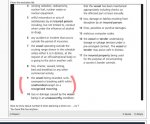
• Claims arising from“XXXXXX”being stranded,sunk,swamped or breaking adrift whilst unattended except on a recognised mooring.


I don‘t have the definition of ‘recognised mooring’ at hand but it’s something like “that which is shown on a chart”

Hope this helps
 
Last edited:
Although this discussion has been done many times before, something always comes out that I hadn’t realised.
My boat is coming up to 20 years old this year and Craftinsure happily insured me with no mention of the 20 year rule.
I read:
You have agreed:
• If “XXXXX” is over 20 years old and over 23ft in length, you have in your possession a survey report not more than five years old from a qualified surveyor, with all recommendations complied with.


Hmmmm! I don’t remember agreeing to this, not saying that it‘s a not a good idea, but with no alert when I filled in the form (first time with Craftinsure) I feel lucky through this discussion that I’ve studied again my policy.
Boat being serviced in a couple of weeks and I‘ve organised…..a survey!

Are all insurers the same?
 
Although this discussion has been done many times before, something always comes out that I hadn’t realised.
My boat is coming up to 20 years old this year and Craftinsure happily insured me with no mention of the 20 year rule.
I read:
You have agreed:
• If “XXXXX” is over 20 years old and over 23ft in length, you have in your possession a survey report not more than five years old from a qualified surveyor, with all recommendations complied with.


Hmmmm! I don’t remember agreeing to this, not saying that it‘s a not a good idea, but with no alert when I filled in the form (first time with Craftinsure) I feel lucky through this discussion that I’ve studied again my policy.
Boat being serviced in a couple of weeks and I‘ve organised…..a survey!

Are all insurers the same?
No survey required from Topsail.

Incidentally, at what point does the 20 clock start ticking? Date of build, date of delivery to dealer or date of commissioning?
 
No survey required from Topsail.

Incidentally, at what point does the 20 clock start ticking? Date of build, date of delivery to dealer or date of commissioning?
Did you try craftsure ?
I mean how much extra are you paying for the same ( well as near enough) N+G or if not gen leisure boat cover ?

Its just in a direct line no frills kinda way weeding out the sink it for the £* lot with the “replace with similar “ clause and ensuring 20 y onwards are regularly surveyed maybe they are in a position due to less claims indeed bigger claims more like, of undercutting other high street brokers peddling the same thing or near as dam it .

Then also the added security imho of defined” unattended @ anchor “ .Which less face it is easy to comply with .knowing it’s covered while you lunch ( everyone ) ashore .

This - Covered leaving it unattended in a from there policy = “Recognised mooring: A professionally laid and maintained yacht mooring or sheltered anchorage which appears in a marine publication such as a chart, almanac or area/pilotage guide.”


* Amazing how many pubs were torched …sorry destroyed by fire in lock down wasn’t it .A disproportionate number compared to other commercial premises.If there was a clause where by they only paid out with evidence of a good set of accounts dating back 3 yrs and no significant owners debt then the pub fires would be less imho .
 
Although this discussion has been done many times before, something always comes out that I hadn’t realised.
My boat is coming up to 20 years old this year and Craftinsure happily insured me with no mention of the 20 year rule.
I read:
You have agreed:
• If “XXXXX” is over 20 years old and over 23ft in length, you have in your possession a survey report not more than five years old from a qualified surveyor, with all recommendations complied with.


Hmmmm! I don’t remember agreeing to this, not saying that it‘s a not a good idea, but with no alert when I filled in the form (first time with Craftinsure) I feel lucky through this discussion that I’ve studied again my policy.
Boat being serviced in a couple of weeks and I‘ve organised…..a survey!

Are all insurers the same?
“ Are all insurers the same “
Good Q !
This is where PeteM and i diverge .
Correct me if iam wrong but Petes school of thought less written means more drops in “ all risks “
That was me until I started conversing with senior underwriters.
They can’t put every scenario in a policy and use weasel words like “good seaman ship “ and “maintenance “.

So with this the age thing even though it’s doesn’t specify a survey in Petes policy ie it’s silent it does not mean never do one .
If you are required to have one ie craft-sure and comply etc then inho you are decreasing the refute scope in the event of a bigger claim the ones that matter .

With out one a survey .
- You could inadvertently end up on the wrong side of poor maintenance refute .How do you know the standards ?
- You could end up against the argument of neglect because with a 22 yrs old it’s never had in the past 10 a professional survey ?
Even though it’s silent on a survey requirement, they could argue its poor seamanship to go to sea in an old boat with zilch second pair of eyes over the maintenance regime. “All our other clients seem to regularly survey and hire professionals in regard to maintenance , we thought period timely surveys and commissioning of professionals to maintain it was normal practice so much so did not need to specify anything in the policy “

We just in the interest of brevity used words like “ proper maintenance “ which thought included a period survey in a old boat , but thought rather be prescriptive we prefer to leave it up the owners .But reserve the right ( as always) to refute claims .

Thing is as per unattended @ anchor ….you find out after a claim I would rather know up front where they are with “ maintenance “and where surveys fit in from there pov .
So for me the more they write up , the more prescriptive they are ie “ thou shalt have a survey under 5 y when it’s 20 t old “ the better .Visible lines in the sand .
Hope that makes sense . I can’t see any downsides to survey a 20;y boat .
 
Well I questioned it topsail where they said do e have anchor watch. , they have now confirmed we do not need to do anchor watch or have a anchor alarm.
 
“ Are all insurers the same “
Good Q !
This is where PeteM and i diverge .
Correct me if iam wrong but Petes school of thought less written means more drops in “ all risks “
That was me until I started conversing with senior underwriters.
They can’t put every scenario in a policy and use weasel words like “good seaman ship “ and “maintenance “.

So with this the age thing even though it’s doesn’t specify a survey in Petes policy ie it’s silent it does not mean never do one .
If you are required to have one ie craft-sure and comply etc then inho you are decreasing the refute scope in the event of a bigger claim the ones that matter .

With out one a survey .
- You could inadvertently end up on the wrong side of poor maintenance refute .How do you know the standards ?
- You could end up against the argument of neglect because with a 22 yrs old it’s never had in the past 10 a professional survey ?
Even though it’s silent on a survey requirement, they could argue its poor seamanship to go to sea in an old boat with zilch second pair of eyes over the maintenance regime. “All our other clients seem to regularly survey and hire professionals in regard to maintenance , we thought period timely surveys and commissioning of professionals to maintain it was normal practice so much so did not need to specify anything in the policy “

We just in the interest of brevity used words like “ proper maintenance “ which thought included a period survey in a old boat , but thought rather be prescriptive we prefer to leave it up the owners .But reserve the right ( as always) to refute claims .

Thing is as per unattended @ anchor ….you find out after a claim I would rather know up front where they are with “ maintenance “and where surveys fit in from there pov .
So for me the more they write up , the more prescriptive they are ie “ thou shalt have a survey under 5 y when it’s 20 t old “ the better .Visible lines in the sand .
Hope that makes sense . I can’t see any downsides to survey a 20;y boat .
I am somewhat reluctantly dipping a toe into this thread and I don’t have the energy to debate all of the issues which have been thoroughly debated and on which entrenched views have emerged.

But there is one point that I would like to highlight in relation to the relative constructions of good seamanship and the specific wording you’ve managed to secure concerning anchoring.

I think we can all envisage that insured and insurer might have different interpretations of good seamanship in a claim scenario. That’s certainly a concern.

But, I would question whether an express requirement to use a “sheltered anchorage” isn’t equally as open to different interpretations. I’ve seen many anchorages marked on many charts. But I’ve never seen one marked as a “sheltered anchorage”.

As experienced seafarers you or I might well agree that a particular anchorage is sheltered from westerlies but not from a wind that’s blowing from the north.

So, let’s say we anchor in a westerly and look at the horizon and our forecasts and conclude the wind direction isn’t going to change in the next couple of hours. And off we go for lunch ashore.

Mid way through our desserts we notice that the wind has veered through 90 degrees.

Our anchorage isn’t sheltered any more and as the wind increases and we watch our boats founder we have to fall to wondering whether the insurer will argue that we didn’t anchor in a sheltered anchorage, because we should have anticipated that the wind would veer and increase.


Well, anyway. Just to say that where there’s a set of words there’s always more than one opinion on what they mean.
 
But, I would question whether an express requirement to use a “sheltered anchorage” isn’t equally as open to different interpretations. I’ve seen many anchorages marked on many charts. But I’ve never seen one marked as a “sheltered anchorage”.
Craftinsure say “recognised mooring” which makes it a lot less ambiguous ref #125 and #121 for “recognised mooring” definition
 
Last edited:
I am somewhat reluctantly dipping a toe into this thread and I don’t have the energy to debate all of the issues which have been thoroughly debated and on which entrenched views have emerged.

But there is one point that I would like to highlight in relation to the relative constructions of good seamanship and the specific wording you’ve managed to secure concerning anchoring.

I think we can all envisage that insured and insurer might have different interpretations of good seamanship in a claim scenario. That’s certainly a concern.

But, I would question whether an express requirement to use a “sheltered anchorage” isn’t equally as open to different interpretations. I’ve seen many anchorages marked on many charts. But I’ve never seen one marked as a “sheltered anchorage”.

As experienced seafarers you or I might well agree that a particular anchorage is sheltered from westerlies but not from a wind that’s blowing from the north.

So, let’s say we anchor in a westerly and look at the horizon and our forecasts and conclude the wind direction isn’t going to change in the next couple of hours. And off we go for lunch ashore.

Mid way through our desserts we notice that the wind has veered through 90 degrees.

Our anchorage isn’t sheltered any more and as the wind increases and we watch our boats founder we have to fall to wondering whether the insurer will argue that we didn’t anchor in a sheltered anchorage, because we should have anticipated that the wind would veer and increase.


Well, anyway. Just to say that where there’s a set of words there’s always more than one opinion on what they mean.
See red box “ or “
Its further up but to save your “ energy “ :)
Would you be happy with this wording while we sit and have said lunch together ?

CFC144A9-7458-4F10-BAF2-68A793585490.jpeg
1763BB93-BC6C-47A1-8C96-33EF80778EE5.jpeg
 
Charts show “anchorages” not “sheltered anchorages”.

Room for a difference of interpretation, at least on the face of the wording. Same as with “seamanship”.
 
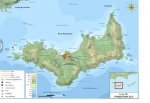
Adding to the above , it’s not a proper chart because they are on the boat as is the plotter ,it’s a Wikipedia chart .
For illustration let’s assume it’s the plotter image it’s actually got 3 marked “ moullinage marks on the N side .I have actually used all three and some un marked on the S with the then Amlin based policy .Once we hired bikes and certainly ended up more than 1/2 away rtn and out of line of sight .
I am more comfortable under craftinsure policy wording hiring bikes .

Agree the “good seamanship “or turned around “recklessness “ of the type Ben suggest ( leaving it with a strong wind ver imminent ) =Opens up a refute .As does the ” proper maintenance “ Different interpretation by the policy holder and underwriters.Another one “ seaworthiness “ - what’s that ? Digressing if I may surly a recent insurance survey adds to defining “ seaworthiness “ to the underwriters satisfaction?

With leaving it unattended @ anchor
It not the weather for me as , it’s others , dragging through, snagging your gear , drunken helming , jet skis , If I thought the boat needed a guard some one would stay aboard .

I have not got the appetite to fight a refute based on its not in the exclusions therefore it’s in all risks and you can stuff “good seamanship/ seaworthiness/ proper maintenance + any other weasel words where the sun doesn’t shine and I will see you in court clutching “all risks “Appreciate others with legal qualifications might .
91317FA7-6C4D-41E5-B61E-532D8380C7D0.jpeg
 
I am somewhat reluctantly dipping a toe into this thread and I don’t have the energy to debate all of the issues which have been thoroughly debated and on which entrenched views have emerged.

But there is one point that I would like to highlight in relation to the relative constructions of good seamanship and the specific wording you’ve managed to secure concerning anchoring.

I think we can all envisage that insured and insurer might have different interpretations of good seamanship in a claim scenario. That’s certainly a concern.

But, I would question whether an express requirement to use a “sheltered anchorage” isn’t equally as open to different interpretations. I’ve seen many anchorages marked on many charts. But I’ve never seen one marked as a “sheltered anchorage”.

As experienced seafarers you or I might well agree that a particular anchorage is sheltered from westerlies but not from a wind that’s blowing from the north.

So, let’s say we anchor in a westerly and look at the horizon and our forecasts and conclude the wind direction isn’t going to change in the next couple of hours. And off we go for lunch ashore.

Mid way through our desserts we notice that the wind has veered through 90 degrees.

Our anchorage isn’t sheltered any more and as the wind increases and we watch our boats founder we have to fall to wondering whether the insurer will argue that we didn’t anchor in a sheltered anchorage, because we should have anticipated that the wind would veer and increase.


Well, anyway. Just to say that where there’s a set of words there’s always more than one opinion on what they mean.
Rod Heikeks pilotage almanac s , which I use mention “sheltered anchorage “ all the time .

FWIW Also mentions the bottom , mud , weed , rocks etc and for balance being a pilotage book when it’s untenable if it is .Sometimes the untenable wind bit is omitted as basically its safe in all directions and the book says so .

Said this before happy to repeat I,am old school use a chart , paper as well as electronic.In fact my 2001 plotter is primitive by todays stds .Also use a plethora of guides , almanacs and even Rod Heikels book .
I find Rods s books useful when planning a cruise because as always i, am looking for rat runs , safe bail outs if the weather deteriorates .Also fuel and provision stoping in pretty places rather than a huge port , military base or oil terminals view .
Eg Porqurolle on the way to Marseille as opposed to Toulon .

Having said that I do appreciate theses days bit like the guy who stuffed his Pershing in the CI ,a lot guys are only heads down staring at screens .Set off only relying on the gadgets in front of them from the helm seat .A screen anchorage mark may only be a anchor sign nothing else .But a pilotage guide a more detailed description inc the word “ sheltered “

You have to make the effort to read them = bed time reading aboard .

I like to read up on where i am going .Rods books take a bit of understanding he’s very succinct with words but once you get his style you can quickly absorb a lot of where you are headed .Inc where the “sheltered anchorages “ his words are .

I can’t see the wording being a issue in the island , bay ridden Med Tbh .
 
Last edited:
Top