To epoxy or not (before coppercoating)

Solent Sailor

Well-Known Member
Joined
9 Feb 2018
Messages
308
Visit site
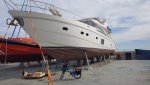
So, I'm planning to have my boat coppercoated later this year. She's an older girl (1997 vintage) but tested well for GRP dampness in her last survey. No hull problems at present, so far as I'm aware.

In obtaining quotes for the coppercoating, one company has quoted for coating her with 5 coats of International Gelshield 200 before numerous (TBC!) coats of coppercoat. Another company is adamant that a separate epoxy layer is not only unnecessary on the age of boat, but also potentially detrimental to the finish of the coppercoat itself (i.e. with all those additional layers, there is an increased risk of something going wrong with the cure of one layer, which could lead to cracking - the more layers, the more risk). That company would also not recommend a solvent based epoxy in any case. Both highly reputable businesses.

The cost of gelshield is not inconsiderable (£3k) and I am minded not to do it given coppercoat is an epoxy based product in its own right.

Any thoughts pro or con? The cost is a factor, but I am not going to scrimp a ha'porth of tar, as the expression goes.
 
I'd be asking the manufacturers of CC the question directly rather than posting on here but what I can tell you is I removed all traces of old antifouling, wiped the gel coat off with acetone and applied several coats of CC remembering to agitate the stuff in the roller tray frequently. I never had any bonding issues.

I found stirring with a stick agitated it more than shouting at it ?

As for a 1997 marque being old, where does that put my 1987 boat?
 
This is a really difficult one. We nearly bought a boat that had been copper coated, it had osmosis which had blistered the copper coat also, so we were looking to redo it all. I did a tonne of research until my head was exploding though that also included looking at peeling and sheathing. We didn't buy that one in the end, but in doing the research there were some rave reviews, some bad reviews, some would cite where you're keeping it as to how well it worked, how you were using it (sail/power) even between saltwater marinas (local factors). In the end, if you do decide to go that route, from my research temperature (above 10 degrees) and no water ie rain/drizzle are critical when applying it, and I believe it should all be done within a day. If you have a shed then great, but if like most you're in a boat yard, you need to think of tenting etc. We found a place that had a sheeted lift on frame which allowed works to be done without risk of rain and if you do it at the right time of year, you should be ok with temps but be careful of temp drop at night. Also I believe you should stop the coat short of things like sterndrives and other metal parts.

In the end, I came to the conclusion to stick with regular anti foul. There are many other reasons to lift the boat annually and it may allow you to catch things early. At least you can't go too far wrong with the regular stuff and application isn't critical that you risk cocking things up and ruining the entire application. Also. if you need to strip it back it'll likely be far easier plus if there is high moisture or osmosis already going on you trap it in and it can potentially make things worse. Also you'll want the moisture levels to be as low as possible before you do apply.

Of course there were many times when I'd read a good review, or speaking to Coppercoat themselves and you'd get off the phone thinking this is definitely the way to go. Then those little voices would warn against it, all I would say is you need to do a load of research yourself, I don't think any one person or their circumstances can give you a one size fits all answer.

We were looking to do the works ourselves, some of the yards we spoke to that had proper facilities wouldn't guarantee copper coat which was another turn off. Perhaps things/methods/confidence has improved with this, there is always going to be resistance to anything new but it's been out quite a few years already. Coppercoat themselves were excellent on the phone and full of advice so well worth a call to them.
 
ps. To answer your actual question, the boat yards we spoke to were talking about applying four coats of gel shield plus, one coat of gelshield 200 epoxy and then 2 coats of AF or coppercoat. This was after a gelcoat peel and slurry blast though.
 
Thanks. The suppliers concerned are both highly reputable and well known (indeed, recommended on here!) outfits, so whilst they may have differing views, I'm sure they have extensive experience that validates their views - that said, they aren't boat owners themselves, which I think always counts for something. As for tenting etc, yes, that's all taken account of and planned for.

I may still give regular AF another year. I've ummed and ahhed about coppercoat for several years but I have a window in our calendar which might just allow for an extended period ashore this year in mid-summer, which is good coppercoating time but normally taken up by us being aboard. One factor in encouraging me toward coppercoat is reducing the number of lift outs, which for a near 50ft boat does add a not inconsiderable amount to the annual budget (in the Solent at least).
 
ps. To answer your actual question, the boat yards we spoke to were talking about applying four coats of gel shield plus, one coat of gelshield 200 epoxy and then 2 coats of AF or coppercoat. This was after a gelcoat peel and slurry blast though.
You can't really have just 2 coats of copper coat - have done 3 boats now my self (never again - its seriously hard work) CC is applied wet on tacky in thin layers - it's not usually until coat 4 does the original colour of the hull disappear - depending on the size of your boat and the Qty of CC that the manufacturers suggest, you'll end up doing 6 to 7 coats. as I say hard work. The key is preparation and GOOD environmental conditions. I found the manufacturers very helpful people to discuss my requirements and what were the optimum conditions.
 
Sorry I meant two coats of AF, or, coppercoat (as in the system 4 or 5 coats iirc, rather than 2 coats of that).
 
So, I'm planning to have my boat coppercoated later this year. She's an older girl (1997 vintage) but tested well for GRP dampness in her last survey. No hull problems at present, so far as I'm aware.

In obtaining quotes for the coppercoating, one company has quoted for coating her with 5 coats of International Gelshield 200 before numerous (TBC!) coats of coppercoat. Another company is adamant that a separate epoxy layer is not only unnecessary on the age of boat, but also potentially detrimental to the finish of the coppercoat itself (i.e. with all those additional layers, there is an increased risk of something going wrong with the cure of one layer, which could lead to cracking - the more layers, the more risk). That company would also not recommend a solvent based epoxy in any case. Both highly reputable businesses.

The cost of gelshield is not inconsiderable (£3k) and I am minded not to do it given coppercoat is an epoxy based product in its own right.

Any thoughts pro or con? The cost is a factor, but I am not going to scrimp a ha'porth of tar, as the expression goes.
Be very very careful using solvented gel shield under Coppercoat. Risk of solvent entrapment.
What problem is the installer who recommended this trying to fix?
If there are no problems, put the Coppercoat on the GRP.
 
ps. To answer your actual question, the boat yards we spoke to were talking about applying four coats of gel shield plus, one coat of gelshield 200 epoxy and then 2 coats of AF or coppercoat. This was after a gelcoat peel and slurry blast though.
Wow. Ok. Gel shield plus is solvent free. Guessing wet film thickness 80 microns. Dry film the same as it is solvent free. Gel shield 200 is solvented and gives you an infinite overcoating window without sanding as it dries Matt. Dry film 30 microns guess. Nearly 0.4mm of solid epoxy barrier.
A good solution if you need epoxy.

Which you will if they peel the boat. You only peel for osmosis. Why are they peeling i????
 
We Coppercoated our Princess about 10 years ago.
This is a link to the thread at that time.
Coppercoat – The Complete Process

I reposted the first post at #86 after the Photobucket debacle.

We used a soda blasting process which is unbelievably gentle on the boat.
Amazingly, it removes the old antifoul without damaging the gelcoat - unlike sand blasting.
It actually left a nice abraded finish which worked as a good key.
Using this process, it was reasonable to simply apply the Coppercoat - no epoxy underneath.

In 2019, we had to have the boat out of the water for about 3 weeks for another matter so I decided to rub the Coppercoat down using orbital sanders (very hard work) to get a good key.
Then we "topped up" - added three (IIRC) more coats over 2 days (1 day each side).
This was the result

20190304_153001.resized.jpg

20190304_152602.resized.jpg

And then a year later she was lifted for a quick wash and scrub - the first lock down year!!
This was the result.

20200910_143900.resized.jpg

I hope the pics help - Coppercoat isn't as good as antifoul for keeping the fouling down but it seems to work for us.
 
Well, been there, done that, got a dirty boiler suit.

We got the hull soda stripped. Let the boat stand.
Then when typical daytime temperature (important) was above 10c we went for it. And no rain!

2 coats of epoxy and another week standing around waiting.

Rinse off with acetone on cloth. Do this in open air.

Watch the weather forecast very carefully.
No rain forecast or hinted at.
For a 30ft boat get a couple of mates lined up for a bit of a workout.
Get decent masking tape and mark the waterline.

One to mix the Copper coat, 2nd person sets off on one side of the boat.
Mix second batch and the 3rd hand sets off on the other side of the boat. Good, uniform thin coats are what you are aiming for.

Now we have a sort of relay going on.

Mixer makes tea. Ready for 2nd person to arrive ready for the second coat
Mixer mixes batch, 2 nd person sets off on the second coat.
3rd person arrives back. Drinks tea and then sets off with his second batch.

Drink tea and repeat seems to be the mantra then.
Depending if you are a 3 or 4 coat merchant you are half way or nearly there.
K
You will find the process physically demanding. But the result is well worth it.

Robert is your uncle
 
Well, been there, done that, got a dirty boiler suit.

We got the hull soda stripped. Let the boat stand.
Then when typical daytime temperature (important) was above 10c we went for it. And no rain!

2 coats of epoxy and another week standing around waiting.

Rinse off with acetone on cloth. Do this in open air.

Watch the weather forecast very carefully.
No rain forecast or hinted at.
For a 30ft boat get a couple of mates lined up for a bit of a workout.
Get decent masking tape and mark the waterline.

One to mix the Copper coat, 2nd person sets off on one side of the boat.
Mix second batch and the 3rd hand sets off on the other side of the boat. Good, uniform thin coats are what you are aiming for.

Now we have a sort of relay going on.

Mixer makes tea. Ready for 2nd person to arrive ready for the second coat
Mixer mixes batch, 2 nd person sets off on the second coat.
3rd person arrives back. Drinks tea and then sets off with his second batch.

Drink tea and repeat seems to be the mantra then.
Depending if you are a 3 or 4 coat merchant you are half way or nearly there.
K
You will find the process physically demanding. But the result is well worth it.

Robert is your uncle
That is a mixture of good advice and a serious error.

You must not wash the boat with acetone before Coppercoat.

Where in the Coppercoat manual does say “wash with acetone”.

Why do people not RTFM with Coppercoat?

You may get away with it. You may get micro bubbling. hope it’s OK.

To others - RTFM. To the letter!

Also……
You say “two coats of epoxy” but don’t say if it’s solvented or solvent free. They are very different.

if it’s solvented then waiting a week is good as it lets the solvent out. But the dry film thickness of solvented epoxy is only 25-30 microns so there’s not much point in doing 2 coats.

if it’s solvent free then you have a good thickness but you must overcoat within 24 hours. Wait a week in this case and the Coppercoat won’t stick.

Again RTFM or ring Aquarius.
 
Last edited:
I did what I thought was the sensible thing & what I suggest the OP does -- ASK the manufacturer. It is their product after all.
I was concerned that as I was having the hull sand blasted it might damage the gel coat. The manager told me that the gel coat was really only an asthetic finish anyway & coppercoat would be Ok applied directly over the sand blasted surface. But that being said, they also told me that coppercoat works, so one cannot always believe all one is told :(
My boat has now had 2 coatings of coppercoat & will possibly have a third in the next 2years, so I think there is enough on the hull to protect the GRP

As it was the sand blasting co was extremely carefull & actually did leave a few patches of old anti fouling still on the boat, which took a day to remove. It took 2 days to remove the very thick 2 inch wide strip they left around the waterline. I stood & watched the operation throughout & it is clear that one does not need to pay extra for soda blasting. Just use a sensible company to do the work. I had to egg him on to take more antifouling off, he was so concerned about damaging the surface- & he barely touched the gel at all
 
I had to egg him on to take more antifouling off, he was so concerned about damaging the surface- & he barely touched the gel at all
Yea, but I've seen contractors using sand blasters, blast right through the gel coat.
It sounds as though your contractor was very careful but, in my experience most aren't.
On the other hand, it is easier for a contractor to get it right when using soda blasting techniques,
IMO, if someone is considering removing old antifoul, they should use the soda blasting technique instead of the more aggressive sand blasting.
The cost difference is minor in comparison with what can go wrong when using sandblasting - it really isn't worth the risk.

Before doing our boat, I had long conversations with Elessar when he was in the Coppercoat application business.
Indeed, I would have used him but there was an issue with him working in Spain so between us, we talked to Coppercoat for their advice.
Coppercoat recommended their agent in Spain who is an Englishman working from Torrevieja.
They also didn't recommend a pre-epoxy coat.
I am very satisfied with the result - 10 years down the line now.
 
Yea, but I've seen contractors using sand blasters, blast right through the gel coat.
It sounds as though your contractor was very careful but, in my experience most aren't.
On the other hand, it is easier for a contractor to get it right when using soda blasting techniques,
IMO, if someone is considering removing old antifoul, they should use the soda blasting technique instead of the more aggressive sand blasting.
The cost difference is minor in comparison with what can go wrong when using sandblasting - it really isn't worth the risk.

Before doing our boat, I had long conversations with Elessar when he was in the Coppercoat application business.
Indeed, I would have used him but there was an issue with him working in Spain so between us, we talked to Coppercoat for their advice.
Coppercoat recommended their agent in Spain who is an Englishman working from Torrevieja.
They also didn't recommend a pre-epoxy coat.
I am very satisfied with the result - 10 years down the line now.
Exactly. Before having your boat blasted with any abrasive medium inspect the work not only of the company but the actual operator. It’s not the abrasive that gives the operator skill, but soda masks any errors better.

For anyone near Southampton Paul Shotton is your man. He recently blasted and coppercoated my boat and he’s a true expert.

Takes a while for the medium to come through. He uses ground glass suspended in hot water.


Notice he never stays still and if there is a small patch of blue he doesn’t go back for it. That will overblast the surrounding area and he knows it will sand easily.

The blast continues. He never stops still.


Any imperfections get epoxy filler and it’s sanded all over.

This is George Shotton. No subbies.


Then it’s Coppercoat day. Always put a drip channel above the waterline in case of condensation or a shower. Isolate all pumps including automatic bilge pumps. Block cockpit drains.

No epoxy save for small amounts of filler. And no acetone! Just paint 5 thin coats on the sanded boat.

If you can’t do five coats in a day remember you can do half the boat but not half the coats.

This is Paul and George with me paint mixing and tea making.

Timelapse Coppercoat Application by Paul Shotton Marine Services – Coppercoat Antifoul
 
Last edited:
For anyone near Southampton Paul Shotton is your man. He recently blasted and coppercoated my boat and he’s a true expert.
Thanks - I'd be grateful for his contact details. I'm about to move her from Hamble to Weymouth, but I could always bring her back.
 
Just a point to add to Elessar's post regarding the actual application of the new Coppercoat.
We rolled our Coppercoat on.
The coats are very thin.
In fact the first coat is so thin you don't think you are putting any on at all.
You then wait until the previous coat is almost dry.
Dry enough so that the next coat won't pull the previous coats off but not completely dry (definitely not cured)
Progressively, it takes longer for the coats to dry enough for another coat.
The aim is to get as many coats as possible onto the boat without damaging the previous coats but also without the previous coats completely drying or curing.
Hence doing it all in one day and having the ambient air temperature correct.
 
Top