The other Channel Islands

Twister_Ken

Well-Known Member
Joined
31 May 2001
Messages
27,584
Location
'ang on a mo, I'll just take some bearings
Visit site
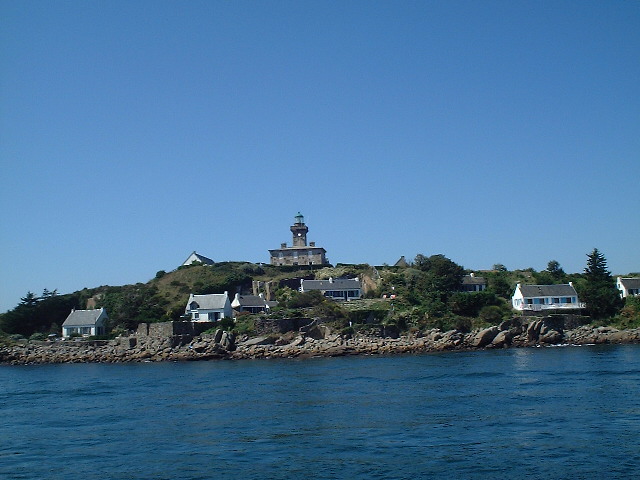
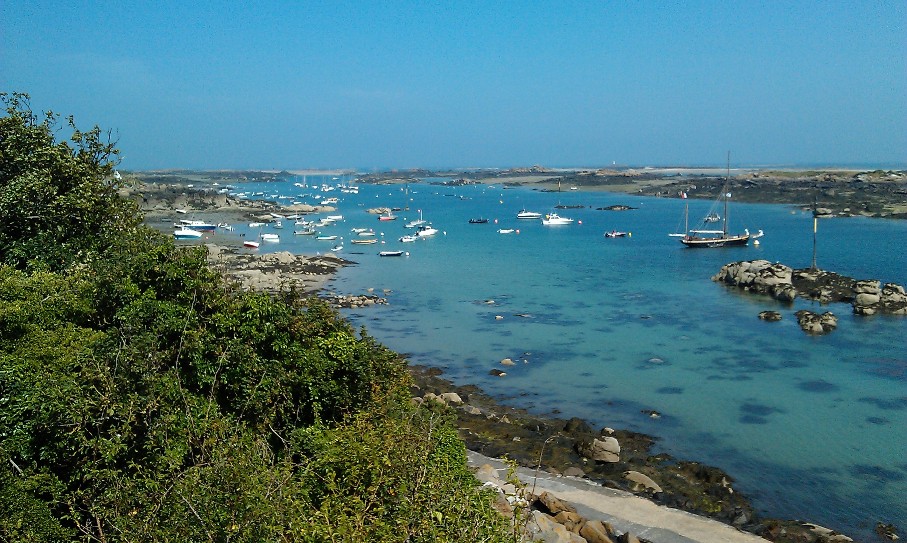
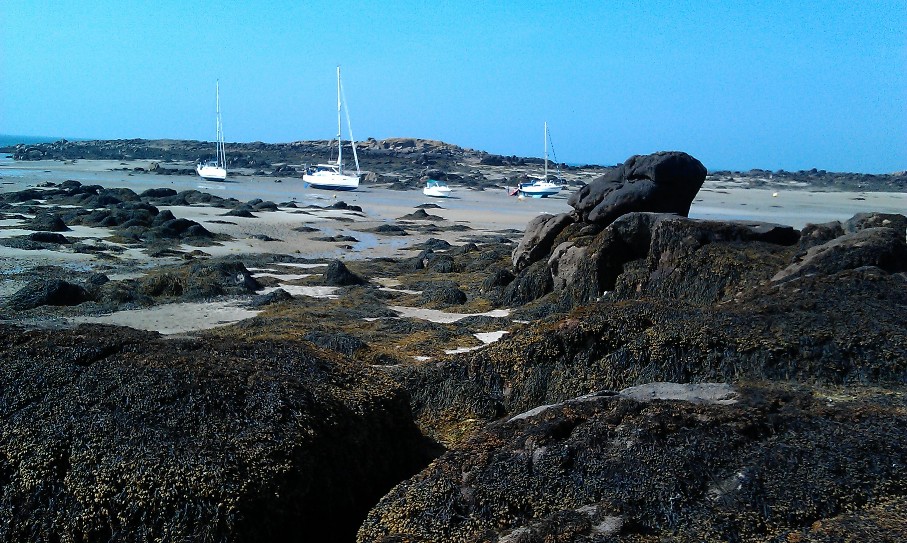
Anyone ever visited The Minquiers, Iles Chausey or Les Echrous.

Not in my Cunliffe Channel Pilot or the Cruising Association Alamanac.

Pix make them look 'interesting'. Any recommendations? Pilot guides?

971491_10151428287642522_368173107_n.jpg


800px-Ecrehous%2BCaprice%2BColbacks.JPG


Chausey.jpg
 
Certainly when I have been there there were plenty of French boats around - and also the approaches are a great spot for dolphins.

I believe at Neaps many French stay there or camp on the islets.
 
Anyone ever visited The Minquiers, Iles Chausey or Les Echrous.

Not in my Cunliffe Channel Pilot or the Cruising Association Alamanac.

Pix make them look 'interesting'. Any recommendations? Pilot guides?

971491_10151428287642522_368173107_n.jpg


800px-Ecrehous%2BCaprice%2BColbacks.JPG


Chausey.jpg

Many French sailors say that they are their favourite cruising grounds. It helps if your boat can take to the ground.

As far as guides are concerned my favourites are the Bénéteau (ex-Pen Duick editions).
 
Yes. Done all three (but Les Minquiers only on someone else's boat). The Minquiers is a bit of a pilotage challenge, to say the least.

The approach to Isles Chausey if coming from the south is easy, as is Les Ecrehous if coming from Jersey.

For Les Ecrehous, the best type of boat to have is one that could take the ground. Mine can't, so I am forced to anchor in deeper water where the currents can be strong, especially at springs. I'm then not happy to leave the boat completely unattended. (Once had the anchor drag there...)

Most impressive time to visit is at springs, as to see the vast area that dries is really something.

Make sure you have a good pilot book. I like Peter Carnegie's "The Channel Islands". Despite the other post today about the error in it, with the corrections it is a good guide with pictures of all the transits to use in the approach.
 
Last edited:
We were in Iles Chausey a couple of weeks ago. Fore and aft bouy moorings off Grande Ile are free, but take a long warp as the bouys are on rope risers and the unoccupied gaps between bouys can be very wide. We had to dig out our 50m warp to pick up a mooring. Very pretty spot but can get busy and if the wind goes SE the advice is to clear out sharpish. We had fresh to strong northeasterlies and the moorings were a little bit lively at HW but nothing serious. Many boats were rafted up on the bouys with no problems. Lots of tempting anchorages but in the wind we had the moorings looked to be about the best place. I have a french detailed chart on the boat but I didn't make much use of it because of the strong winds. But the sea was crystal clear and about 20 degrees C so lots of swimming and a few pleasant walks ashore. Dramatic scenery at low tide. Virtually no mobile phone signal and no internet so a good spot to hide from one's persuers!

chaussey1.jpg


chaussey2.jpg
 
Last edited:
If you are in Jersey before you visit them you can have a look at the Channel Islands pilot by Carnigie. V good and detailed. Also have the SHOM chart of Chausey. Chausey best of the bunch, Minquiers probably worth a visit but I have never made it ashore but have anchored and dropped the line over the side a few times. The tides are amazing around these places, was in the dinghy fishing and within half hour of the tide turning really struggled to row back to the boat.
 
Know what you mean about tides in that neck of the woods. This is the view inside the marina at St Cast at HW...

Wow!

I look at the chart to get into a new harbour, but once I'm into a marina I tend to assume it will all be deep enough. Could easily steer across the middle of that to a berth on the far side, and it looks like it's never deep enough for a keel to pass over.

I guess the pilot book is probably very explicit about the obstruction?

Pete
 
I seem to remember the early 1980's edition of ' Channel Harbours and Anchorages ' by Adlard Coles covered the Minkies, maybe also the Cruising Association handbook of the same period.

Of course this is strictly pilotage, I'd suggest in daylight, no reference to modern electronics in those books.

I've only taken the cowardly route straight past to St Malo, but I met a chap who'd singlehanded a 16' Hunter 490 across the Channel as we were returning, so he borrowed these books and did well with them, impressive stuff.

Even more impressive was the fact he returned the books, thanks Dave !
 
If you can take the ground thread your way right into the middle of Chaussey and stop for a tide or three. Awesome, and you can walk everywhere at low water. Otherwise the main North-South passage at high water is still pretty exciting. By far the best pilot book I have seen for these areas is Malcolm Robson, but sadly it's long out of print and even Hampshire libraries appear to have disposed of all their copies (or perhaps they were never returned). All based on transits which is just about the only safe way in such confined waters.
 
I do all three on a regular basis, I have several routes into the Minquiers and use the Chausey north entrance as well as the Chenal Beauchamp, I enjoy going where others daren't!
If you do a search on here there's an interesting thread on the Minquiers where I've posted a few pics and pilotage tips.
As previously said though, without the ability to take the ground, you are severely limited in these places.
 
Les Erchehous is highly recommended, makes a good lunchtime stop on passages between say Jersey and Carteret, best at low tide, easy approach from the south and good deep water anchorage.
 
Went to Chausey once at springs. Rafted up on the visitors buoys with three other boats. We all got the tides wrong because in the middle of the night we dried badly and fell over in a neat line like four large dominoes. I still remember our backstay acting like a violin bow creating a horrible sound as it slid over next door's forestay. We ended up at over 45 degrees, each boat resting hard on the next. Amazingly the only damage was some very tired looking fenders the next morning. The French chap on the next door boat seemed to enjoy the whole experience, for him I think it was all part of the salty cruising fun.

I couldn't work out how we had all got it so wrong. I checked the tidal calcs very carefully and re checked them in the morning to see if I had made a mistake. I made an allowance for pressure, but i don't think that would make much difference. I think the heights must vary considerably from the predictions in the almanac. Also, i wonder working them out as a normal secondary port might lead to say 10% error, which translates into about 1.5 metres in a place with such a big range at springs. Never managed to work out what had gone wrong.

I would only return at neaps with a fin keel!

We went out the next morning through the north passage, which was fantastic. It looks impossible on the chart but is reasonably easy as long as you plan the transits carefully.

The place is certainly worth a visit.
 
Last edited:
Been to all of them. tend to look at the books, and take whatever route they say is the hardest. Where's the fun in easy pilotage?
 
Which books? There's only very sketchy info on Chausey in the ones I have, and nothing on the Minkies or Echerou.

As I mentioned earlier, Peter Carnegie's "The Channel Islands", published by Imray. Detailed on both Les Ecrehous and Iles Chausey. Probably on Les Minquiers too - it is just that I haven't used it for that one, so I don't recall.

Book is on the boat at the moment, so I cannot check.

When are you thinking of going?
 
Rafted up on the visitors buoys with three other boats. We all got the tides wrong because in the middle of the night we dried badly and fell over in a neat line like four large dominoes.

From what I saw of the bouys it is possible that you weren't in the same position at LW as you were at HW. They have rope risers and to cope with the large tidal range they have a lot of slack at LW. And we found that some boats were taking up very odd positions for the short period when the tide runs southwards through the moorings. IIRC correctly it runs northwards for 9 hours out of every 12.

Other people there said that they had been temporarily rafted to boats on the opposite trot for part of each tide. Everything looked fine when all the gaps were occupied but when a boat leaves and there is a vacant gap everything goes very slack and boats start to move around a bit. Interesting place!
 
Frightfully good fun!

Really nice, do have to do the sums and longer lines for Chaussey.
Current can get some speed through there and rowing might not be enough to get back to the boat.

Taking the ground easily can make life a lit easier and more peaceful.

SOHM Charts are the best.

The Bloc Marine is the most informative - English translation included. Worth the €25.
 
From what I saw of the bouys it is possible that you weren't in the same position at LW as you were at HW. They have rope risers and to cope with the large tidal range they have a lot of slack at LW. And we found that some boats were taking up very odd positions for the short period when the tide runs southwards through the moorings.

That's an interesting explanation. I remember working out that we would have just about a couple of feet under us at LW, but that must have been a few hours before LW. If we had moved into water a metre or two shallower, that would explain the difference. Not something I thought of at the time but it would make sense, as the risers must be 20 or 30 metres long.
 
Top