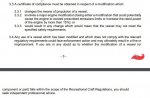
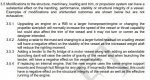
The end of owner maintenance ...

A brief skim of the various documents suggests that there is bit of 'stable door and bolted horses' going on here.
Boats that have lost keels might have been an operator in this response and then a few other odds and ends get chucked in.

Discussing the impact and recording of a grounding or a knock down on the integrity of a boat and what to do with a MOB situation seems to be bundling very disparate matters.

Also there is some confusion between what might be seen a 'pre-regulation directive guidance' and 'good practice'

Yes, it is a good idea to have life jackets on board, make sure they are safe and efficient - not exactly rocket science that you brief the crew where they are, how and when they put them on and operate them. For us it is, if you want to wear a lifejacket, when I tell you you will wear one and on deck at night whatever is happening.

As for giving instruction what to do when someone goes overboard - that is delicate.
So he went over the side, the book said slow the boat - bit of the 'bleedin obvious'
It's what you practice on your YM and other courses - and if you are like me, in your mind everytime you take to sea.

As far as I can see it sort of needs to decide if it is a yachtmaster check list or a set of draft regulations aimed at boosting revenue for marinas and yards.
If that is the case then we need some formal qualification for marine engineers and their ilk.
My experience is that their range of competence, skill and ability is variable and difficult to quantify at first meeting.
 
The problem is that while these notes are not actually part of law, they coudl certainly be brought up in a court case for example.

It only needs your insurance company to add the words "maintenance will be carried out in accordance with recognised best practice" .. and when you come to make your claim for total loss, they will rattle these notes as evidence of accepted "good practice" and ask for the engine logs, signed off each year by a "marine professional" and if you have carried out work yourself, then all bets are off!
 
Looking at the maintenance section, the main stumbling block seems to be what counts as being "qualified". I for instance served an apprenticeship in the motor trade in the '60s but I don't have any paperwork to support that or, any paperwork to prove I later went through the Gas Board (as it was then) training school, being employed on district service repairing and servicing all sorts of domestic and industrial appliances.

Times have changed and NVQs are most likely needed to sweep the office floor these days so, where are all these professional boat maintainers going to come from?
 
Good grief! Pages, pages and pages of babble-speak and obfuscation!
Who on earth dreams up these documents and who do they think is going read, never mind take in every page, point and detail? Far too much wordery!

As a post said at the beginning of this thread, being familiar with the workings of a boat and able to undertake routine/emergency repairs etc is surely the very best way of keeping our leisure pursuits safe and affordable.

I for one do not have a handy rigger, sailmaker, boatyard, engineer, antifouler, GRP repairer (the list goes on) within a great distance. I might as well sell the boat, buy a wetsuit and go paddling in the water's edge (before that too is subjected to H&S or some other intrusive legislation).

There will always be some unfortunate people who's expertise is either lacking or wilfully ignored; there will always be accidents and mishaps. This is the "Nanny State" going bonkers.

How do we resist this sinister meddling? Any ideas?


And no, I didn't read the whole document(s), I gave up halfway through the first section.
 
You are all up in arms about this proposal but i have just read the second document - maintenance etc-
can anyone tell me what is so wrong with that?
basically it is just outlining good practice. It refers to maintenance of critical parts. Take for example, rigging, i had a rigger examine and report on my rigging a number of times when the mast was down and i had a rigger fit new rigging.
if i wanted to do new rigging myself i would still have the swages made up professionally.
if i changed the engine i would take advice on the correct type. If i changed the prop i would go to a prop manufacturer for advice
if i had a new gas system i would get it checked by a recognised installer
i do actually keep a log of what i do every year
changing the oil etc is not precluded in the document as an owner maintainable item as far as i can see so comments about filters are irrelevant. It depends on the definition of safety items. It would seem sensible when changing engine components ( fuel lines are mentioned) to keep to the manufactured design. Surely it is right to remind people that sticking a bit of garden hose in place of some fractured copper is not really a good long term solution. I bet some have done it though!!!
as i said , i have only read one document and need to read them all - subjectively- then perhaps one can feel justified in making sensible contributions to the thread rather than panic reaction
 
Last edited:
The end of owner maintenance is nonsense. All boat kit is made for weekend and holiday sailors, so long distance sailing everything, except electronics, will break more than once. We carried two spares for everything, exploded diagrams and a whole range of tool including open and ring spanners. I spent at least one day doing maintenance or fixing things, the longest I didn't do something was a month then three things broke one day.
 
"(before that too is subjected to H&S or some other intrusive legislation)"
I must take issue with remarks like this. The health and safety at work act was a major step forward in protecting working people and has saved many lives and health issues by forcing employers to provide a safe working environment and penalising them if they don't. I spent most of my working life involved with the construction industry which had a very poor safety record when I started. Admittedly I've sat through many boring training sessions on it but that's the price you pay.
HASAWA only applies to activities at work - you can do what you like at home or at leisure - paint your house with an unfooted triple extender, cut your toes off with a Flymo or blind yourself by not wearing goggles when angle grinding (to name but a few). BUT you can't do it at work (legally) any more.
 
"(before that too is subjected to H&S or some other intrusive legislation)"
I must take issue with remarks like this. The health and safety at work act was a major step forward in protecting working people and has saved many lives and health issues by forcing employers to provide a safe working environment and penalising them if they don't. I spent most of my working life involved with the construction industry which had a very poor safety record when I started. Admittedly I've sat through many boring training sessions on it but that's the price you pay.
HASAWA only applies to activities at work - you can do what you like at home or at leisure - paint your house with an unfooted triple extender, cut your toes off with a Flymo or blind yourself by not wearing goggles when angle grinding (to name but a few). BUT you can't do it at work (legally) any more.

When I started my apprenticeship in 1961 we had H&S lectures every other day the first month and regularly after that, the firm had two full time safety officers that ran courses for all employees. H&S is not new, just applied to all and provides income for many.

Brian
 
Re: MCA consultation - in the wake of Cheeki Rafiki

Ah sorry. I had a look in PBO, but missed that thread title as referring to the consultation.
 
keeping a log will be a great help, contemporaneous records to show your due diligence. In my case the MCA and insurance were happy for me to self certificate between 5 yearly inspections. It was a precondition of cover that a valid MCA cert was in force.
 
"(before that too is subjected to H&S or some other intrusive legislation)"
I must take issue with remarks like this. The health and safety at work act was a major step forward in protecting working people and has saved many lives and health issues by forcing employers to provide a safe working environment and penalising them if they don't. I spent most of my working life involved with the construction industry which had a very poor safety record when I started. Admittedly I've sat through many boring training sessions on it but that's the price you pay.
HASAWA only applies to activities at work - you can do what you like at home or at leisure - paint your house with an unfooted triple extender, cut your toes off with a Flymo or blind yourself by not wearing goggles when angle grinding (to name but a few). BUT you can't do it at work (legally) any more.
OK, I accept that H&S, HASAWA or whatever has brought huge safety benefits to the work place, and by that to the domestic environment as well. But this proposal seems to me to be the thin end of the wedge in its direction to eventually make illegal all sorts of "home maintenance".
Bodging, dangerous bodging, should be controlled and stamped out if it puts others in danger, but an individual who accepts all manner of risks in daily life is just that - an individual in charge of his/her environment/practices.
Why attempt to force all "home maintenance" into the regulated services sector to the cost and likely inconvenience of the home "mechanic".
I'm not saying I'm an expert at boat/car/garden equipment/home maintenance, but I'm quite useful at it and I'm not hurting anyone else.
I accept that were I to endanger a third party through my actions then I might be liable to some controls and even sanction.

For example, when Khamsin needs re-rigging (within two years) then it will be professionally done, by who I trust will be a qualified and accomplished rigger.
I can change an injector and the engine still works perfectly, I can do GRP repairs, splicing, general maintenance etc without endangering third parties.
I can even put the correct amount of air in my car's tyres.
All those might cause a breakdown in a potentially dangerous situation - but life is not totally risk free.
Common-sense and forethought must count and not be legislated away.
 
When I started my apprenticeship in 1961 we had H&S lectures every other day the first month and regularly after that, the firm had two full time safety officers that ran courses for all employees. H&S is not new, just applied to all and provides income for many.

Brian

When I started my apprenticeship in the motor trade in the '60s, the only health advice I received was to clean the spoon in the foreman's tea. Joking apart, we had no formal H & S training whatsoever, learning was on the job.
 
When I started my apprenticeship in 1961 we had H&S lectures every other day the first month and regularly after that, the firm had two full time safety officers that ran courses for all employees. H&S is not new, just applied to all and provides income for many.

Brian
The difference with HASAWA is that there are statutory responsibilities with severe penalties for non compliance. It sounds like your apprenticeship was with a responsible firm but not all were like that.
 
Top