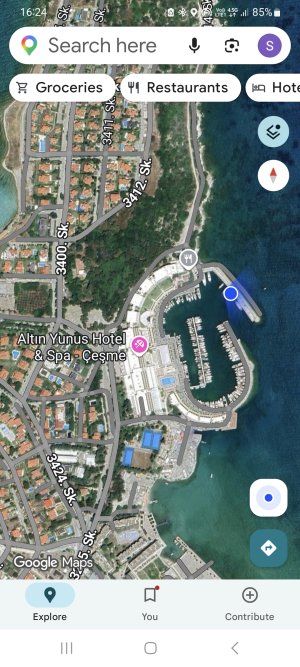
Thats clever.

Its odd, or I find it odd, but Med and Baltic mooring are quite acceptable (in the Med and Baltic) and YBW members seem to accept the concept (in the Med and Baltic) but I have not noticed either practice being used neither in the UK or Australia. It seems such an efficient technique. Adding a gang plank, so much better called a Passerelle, is necessary but in the gran scheme of things that cost (and storage) cannot be the reason

I'm sure someone will have the reason(s)

Jonathan
 
Not sure about Aussie, but going alongside and tying up with your own clean, dry mooring ropes is probably favoured in the UK, rather than hauling gungy, cold, critter/weed infested ropes off a Uk sea bed as stern/head ropes. Ok in the Med, water's usually warm and in some places clearer. Can't speak for the Baltic, they're a funny 'ol lot anyway..:giggle:
 
Its odd, or I find it odd, but Med and Baltic mooring are quite acceptable (in the Med and Baltic) and YBW members seem to accept the concept (in the Med and Baltic) but I have not noticed either practice being used neither in the UK or Australia. It seems such an efficient technique. Adding a gang plank, so much better called a Passerelle, is necessary but in the gran scheme of things that cost (and storage) cannot be the reason

I'm sure someone will have the reason(s)

Jonathan
6501C8FB-8634-487C-8683-179FE1212609.jpegI think Cornwall has something similar
 
Not sure about Aussie, but going alongside and tying up with your own clean, dry mooring ropes is probably favoured in the UK, rather than hauling gungy, cold, critter/weed infested ropes off a Uk sea bed as stern/head ropes. Ok in the Med, water's usually warm and in some places clearer. Can't speak for the Baltic, they're a funny 'ol lot anyway..:giggle:
The commonest mooring in the Baltic is probably the box, but the staging can be at anywhere from deck height to near sea level. Common alternatives are stern buoys, with bows to the staging, and uncommonly a slack line from the shore to the ground offshore which is picked up and made fast to the boat's stern. This is effective but mucky and I have only seen it occasionally, such as at Gudhjem. The Baltic systems make effective use of space but rely on tideless conditions to work.
 
Its odd, or I find it odd, but Med and Baltic mooring are quite acceptable (in the Med and Baltic) and YBW members seem to accept the concept (in the Med and Baltic) but I have not noticed either practice being used neither in the UK or Australia. It seems such an efficient technique. Adding a gang plank, so much better called a Passerelle, is necessary but in the gran scheme of things that cost (and storage) cannot be the reason

I'm sure someone will have the reason(s)

Jonathan
I assumed it was a tidal issue. UK tides being big enough to make the bow lines difficult to have tight at high tide and not holding the boat out the water at low tide, and the pasarelle being awkwardly steep. Of course it might be possible to still have floating pontoons to compensate for the tide but I guess if most boats aren't set up for and skippers aren't familiar with it the only way to attract those customers would be to undercut the competition. Since marina pricing seems to be based on what the customer will pay rather than the cost I'm not sure it makes business sense.
 
Almost everyplace in the Aegean, Ionian and Adriatic I've used lazy lines they've been filthy and quite often with razor sharp growth on them. We use cut resistant gloves for hauling lazy lines.
Yes, I too found old Gardening gloves liberated from the chain locker were near enough essential in many places in the Med. It's probably more to do with Tides as Ylop suggests, or Brits just don't like dabbling in cold water for a mooring line..:ROFLMAO:
 
Its odd, or I find it odd, but Med and Baltic mooring are quite acceptable (in the Med and Baltic) and YBW members seem to accept the concept (in the Med and Baltic) but I have not noticed either practice being used neither in the UK or Australia. It seems such an efficient technique. Adding a gang plank, so much better called a Passerelle, is necessary but in the gran scheme of things that cost (and storage) cannot be the reason

I'm sure someone will have the reason(s)

Jonathan
Tides. Baltic and Mediterranean moorings are based upon having minimal tides.

Interestingly as recently as 1990 in magazines such as Yachting Monthly, “Med mooring” as a term was used to mean BOWS in, as in the Baltic today - without bothering to define as it was assumed all readers knew that bows to was the norm. The reason for bows in often being to avoid rudder damage if boulders near the quay.
It is not clear when the mindset flipped from “Med mooring” being assumed to be bows in to be assuming stern in?

From a privacy point of view bows in is preferable, to my mind.
 
Its odd, or I find it odd, but Med and Baltic mooring are quite acceptable (in the Med and Baltic) and YBW members seem to accept the concept (in the Med and Baltic) but I have not noticed either practice being used neither in the UK or Australia. It seems such an efficient technique. Adding a gang plank, so much better called a Passerelle, is necessary but in the gran scheme of things that cost (and storage) cannot be the reason

I'm sure someone will have the reason(s)

Jonathan
S8mple. No tide rise and fall.
 
Almost everyplace in the Aegean, Ionian and Adriatic I've used lazy lines they've been filthy and quite often with razor sharp growth on them. We use cut resistant gloves for hauling lazy lines.
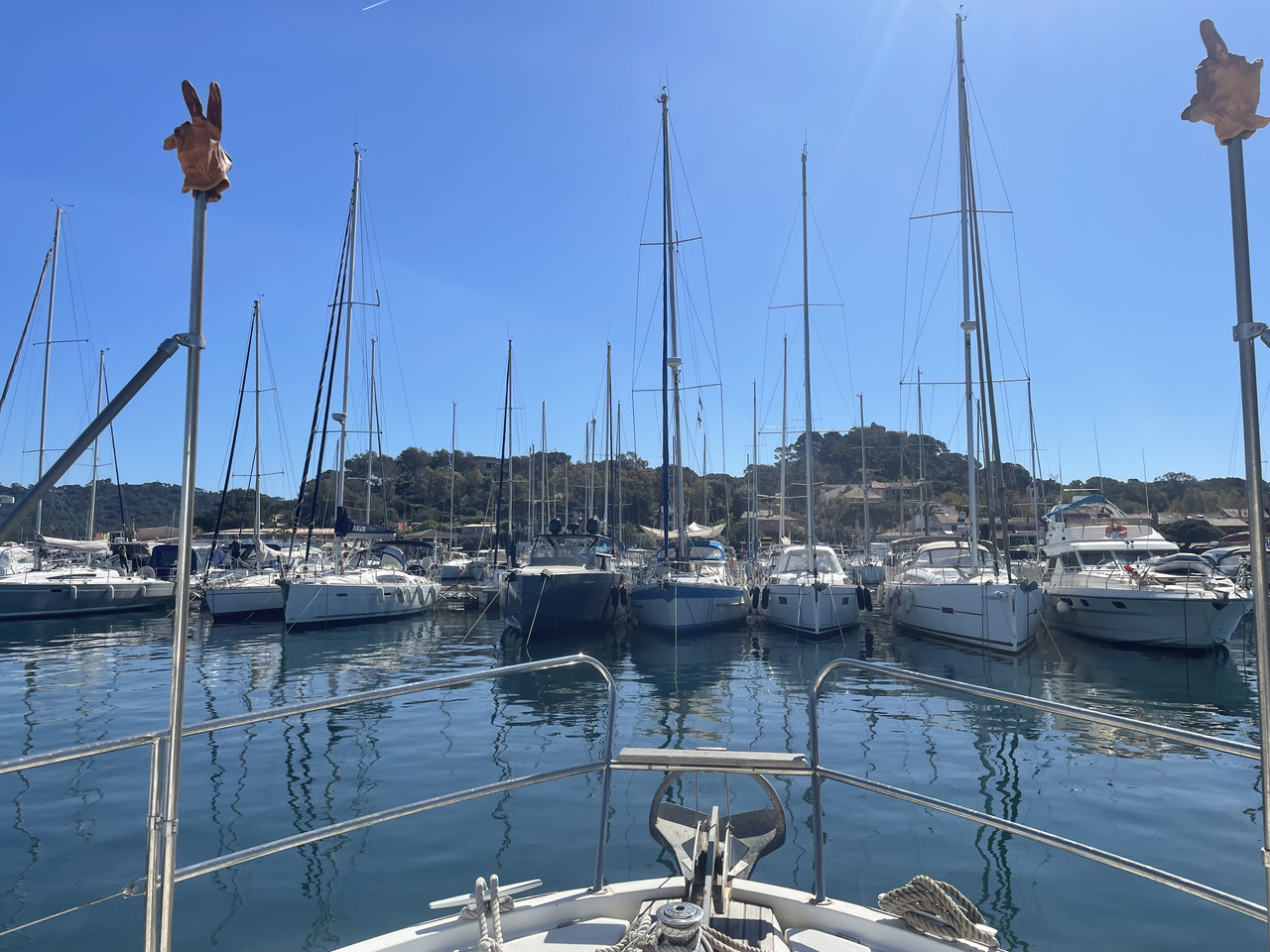
The usual name amongst sailing school instructors in Gib for these are 'slime lines'. :)

I got very used to them in many years of coaching makee learnees in and around the Straits of Gibraltar. There is still a bit of tidal range in that area so it does require care. But the first 500 times are the hardest!

You'll know about the effect of ambient air pressure on sea levels at that end of themed. I found out about that in Croatia, Greece and Turkey on various deliveries. So not always quite what it seems.

For others, we lived a lot of years on our Moody in Gib. Definitely bow to for privacy and to protect £££ of hydrovane.

I've used pasarelles plenty on other yachts. A real pita to stow when you are moving around every day on courses. So that neat idea in my opinion caught my eye so I thought I'd share. If you a cruising in near non tidal waters, seems fab to me.

Some Canarian marinas use slime lines even with a tidal range of around a metre. Would be very handy in West Indies marinas too, Baltic sailors will recognise either the two posts that you pass through to a very concrete dock or as Mr. J mentioned, one or two fixed buoys to grab in passing before the same very concrete!

I'm sure those who aren't familiar with this stuff can imagine that boats with propellers right next to underwater lines can involve fascinating challenges especially in a cross wind....

Last bit, those who have sailed the Eastern med know about using ones own anchor rather than slime lines.

Neptune has many devious ways to test us simple sailors.
 
Last edited:
Tides. Baltic and Mediterranean moorings are based upon having minimal tides.

Interestingly as recently as 1990 in magazines such as Yachting Monthly, “Med mooring” as a term was used to mean BOWS in, as in the Baltic today - without bothering to define as it was assumed all readers knew that bows to was the norm. The reason for bows in often being to avoid rudder damage if boulders near the quay.
It is not clear when the mindset flipped from “Med mooring” being assumed to be bows in to be assuming stern in?

From a privacy point of view bows in is preferable, to my mind.
Maybe it coincided with the change to walk through transoms?
 
I spent far more time at anchor than in Marinas, until the winter that is, then it was always Bow to the jetty. Like the Capt: I used to worry a bit about my Hydrovane getting clouted, possibly by people struggling to berth their own boat safely. The big pink Net marker buoy actually saved the day on one occasion when a local owned Motor Boat ran amok.

 
I assumed it was a tidal issue. UK tides being big enough to make the bow lines difficult to have tight at high tide and not holding the boat out the water at low tide, and the pasarelle being awkwardly steep. Of course it might be possible to still have floating pontoons to compensate for the tide but I guess if most boats aren't set up for and skippers aren't familiar with it the only way to attract those customers would be to undercut the competition. Since marina pricing seems to be based on what the customer will pay rather than the cost I'm not sure it makes business sense.
Exactly... with a big tide the slime line would either be totally slack or would pull your bow under.
 
Top