Taking wind gen up and down

... The problem in Australia is supplying enough electricity for periods of peak demand. This is during late afternoon to early evening (around 3 p.m. to 9 p.m.). Unfortunately, this is a time when solar contributes little or nothing. Hence the desire to use wind to have a renewable energy source that still works during periods of peak demand. ...

I think this point will diminish as home batteries are become more common. In the last few years, in the UK, batteries are offered as well solar when proposals are made. Also, battery additions are now offered to those who installed solar before batteries were easily accessible.
 
I think this point will diminish as home batteries are become more common. In the last few years, in the UK, batteries are offered as well solar when proposals are made. Also, battery additions are now offered to those who installed solar before batteries were easily accessible.
Yes, home batteries can potentially reduce peak demand.

The Australian government is wrestling with how to supply enough power during periods of peak demand while at the same time reducing the reliance on fossil fuels. Unfortunately, no matter how much solar is fitted, this cannot supply much energy for most of the peak demand period. Once it goes dark solar panels don't work. Hence the interest in wind despite the good solar conditions in many Australian areas.

One state even added a 100-megawatt battery to their power grid. This, together with household batteries, helps, but in relative terms, it is nothing like a boat system (particularly with lithium batteries) where we typically don’t care how much energy we are using at night, providing we have enough solar (or other energy sources) to comfortably replenish the energy during the day.
 
Last edited:
This is referring to the grid power supply, which is quite different from a boat’s power supply.

Australia has lots of solar with incentives for households (and businesses) to fit solar to their roofs.

The problem in Australia is supplying enough electricity for periods of peak demand. This is during late afternoon to early evening (around 3 p.m. to 9 p.m.). Unfortunately, this is a time when solar contributes little or nothing. Hence the desire to use wind to have a renewable energy source that still works during periods of peak demand.

Boats do not have the same problem, especially with the development of lithium, we have plenty of battery power to cover our electricity need when solar is not working. Our goal is to make sure we are making on average more energy than we are using. If this goal is met, it does not matter if for many hours of the day we are not producing enough electricity to keep up with demand.
A cruising couple, living aboard, in a 35' yacht have similar demands for their domestic power usage as a couple in a 50' yacht. I remember the days when the J35 was introduced, it was a big yacht - and the yacht to covet. If it was a big yacht then - not much has changed - except now you need to think beyond 50" for a 'big' yacht. The couple with the 50' yacht have room for a significant solar display. The couple in the 35' yacht have fewer options for their smaller solar display. Unless you think the couple in the 35' yacht should be without a fridge and deep freeze, radar, etc Similarly the couple in the 50' yacht have plenty of room for a large Lithium battery bank. You may not have noticed but 35' yachts have less free space to have a large battery bank and though Lithium takes up less room (and is lighter than lead) a big bank will impact sailing performance.

Wind and a hydro generator seem like sensible additions to the power sources of the couple with the smaller yacht.

But maybe I need to get out more and no-one cruises a 35' yacht - too small - and if they are so impecunious they should cut back on domestic needs and live like camping in the 1950s.

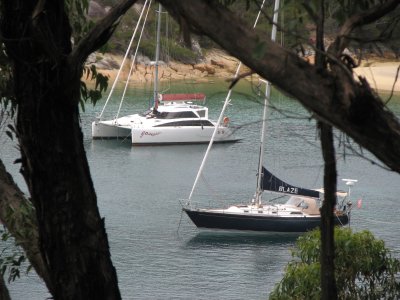
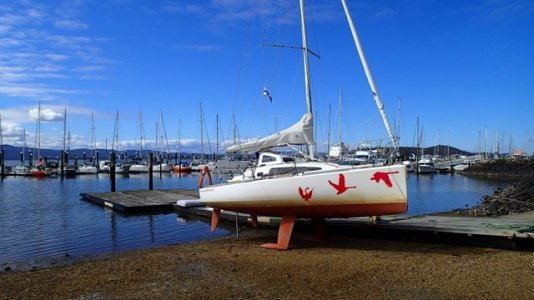
This yacht is an extreme and is being sailed, round the world, by a couple and has a Lithium house battery.

Resizer_16316682173575.jpeg

Tasmania On route 08 118.jpg

The couple, from the UK, on Blaze were half way round the world, circumnavigating slowly - 12 years to date. They sailed in one of the early ARCs in a tiny yawl and later upgraded to a 'big' yacht (Blaze)

People do live on small yachts.


Jonathan
 
Redundancy is an important issue (imho)

Solar is best; very little contest.

Wind turbines have their place imo ( and as someone who sees how simple they are and how fixable they are (in general). Carry spare parts / who doesn’t?

We use wind to propel us, why not use it to create energy?

I also built two towed generators for absolute peanuts.

I love to create and build and avoid yacht chandlers; I was taught to make do and mend.

I was brought up in a family of farmers, DIYers, mechanics and engineers and inventors.

It is rare that I need help form tradesmen.

Age affects this, however. I notice it mostly upon house maintenance; rooves, I never liked climbing or heights now I have given up the “suck” and pay rather than spend a day in terror with support ropes, etc.

Devising clever (or common sense) solutions can avoid costs obviously if one is able.
 
A cruising couple, living aboard, in a 35' yacht have similar demands for their domestic power usage as a couple in a 50' yacht. I remember the days when the J35 was introduced, it was a big yacht - and the yacht to covet. If it was a big yacht then - not much has changed - except now you need to think beyond 50" for a 'big' yacht. The couple with the 50' yacht have room for a significant solar display. The couple in the 35' yacht have fewer options for their smaller solar display. Unless you think the couple in the 35' yacht should be without a fridge and deep freeze, radar, etc Similarly the couple in the 50' yacht have plenty of room for a large Lithium battery bank. You may not have noticed but 35' yachts have less free space to have a large battery bank and though Lithium takes up less room (and is lighter than lead) a big bank will impact sailing performance.

Wind and a hydro generator seem like sensible additions to the power sources of the couple with the smaller yacht.

But maybe I need to get out more and no-one cruises a 35' yacht - too small - and if they are so impecunious they should cut back on domestic needs and live like camping in the 1950s.

This yacht is an extreme and is being sailed, round the world, by a couple and has a Lithium house battery.

View attachment 201134

View attachment 201135

The couple, from the UK, on Blaze were half way round the world, circumnavigating slowly - 12 years to date. They sailed in one of the early ARCs in a tiny yawl and later upgraded to a 'big' yacht (Blaze)

People do live on small yachts.


Jonathan
Yes.

Book called Shrimpy as you probably know; 18 foot, bilge keel ply wood.

He lived.

He even acquired a girlfriend !
 
This yacht is an extreme and is being sailed, round the world, by a couple and has a Lithium house battery.
Congratulations to them.

Our first yacht was significantly smaller than this, and we cruised for months at a time. Solar generated all our electricity, but I wish we had lithium back then.

I don’t need any convincing that small boat cruising is not only possible but also fun.
 
Congratulations to them.

Our first yacht was significantly smaller than this, and we cruised for months at a time. Solar generated all our electricity, but I wish we had lithium back then.

I don’t need any convincing that small boat cruising is not only possible but also fun.
But its now the 21st Century, we do have lithium, and it is possible to desire and acquire toys that make life more comfortable but that all need amps to run them, like induction instead of gas, a desalination unit, a decent fridge and ideally an equally decent deep freeze. But these smaller yachts lack the space for huge solar farms - so how are they going to run the fridge, 24/7, (let alone a deep freeze) and have a fresh water shower without a different means (other than solar) to power them. Wind is not a panacea - but its better than throwing the tuna and surviving on baked beans and strictly rationed fresh water.

I'm the first to agree that with age the idea of living without life's little essentials is simply unacceptable - but then we have grown soft (and made different choices). And I would not impose our choices on anyone - nor close my mind to their possibilities.

With time travel I WOULD do things differently - I'd have a bigger wind gen(s) and 2 of them. :). Sitting on cranked pylons, well clear of the transom - they would not cause shade on the yacht, at all.

Jonathan
 
But the wind gen is still there!

I can see it!

I am having a laugh; I assume you took wind gen down later?

Why not leave for night use or winter use or very cloudy use may I ask?

Noisy? Vibration? Needing too much maintenance?

Yes, I have had wind gens before as you can deduce.
These things should be banned. Have you ever tried to get a decent nights sleep moored anywhere near one on a blustery night with the blades speeding up, slowing down and making more din than a jet ski.
 
These things should be banned. Have you ever tried to get a decent nights sleep moored anywhere near one on a blustery night with the blades speeding up, slowing down and making more din than a jet ski.
Yes, had one on my boat- no worries. I loved it and loved the maintenance. (That was pretty easy).
 
These things should be banned. Have you ever tried to get a decent nights sleep moored anywhere near one on a blustery night with the blades speeding up, slowing down and making more din than a jet ski.
If you could hear it arguably you were too close to your neighbour and should have moved. But if you could hear it - then it was producing amps - if you cannot beat them, join them

Ours was an LVM Areo4aqua - it made little noise, what there was reassuring - amps pumping into the batteries overnight or under an overcast sky (when oddly there is little sunshine) and all the solar display deployed to ensure you cannot safely walk the decks - is doing nothing (well not quite - keeps you off the bow :)

Jonathan
 
If you could hear it arguably you were too close to your neighbour and should have moved. But if you could hear it - then it was producing amps - if you cannot beat them, join them
...
Lots of them left running in marinas, making horrible noise just a finger pontoon width away.
Definitely not the best neighbours.

And whilst new generation ones may be quieter, few bother to fit nowadays as solar better. So tends to be old kit in the neighbouring berth.
 
But its now the 21st Century, we do have lithium, and it is possible to desire and acquire toys that make life more comfortable but that all need amps to run them, like induction instead of gas, a desalination unit, a decent fridge and ideally an equally decent deep freeze. But these smaller yachts lack the space for huge solar farms - so how are they going to run the fridge, 24/7, (let alone a deep freeze) and have a fresh water shower without a different means (other than solar) to power them. Wind is not a panacea - but its better than throwing the tuna and surviving on baked beans and strictly rationed fresh water.

I'm the first to agree that with age the idea of living without life's little essentials is simply unacceptable - but then we have grown soft (and made different choices). And I would not impose our choices on anyone - nor close my mind to their possibilities.

With time travel I WOULD do things differently - I'd have a bigger wind gen(s) and 2 of them. :). Sitting on cranked pylons, well clear of the transom - they would not cause shade on the yacht, at all.

Jonathan
The choice of wind is a strange one in this day and age of high performing solar. We had, what was considered a high performance wind turbine for 20 years. In my view, they are no longer relevant in this day and age. I would never go back to wind unless I was trying to live aboard a boat in winter at anchor. Something I can't imagine myself doing.
If you sail in the summer, anywhere in the world, it is possible to do it all powered from solar. Even on a smaller boat.
Our 44ft boat has 1300w of solar without a solar arch. We run a 220v watermaker, all electric galley, immersion heater and all the normal boat loads with lithium batteries.
Being able to tilt solar panels is good for another 25% output compared to fixed horizontal panels. Having lithium has a similar 20/25% benefit as you spend zero time in absorption unlike lead batteries. Having high performance solar with 25% efficient cells and bifacial panels is also improving output, especially in low sunlight conditions.
We are currently spending time in marinas, as there are few reliable anchorages where we are now. Something of a rarity for us as we generally spend all of our time at anchor. We don't need shore power. We haven't plugged the boat in since it was inside a big shed over winter.
 
We chose a duogen so obviously it's low down on the stern. That was about 20 years ago. It's still going well. We never worry about consumption underway as we are either generating about 2 A (24V) or motoring. I am surprised more people don't go that way. We don't use it in wind mode much, just occasionally at anchor in a blow but in water mode it makes night sailing a doddle when the solar is not working. Moreover the service from Eclectic Energy in Nottingham is second to none, even after all this time.
 
We chose a duogen so obviously it's low down on the stern. That was about 20 years ago. It's still going well. We never worry about consumption underway as we are either generating about 2 A (24V) or motoring. I am surprised more people don't go that way. We don't use it in wind mode much, just occasionally at anchor in a blow but in water mode it makes night sailing a doddle when the solar is not working. Moreover the service from Eclectic Energy in Nottingham is second to none, even after all this time.
That is what I had. I have done 10s of thousands of miles with it but probably spent £1000 over 20 years fixing it. Never again. They do make good power in water mode but it has hit discarded fishing gear twice that almost destroyed it. With lithium and good solar, we really don't miss it
 
Wind is not a panacea - but its better than throwing the tuna and surviving on baked beans and strictly rationed fresh water.
There is no perfect answer, but solar has improved so much that the trend I see in cruising boats is to fit more solar and no wind. It may not be the answer for everyone, particularly those planning to visit areas of very poor solar insolation, but overall solar is proliferating, and the number of boats fitting wind generators is declining.

This still applies to smaller cruising yachts. The small long distance bilge keel cruising yacht you posted a photo of in #27 was featured in PBO a couple of years ago. The owner states one of the pieces of equipment that he did not fit for his world cruise was a wind generator.
 
There is no perfect answer, but solar has improved so much that the trend I see in cruising boats is to fit more solar and no wind. It may not be the answer for everyone, particularly those planning to visit areas of very poor solar insolation, but overall solar is proliferating, and the number of boats fitting wind generators is declining.

This still applies to smaller cruising yachts. The small long distance bilge keel cruising yacht you posted a photo of in #27 was featured in PBO a couple of years ago. The owner states one of the pieces of equipment that he did not fit for his world cruise was a wind generator.

I did better than read an article in PBO.

I made his new 6mm anchor chain, replacing his 8mm chain and he and his partner came for dinner, a shower and fill their jerry cans with water. He said he regretted the inability to add a wind gen but it was impossible to fit without reducing some of the sailing characteristics - the working component, the generator itself, was too heavy and to be useful needed to be high up. Having a big lump of copper and magnets high up, its not your common bilge Keeler :), was simply unacceptable. Like others he had a weight fetish, hence 6mm not 8mm rode.

Jonathan

The new rode was a 6mm galvanised G100 chain designed to have the same tensile strength of the 8mm it replaced. On reflection I should have insisted on simply replacing the G30 x 8mm with G30 x 6mm. 8mm was grossly over weight and unnecessarily strong (a common problem - what are specifiers thinking of?) for such a small yacht - but the owner's demands take precedence.

Many rodes are far too heavy and too strong - its a common problem. Owners are then left with a gypsy for chain unnecessarily large - new chain, smaller chain is not necessarily expensive....... the new gypsy is extortionate. If you complain of the use of old technologies - look at your rode before complaining - pot calling the kettle black comes to mind. Some old technologies can be useful - carrying heavy chain around to no benefit lacks any logic at all.
 
Last edited:
Top