Starter key or buttons?

mogmog2

Well-Known Member
Joined
12 Feb 2011
Messages
494
Location
Sussex
Visit site
I'm looking at making my own panel. What are the pros and cons of a push button system compared to a 4 position (preheat) keyed starter switch?
I've got
Buttons: not having to have a loseable key and more modern-looking.
Key: simpler to make (and operate possibly if buttons need a separate 'energise' switch?) & more compact.
Thanks
 
When we bought our boat the keys in my Yanmar control panels were locked into place with little grub screws which can only be removed if you partly dismantle the switch. They might as well have been buttons (there's no glow plugs).

I've removed the grub screws and can remove the keys now ..... but as every Yanmar Panel B switch is identical it's all a bit pointless and I only did it so I could clip the rubber weather shields over the switch.

Richard
 
I'm looking at making my own panel. What are the pros and cons of a push button system compared to a 4 position (preheat) keyed starter switch?
I've got
Buttons: not having to have a loseable key and more modern-looking.
Key: simpler to make (and operate possibly if buttons need a separate 'energise' switch?) & more compact.
Thanks

For me the choice was simple.

A few years ago I re-engined and a choice of control panel for my new Beta engine: https://betamarine.co.uk/seagoing-control-panels/

I went with the keyless Beta 'Control Panel ABVW' simply because my cabin lock was good and I didn't want to lose the engine keys out of the open stern of the boat. Oh, and I didn't want to bend them, break them, lose them or them to rust either. Isolating the batteries inside the cabin when leaving the boat stopped any power getting anywhere near the engine so when isolated, there was no engine starting or power (to anything except the auto bilge pump).

Given the range of control panels I'd select the same panel again as first choice. I can't understand why anyone would want keys to be honest...
 
A button panel is likely to be more complex to design/build. Relays will probably required to latch and maintain power to alarm systems etc whilst the engine is running unless you have an extra manual switch, which spoils the concept to some extent.
 
Last edited:
The Beta keyless panel mentioned above has, besides the three push buttons, two relays and three diodes.
There is no direct equivalent to the 'run mode' of a key switch panel.
 
The Beta keyless panel mentioned above has, besides the three push buttons, two relays and three diodes.
There is no direct equivalent to the 'run mode' of a key switch panel.
That makes sense as the manual just says turn on the battery isolator
and press start.
A button panel is likely to be more complex to design/build. Relays will probably required to latch and maintain power to alarm systems etc whilst the engine is running unless you have an extra manual switch, which spoils the concept to some extent.
That's where I thought this was going. Thanks for confirming.
 
A key is easier to fit. Push buttons are nice but can be a pain when things start to go wrong!

We are a Beta dealer and always opt for the key switches unless specifically asked by a customer.

Thanks. Pros & cons. You pays yer money...
I'm thinking of relocating my panel to a place where I can actually see it,but it would be more exposed, which is partly one of tbe things about buttons - more water resistant?
 
Button panels are very easy to build. Momentary button wired to a latching relay for the "ignition". Push for on, the relay latches and supplies power to the warning lamps, buzzers and the starter switch. Push for off, everything goes off, simples.

Momentary button for the starter.

If it has pre-heat, either a 3rd momentary button or a times relay (kind of thing fitted to old Peugeot etc).

The buttons can be waterproof, the rest can be out of the way. There isn't realy much more to go wrong than with a standard panel and you don't have to pay £200 for a Volvo key switch that's failed. Buttons an relay readily available for peanuts.
 
I'm looking at making my own panel. What are the pros and cons of a push button system compared to a 4 position (preheat) keyed starter switch?
I've got
Buttons: not having to have a loseable key and more modern-looking.
Key: simpler to make (and operate possibly if buttons need a separate 'energise' switch?) & more compact.
Thanks

Replaced my cockpit mounted Vetus engine panel with a diy one eliminating the key switch and two relays (there is still a relay in the glowplug circuit) and it has been perfectly reliable, unlike the Vetus one.

Www.solocoastalsailing.co.uk
 
The PO was determined to have a key switch for some reason. He added a Volvo key switch and rewired the panel (I have the sketched diagrams). The glow plugs are not connected properly to the switch (being on the 'fan' setting), and their indicator does not light. I might revert as a button which seems more fool proof - there is an engine battery master switch below.
 
When I moved my engine control panel from the saloon to the cockpit, I used a rocker switch for the "ignition" and a glorified bell push for the starter, both suitably IP rated. I was glad to see the back of the ancient and now unreliable key switch, but I don't have the complications of heaters or electronic run/stop controls.

So far, so good, and being able to start the engine without abandoning the tiller is a definite plus.
 
My new Beta panel has a key start. The old Yanmar had a push button. Soon after installation the key jammed in start position resulting in a burnt out starter motor and lots of smoke. Lesson learnt, only have one key in the ignition, not on a bunch.
 
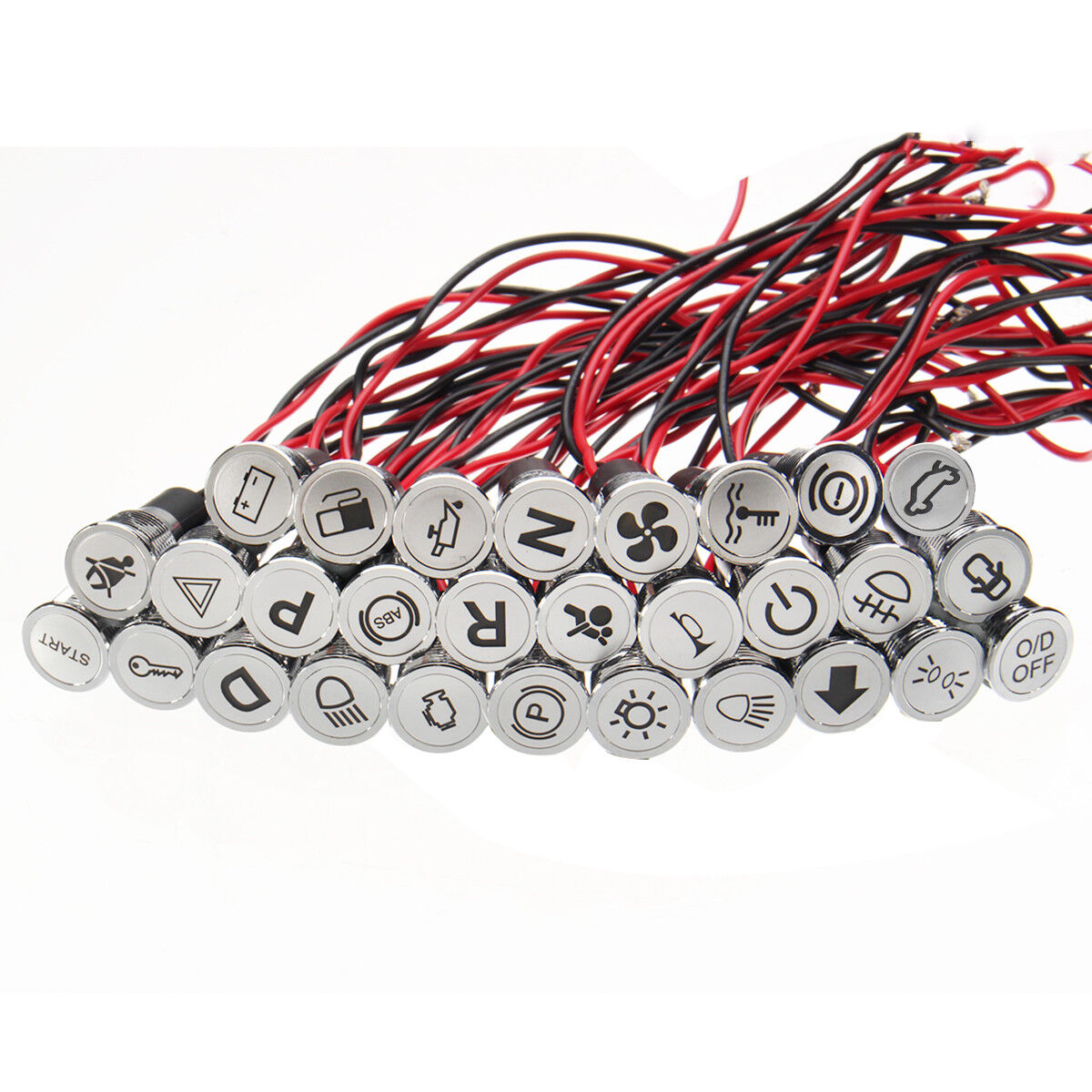
Not quite the same as you as don't have glowplugs but rebuilt my yanmar 1gm10 one entirely. No original parts from the panel used apart from wiring. Originally it has a key to switch on & off and push button start. It needs this otherwise it would constantly beep at you. I changed it too key start loosing the start button entirely. Feels better in use to me but it is personal preference. I rebuilt the new panel onto a 'household' double plug blanking plate and installed the finished panel into an outdoor waterproofing unit. I then set this into the cockpit coaming under the main door. Ideal and fully splashproof. The LED warning lights are the same as used on kit cars etc with graphic emblems that show up. Just grabbed a pic from one of my videos as a pic is worth a thousand words and it shows what I mean quite clearly although my lights are slightly different.

49778696_2178458585815167_3015707971171647488_o.jpg


s-l1600.jpg
 
Last edited:
On at least two panic stricken occasions, I have tried to start my engine with the 'stop' button. The engine makes a loud click - just like a jammed starter motor - adding further panic! It is only later do I realise what I did, and that the click was the stop solenoid. Go for all buttons!
 
Not quite the same as you as don't have glowplugs but rebuilt my yanmar 1gm10 one entirely. No original parts from the panel used apart from wiring. Originally it has a key to switch on & off and push button start. It needs this otherwise it would constantly beep at you. I changed it too key start loosing the start button entirely. Feels better in use to me but it is personal preference. I rebuilt the new panel onto a 'household' double plug blanking plate and installed the finished panel into an outdoor waterproofing unit. I then set this into the cockpit coaming under the main door. Ideal and fully splashproof. The LED warning lights are the same as used on kit cars etc with graphic emblems that show up. Just grabbed a pic from one of my videos as a pic is worth a thousand words and it shows what I mean quite clearly although my lights are slightly different.

49778696_2178458585815167_3015707971171647488_o.jpg


s-l1600.jpg

That's where I'm thinking of moving it from! Those lights look nice though.
 
My new Nanni came as standard with a keyed panel, but I chose to have a button one instead, which is sold as a flybridge extension. Not that I can imagine many flybridge boats with 14hp engines, but there you go.

On/off is one button with a time-delay latching relay built in to operate the "stop" solenoid for ten (?) seconds after power is turned off. Preheat/start is another combined switch/relay: push in to preheat, push in further to start. It all seems needlessly complicated, as the whole thing could be done with switches and an energise-to-run solenoid. However, I think it's the way it is to work in parallel with another panel.

It has only gone wrong three times so far, in 100 hours. Quite good, by Nanni standards.
 
could be done with switches and an energise-to-run solenoid.

Marine diesels are energise to stop, that way, if everything goes tits up, the engine keeps running. Unless it's a shiny new evc setup. :)

Can still be simple though. I did a setup last year on a big flybridge mobo, was fitted with Volvo engines and key switches upstairs and down, for both engines (obviously). Pain in the bum, if you started the engines upstairs, you had to turn the ignition off up there when you finshished, plus, if a key stuck in the stop position the solenoid got red hot, burnt the wiring out and could set light to the boat, which is why i was called in.

At each helm station i fitted three switches for each engine, on/off (connected to a simple latching relay), start (connected to the starter solenoid) and stop (obviously connected to the stop solenoid). I also added a warning lamp that lights up when the stop solenoid is energised, so it can't incinerate the boat again. Now, doesn't matter with on/off button is used, either will turn it off.
 
Top