Smooth bottom, would you?

sharpness

Well-Known Member
Joined
28 Jul 2010
Messages
713
Location
Midlands - Worcestershire
Visit site
Sorry it's just a boat related question :giggle:

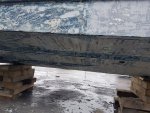
My boat is due to be lifted in the new year, and on the list is to sand off the old layers of antifoul so that its nice and smooth. The worst sections are around the bow area (see pic) and on the chine sides. Question though is it worth doing this, and are there any advantages. I've assumed it will cause a little less drag, improve efficiency etc, but has anyone done this and seen the positive results.
I know the best advice is to soda blast back to bare grp, but in this instance I would be sanding to achieve a smooth surface.

Edit: Sorry, Ive just seen post from Chris H ref Antifoul asking pretty much same question. Thanks all for any advice, either to his post or mine. Just wanted to know if its worth the effort or not to have smooth surface before applying new coat of antifoul.
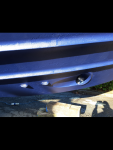

Screenshot_20201122-193448_resized.png
 
Last edited:
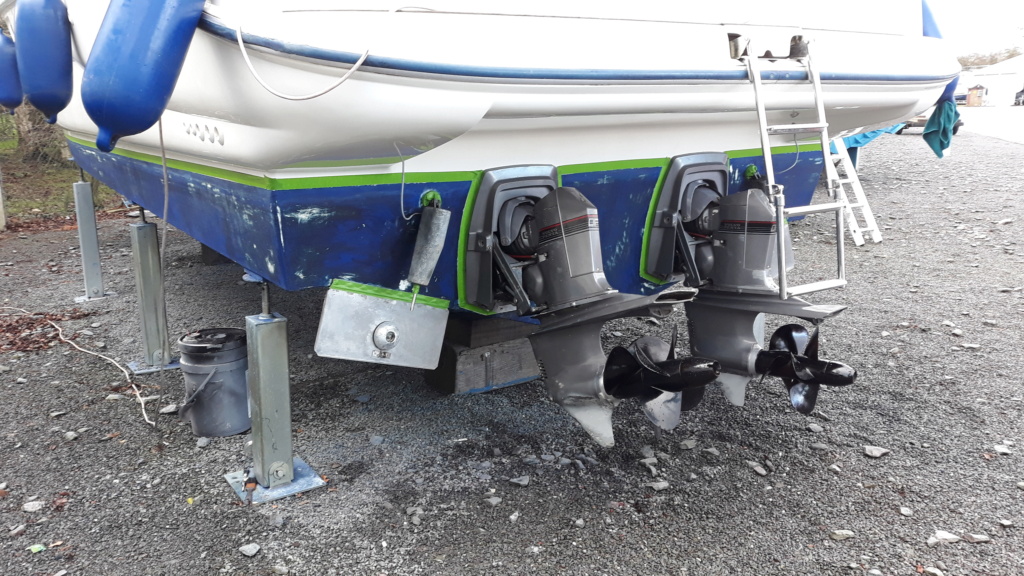
I did this with my Azimut. Scraped all the old a/f off, then several layers of Coppercoat. Well worth it for me. Cost £3000. Still have to lift twice a year, once for anodes and sterngear clean up, then mid season for sterngear again. You won’t need to do this on the Severn. Lift and hold, so much cheaper than lift and block off.
 
Those areas if I am seeing the pic right are largely out the water when on the plane. I have been through what you are proposing and can confirm that you will not realise any extra speed. What you will obviously do is improve it cosmetically. I did mine because the hull had been epoxied with what I can only call a type of grout at OEM that had become friable and was not a good base on which to apply AF. It simply would peel off within it's allocated 2 yr lifespan. The amount of work involved is absolutely MASSIVE, awkward and soul destroying. So unless you are paying someone to do it, the only valid reason AFAIC to scrape back is for adhesion.

Scraping through multiple AF coats later and I'm down to that epoxy stuff ready to sand.


16681525_10154580056628922_4243195635905764379_n.jpg
 
+ 1
Bruce, feel your pain. been there, done it, same situation. Coppercoated afterwards and no looking back. Sigh of relief every year knowing no more painting.
 
Sorry it's just a boat related question :giggle:

My boat is due to be lifted in the new year, and on the list is to sand off the old layers of antifoul so that its nice and smooth. The worst sections are around the bow area (see pic) and on the chine sides. Question though is it worth doing this, and are there any advantages. I've assumed it will cause a little less drag, improve efficiency etc, but has anyone done this and seen the positive results.
I know the best advice is to soda blast back to bare grp, but in this instance I would be sanding to achieve a smooth surface.

Edit: Sorry, Ive just seen post from Chris H ref Antifoul asking pretty much same question. Thanks all for any advice, either to his post or mine. Just wanted to know if its worth the effort or not to have smooth surface before applying new coat of antifoul.


View attachment 103549
That is good I see many worse than that and they just lightly sand and then Antifoul over
 
I don't think that looks bad
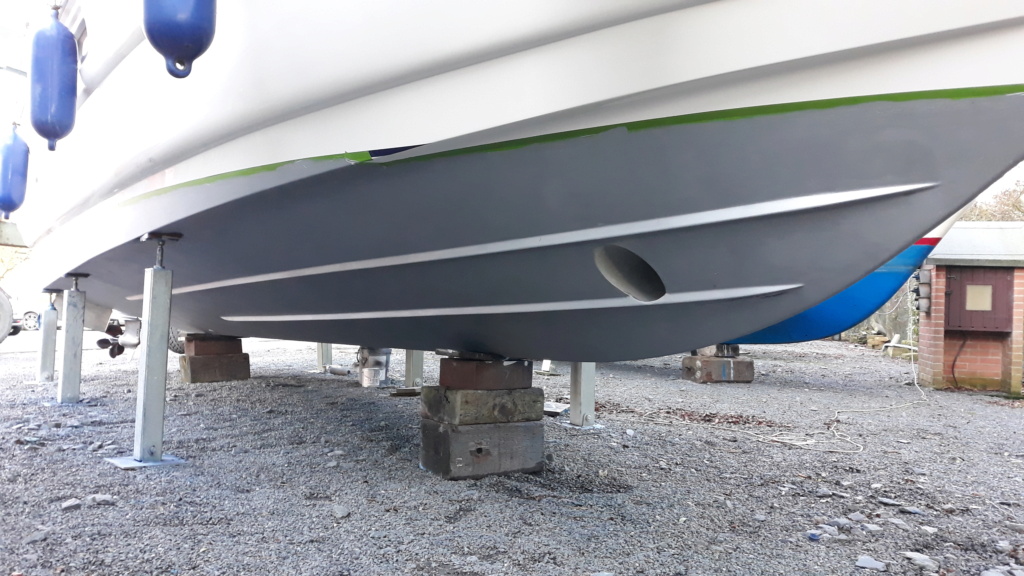
I spent while wet sanding my boat last year around this time. sanded until the white GRP started to show through


Then a barrier coat


Then the antifoul


Applying the paint was the easy bit

PS
The boat did go better !
 
Thanks for the replies. I'm glad the general view is to not bother, I can already hear my shoulders give a sigh of relief. If there are any rough areas that need doing, I will go with the light sanding option, and then apply new antifoul.
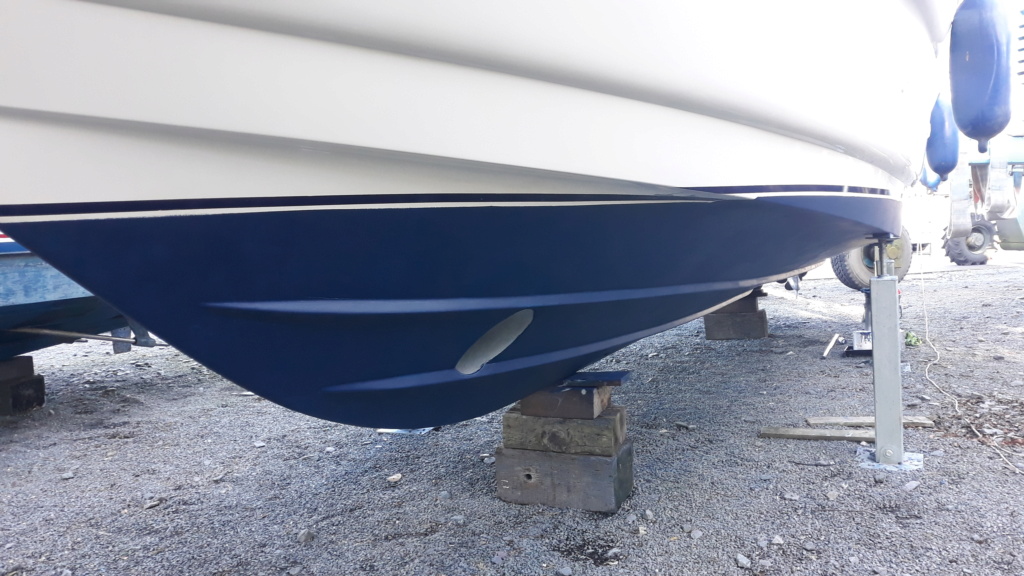
MartynG, the hard work you did looks great, it might be a stupid question, but to wet sand did you do it by hand, or use an electric sander - I'm imagining water and 240v isn't a great mix. When you said the boat goes better, in what areas - top speed ? Economy?
 
Thanks for the replies. I'm glad the general view is to not bother, I can already hear my shoulders give a sigh of relief. If there are any rough areas that need doing, I will go with the light sanding option, and then apply new antifoul.
MartynG, the hard work you did looks great, it might be a stupid question, but to wet sand did you do it by hand, or use an electric sander - I'm imagining water and 240v isn't a great mix. When you said the boat goes better, in what areas - top speed ? Economy?

I tried an electric sander and it made very unhealthy dust so soon gave up with that .

Wet sanding was messy in a different way but at least not breathing it in.

Safety glasses when sanding and painting , gloves essential when painting, and clothing that you don't mind being spoiled . I had an old set of yellow high viz coat and over trousers that now looks blue/green . Hard work but a satisfying job when you look what people say they have paid . Cost me about £125 for paint and about £30 for rollers, cheap brushes , a pole for the rollers , trays , disposable overalls ,etc for my F33 . Threw away the rollers etc rather than buying expensive thinners for cleaning them . One tin of paint did each coat nicely , plus the crane cost but had the boat out anyway for leg service and anodes .

The old antifoul wasn't rough . However the boat seemed to get on the plane a little easier and achieved a knot or two extra at 3200rpm but to be honest I didn't get to go very far at all at speed this year so no evidence really. I doubt it would make any measurable difference in fuel consumption.
 
Wet sanding by hand :eek: Martyn you are a stalwart! I used a thin layer of paint stripper. Just enough to soften the upper coats of AF but not enough to get to the gelcoat and then used an electronic scraper. The reciprocal and not orbital kind. This shaved the AF off without getting to the gelcoat. What was then left was much easier to sand. I dont know what it is about AF, but I've stripped paint off many things in the past in restoration projects. AF despite being designed to erode off is in my opinion actually the hardest of paints to get off.
 
Out of interest what wet&dry sandpaper do you use, in my experience some simply disintegrate too quickly or do you have different wet Sanding method.

I find first using a sponge, it removes quite a bit of my semi eroding AF, then sand off any patches to a smooth surface.
 
Out of interest what wet&dry sandpaper do you use, in my experience some simply disintegrate too quickly
I used abrasive discs '' Mirka Gold '' but only because they were supplied to me free of charge. They seemed unaffected by the water.

Wet sanding by hand :eek: Martyn you are a stalwart!

It was certainly hard work especially for me as my day job mostly involves sitting at a computer . But the paint seemed reasonably soft . I guess the degree of difficulty depends on the product already applied . I have seen antifoul on other boats that is very resistant to removal.
 
Top