Self tappers spinning in fibreglass hollow sections

johnphilip

Well-Known Member
Joined
15 Nov 2005
Messages
1,322
Visit site
In some locations on boar, notably screwing down the cabin sole boards some of the screws now just spin rather than pulling tight down to the hollow frames in the bilge. Due to the brass inserts in the sole boards upping the thickness of the self tappers is not an option. Has anyone tried drilling a larger hole in the fibreglass and inserting a cavity fixing or plug? Any other suggestions?
 
Could you fibre glass some small nuts into the present holes in the frames and use small bolts with counter sunk heads, so that instead of screwing the sole boards down, you would bolt them in position? You may have to enlarge the screw holes in the frames slightly but once the nuts were captive in set fibre glass there would be no weak spots along the frames.
 
A simple solution is to soak a piece of sponge in the epoxy, then poke it into the hole in the GRP, so you have most sticking through the hole but a bit still on top. The foam expands and holds itself in place, let it set. Then trim flush and drill a pilot hole for your self tapping screw size. Obviously clean the hole in the GRP first if it is dirty.

Cheep as chips, and very easy.
 
In some locations on boar, notably screwing down the cabin sole boards some of the screws now just spin rather than pulling tight down to the hollow frames in the bilge. Due to the brass inserts in the sole boards upping the thickness of the self tappers is not an option. Has anyone tried drilling a larger hole in the fibreglass and inserting a cavity fixing or plug? Any other suggestions?
Drill the holes out and fill with epoxy, then re-drill.
 
A simple solution is to soak a piece of sponge in the epoxy, then poke it into the hole in the GRP, so you have most sticking through the hole but a bit still on top. The foam expands and holds itself in place, let it set. Then trim flush and drill a pilot hole for your self tapping screw size. Obviously clean the hole in the GRP first if it is dirty.
I've used that method successfully as well. The sponge stops the epoxy cracking when screwed into which epoxy on its own or with filler can do. This is a technique from some West publication somewhere but I can't remember where.

Another method I've had success with is cut out a hardwood plug with a plug cutter and epoxy it into a suitably sized hole, then drill the plug for the screw. This is good for screws which are periodically removed and replaced like those holding a cabin sole board. It's a bit of work but is permanent and looks professional.

This is the tool needed...

Titanium Plug Cutter Set
 
I've used something like this in the past They aren't stainless, but they last fine with a squirt of ACF50
181GX_P

https://www.screwfix.com/p/suki-drill-in-threaded-sockets-m6-x-10-5mm-4-pack/181gx
 
Providing it is unlikely that the fixing will need to ever be removed again and not safety critical , clean out any loose debris from hole and with a small blob of fast Araldite rebedded small fixings including self tappers.
All have remained in situ to date.
 
... This is a technique from some West publication somewhere but I can't remember where. ...

Indeed it is, an excellent resource for all things GRP is West's Fiberglass Boat Repair & Maintenance Manual. The foam plug is in Section 7.2 Bonding fasteners and hardware

Fiberglass Boat Maintenance | WEST SYSTEM Epoxy

Figure 7-1 Work the open-cell foam through the hole with a small stick or nail and allow the epoxy to cure thoroughly. Grind the foam flush with the surface and re-drill a pilot hole in the foam.
 
I use soft wood plugs or cut short plastic rawlplugs .... it really does not need a lot of work to sort.

Drill the GRP so the plug is a tight fit ... force into place - drill wood plug - if its wood plug for the screw .... if its the plastic Rawlpug then just wind the screw in ...

Another way is dribble CA thin glue in - to spread into the GRP fibres and set hard ... then wind in your self tappers ... do not overtighten ... this will be good for a few removals but after a few you either do it again or do a more permanent job.
 
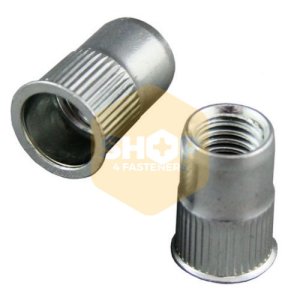
What about rivet nuts ? Problem is that they require a tool to set them unless there is another way.

Search the Westfield Fasteners inventory
Yes, I have had success with stainless steel riv-nuts, normally with 4mm internal thread, for when a self tapper strips the grp. I bought a little 4mm mandrel which is used in conjunction with a Standard pop rivet tool to set the riv-nuts.
 
Only possible problem with rivnuts in this instance is they stand a little proud, so the sole boards won't sit flush. There's also a chance that the boards might be a close fit under the edges of some furniture (or not).
 
Only possible problem with rivnuts in this instance is they stand a little proud, so the sole boards won't sit flush. There's also a chance that the boards might be a close fit under the edges of some furniture (or not).

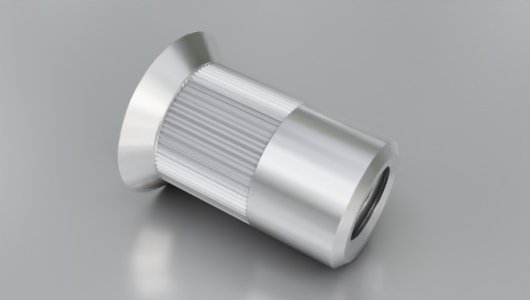
You can get countersunk rivet nuts for exactly that problem
IMG_1734.jpeg

Or you can get “reduced head rivet nuts” which only require a tiny countersink (in metal they pull in almost flush anyway).
IMG_1735.jpeg
 
All that is a bit OTT when filling the holes with epoxy and redrilling will do the job. The screws are self rappers with no load on them - just holding the boards down.
 
I use stainless Jacknuts occasionally. As Paul says, they stand slightly proud so you need to cut a shallow relief to allow the boards to sit flush.
If you only need a few I can help you with 8mm thread versions. Set them with a dry wall fixing tool from Screwfix.
 
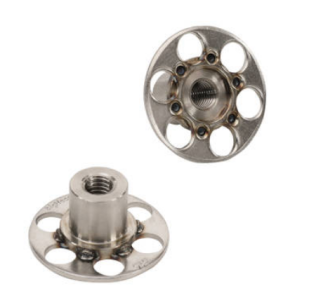
Remove the brass inserts and fit stainless steel female Big Heads.

Use machine screws to secure the floor panels. (with anti-seize grease on the threads, or use brass/bronze machine screws).

1765646631160.png
 

Attachments

  • 1765646509225.png
    1765646509225.png
    116.4 KB · Views: 1
Top