
Refueler
Well-Known Member
Anyone got photos of neat teak deck chocks to allow a plough to lie on the deck please.

Standard plastic chocks from chandlers .... simply screw to deck.
Far better IMHO than hanging anchor over stem .... nice and neat.

Anyone got photos of neat teak deck chocks to allow a plough to lie on the deck please.

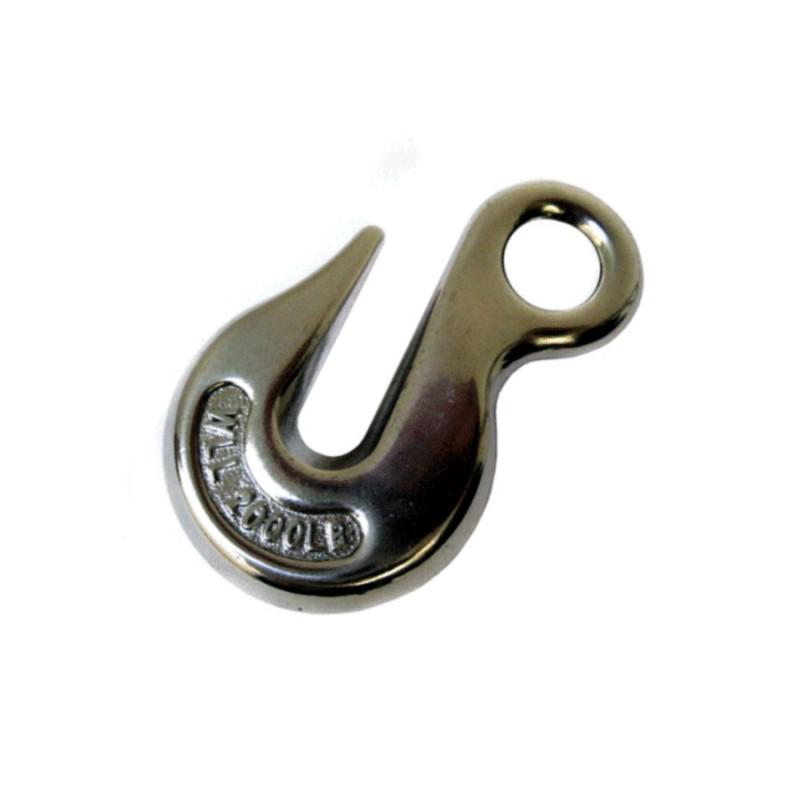

I have used that exact type of hook for many years. Personally I find no difficulty at all in setting it but its big advantage comes on recovery. As soon as the windlass begins to haul in the chain the hook falls off. Invaluable in emergency compared with the need to go forward to undo a snap shackle.A question about snubbers going slightly off tangent. At home, I use a bridled line with a chain hook on the end but as I deploy it, I need to keep tension on it to avoid it falling off the chain in front of the boat.
On a holiday charter in the Whitsundays recently, the charter co had a snubber made up with a metre or so of line, a splice to go over a forward cleat, the rope protected by reinforced plastic hose then a snap shackle on the end. It was really easy to pull the snubber over the second bow roller, back around onto the chain then deploy excess chain until it went slack and the snubber took the load. The snap shackle rode over the bow roller very easily both in deploying and recovery.
Before I get one made up, any thoughts from the metallurgists and experts here? It seemed to easy compared to fiddling with a chain hook.
Of course it is. Try releasing it at night in a force 7 when another boat drags, drops down on you and is lying across your bow.

We have never found the need for a retention device on the hook. I like that we can flick the hook off when hauling up the chain.View attachment 176046
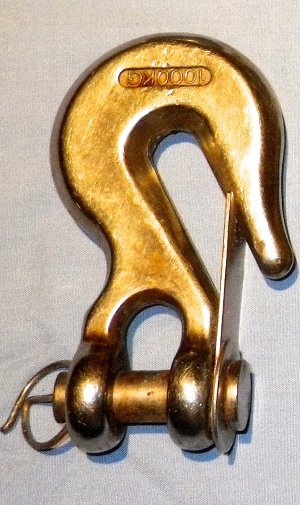
They are not expensive - go and buy a clevis hook, like the one in my picture. Cut a small piece of stainless plate and add to the hook, you may need a slightly longer clevis pin. Note the gate has slight indent to 'lock' into the hook.
You can hold the hook with one hand and using the thumb of that hand flick the gate round. I have tried to devise a way to use an eye hook, like yours, but my imagination has proven inadequate.
Job done.
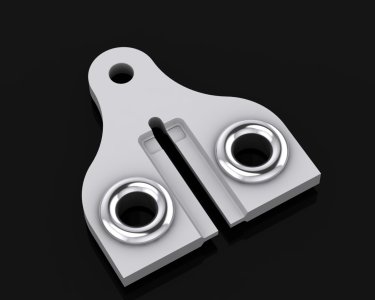
If you have a bridle you can buy a hook like this from Viking Anchor (or make your own)
View attachment 176047
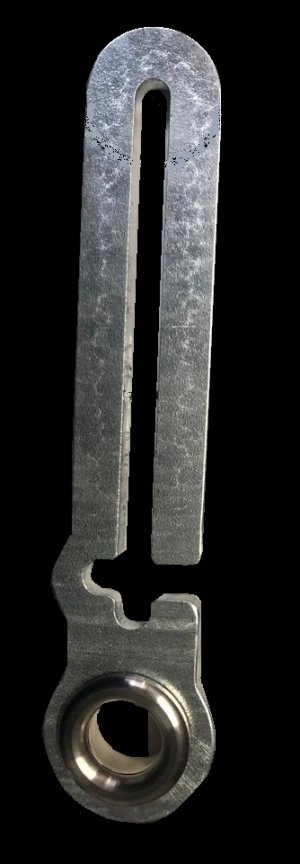
This is a variant on the theme for a single snubber, also from Viking Anchor.
View attachment 176048
With an angle grinder, a bit of duplex stainless - you can make your own. If you want to know why the threaded LFRs are in the device send me a PM with your email address and I will send you the explanatory pdf.
Jonathan
We have never found the need for a retention device on the hook. I like that we can flick the hook off when hauling up the chain.
We use a second hook on a short length of dyneema to stop the chain running out should the snubber fail. We have only lost one snubber that was old when anchored with less than 1m under the keel in a very gusty anchorage. I dived in and retrieved the snubber and hook
In shallow water and not much wind we shorten the snubber line. When it's windy, it is put to its full 12m length. We use 13mm ny,on on a 18t boat. Its stretchy. We also have a 15mm snubber for stormy conditions. This one is less stretchy until its very windy but has a HUGE rubber dildo fitted. This makes up for the lack of stretchy when it's not so windy.We too find a securement device unnecessary, but as the thread indicates some people have issues. If you keep the snubber under very slight tension it does not fall off. I suspect that it might depend on the snubber and the hook design. The snubber hooks, like the stainless one I illustrate, the one that the OP pictures and some others available in chandlers would cause much mirth in the lifting industry. They are to very dated designs, and potentially damage the chain or are totally inadequate, like the Witchard hook (which is an accident waiting to happen). The slots on the devices I offer in my pictures have been sized specifically to make it more difficult for the device to fall of unintentionally but make it easy to disengage - when Vyv's worst case scenario is developing.
We have broken 2 bridle arms. When they failed it was like a gunshot. They do not last forever, in fact if they don't wear - they are not stretching (and are not much use as a snubber). Using a bridle gives you a form of fall back, as we have never had both arms fail together. But you should carry spare(s). Snubbers fail based on the number of stretch cycles - which is contradictory. A good snubber should stretch, upto a metre, but if its regularly stretching its life is finite. There is a strong argument for having a really long snubber/bridle - ours were 30m each arm (or an 11.5m cat).
Because they fail - you should have a fall back to ensure the loss of the snubber does not transfer the tension to the windlass, you need a chain lock or an equivalent device (as well as a spare snubber).
Using a claw instead of a hook is not, in my opinion sensible - they are very difficult, almost impossible, to disengage under tension. When Vyv's worst case develops the last thing you need is a hook you cannot disengage easily.
There is a situation where one might not want a too easily disengaged snubber attachment. If you anchor in shallow water AND your snubber/bridle extends a long way forward of the bow then there is every opportunity for the snubber to reach the seabed and the seabed can cause the attachment device to fall off. Best with a device that is easy to manipulate but has a low risk of disengagement, which is why I suggest something like photos 2 and 3 on my previous post, emphasising the long slot, also made from HT steel and sensibly tested, to minimise bending of the plate/hook.
Disturbing report on MANTUS and other chain hooks
Mantus are not alone - the Witchard chain hook has a retaining pin (to retain the chain) - it is easily bent (ours bent in use) and then you need a Mole wrench to rip the pin out. There are also incidences of the Witchard hook itself failing in use - steer clear.
Jonathan


Been using the same homemade long d2 dyneema softshackle for many years now. Before used a chain grab & also a rolling hitch but softshackle seemed nicer so it stayed in use.
I am wondering what a high rubber dildo is, compared to say, a huge rubber dildo, and how it gets used with an anchor chain. I must ask Dominatrix Wiplash at my next therapy session.

I think the nut/loop only needs to be loosened a few turns, not removed.Back to the original post, I would have to have a bit of line tied onto the loop of the nut, otherwise I would certainly drop it over the side while fiddling about trying to free the anchor.
Personally I get an obscure but definite sense of satisfaction if I can make a piece of rope do the work of an expensive bit of metalwork.
I think the nut/loop only needs to be loosened a few turns, not removed.


