Seagrass

longjohnsilver

Well-Known Member
Joined
30 May 2001
Messages
18,839
Visit site
It’s been announced that there will be protected areas , including Plymouth Sound and Scilly. Does anyone know where and to what extent anchoring for leisure boats will be restricted

 
It said they were also threatened by anchoring, mooring and launching of recreational boats, as well as trampling from walkers and bait collectors.
Natural England's chief, Marian Spain, said the project was a "win-win-win for the planet, for people who use the sea and for the marine environment by protecting the delicate sea bed ... as well as providing new places for boats to moor".

I do wonder how anyone can provide new places for boats to moor? It does sound to me like another potential attack on our maritime freedoms. I hope I’m wrong.
 
The suggestion was to provide fixed buoys for mooring to ... but that we all know is a non starter ... as soon as all buoys are used and very few will want to raft to another boat on a buoy ... down go anchors.
 
Seagrass is a key marine species, providing shelter and nurture to a very wide range of marine life, but globally is said to be in decline by 10% per annum. I find that odd, as they have been saying it for for at least 12 years now..... which highlights the hype that surrounds these arguments.

As far as Plymouth and Scilly are concerned its part of the same Marine Protection programme that we are arguing over Studland in Dorset. Anchoring in seagrass is a bad thing because it fouls the anchor and prevents it setting properly. But the arguments centre round whether it actually causes anything more than a minor disturbance to the UK variety. The same people who claim 120% global loss of the species maintain it causes irreparable long term damage. In Studland in 1953 there was about 100sq M of seagrass. It has been one of the busiest sea anchorages in the UK in the intervening 70 years. What effect has that had on it? Well there are 96 hectares of it now, and over the last 10 years it has been spreading by about half a meter a year.

See all the arguments on www.boatownersresponse.org.uk

The current situation is that Studland has been designated to become an MCZ. The whole argument has been put in the hands of the Marine Management Organisation who are evaluating the whole thing and carrying out 'feasability studies' to see how Studland, Plymouth, Scillies and other MCZs can be managed on an individual basis on a minimal budget. There isnt the money to police them, so is this anything much more than a paper exercise - an accusation already levelled at other MCZ areas. Studland is cursed by having a Seahorse eco warrior trying to take over and kick the boats out. All he has achieved so far is to drive the seahorses away. This 'unique colony' has only seen one live specimen in the last 8 years, while round the corner in Poole Harbour there is a thriving colony of them - in among the boats and moorings! From contact with the Inshore Fishing fleet I gain the clear impression these things are actually quite common. Just too small and well camouflaged for anyone to find them! They are actually seen quite regularly throughout the central S Coast by the Inshore fishing fleet. The fuss is all because there is one man looking for them in the wrong place!

This debate which has been effectively stalled by the Govt shifting all its available manpower to resolving Brexit is likely to become active later this year when MMO finally decide how much money to throw at each place.

In answer to OPs original question will at affect anchoring and mooring? if the Conservationists have their way, yes. But MMO is not resourced to police it, spo it ir more than likely there will simply be 'voluntary codes of conduct' like the one I initated with RYA in 2014 at Studland. ('Anchoring with Care' RYA Leaflet on their website) And yes, it is an encroachment on our basic constitutional right of free navigation in UK waters. I was invited in 2010 by MMO to represent the boating interests at Studland, and have been battling for it ever since, right up to Ministerial level and the House of Commons.
 
You will recall oldharry, that in the linked post, I asked why this public statement was made concering Cawsand Bay, despite all the prior evidence from studies on the ground saying that seagrass beds were in favourable condition :

Dr Solandt:
“We believe we’ll be protecting something like 0.5km square of seagrass bed with our project in the first year. We hope to cover the entire bed within three years, if the project proves successful,” says Dr Solandt. “The seagrass bed is considered to currently be in ‘unfavourable condition’ by Natural England .

My subsequent Email to Dr Solandt got no response.


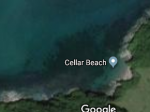
One of the areas of grass is in the well used anchorage at Cellars at the mouth of the Yealm. It compares very favourably with the remote bays to the north.

1580383167543.png
 
Nail on the head, Doug! NE has spoken. End of. The convuluted and tortuous arguments that were used to come to this conclusion are based largely on the fact the generically, seagrass worldwide IS indeed very vulnerable to anchor abrasion damage. NE will never refer to Eeelgrass - which is the variety mainly present in UK waters. There is a whole library of research which demonstrates that eelgrass is exceptionally tough, and in some cases has been seen to respond to disturbance by increasing growth rates. However UK must be seen to be protecting our seagrass stock, so if people are anchoring in it, it must be 'unfavourable condition' because its seagrass, and seagrass doesnt tolerate anchor damage. Period.
 
.............There is a whole library of research which demonstrates that eelgrass is exceptionally tough, and in some cases has been seen to respond to disturbance by increasing growth rates. .....

If you have a moment, could you let me have a link to the most concise research of this type, particularly the suggestion that the grass may increase it's growth?

Could be useful, but I agree that there seems to be a lot of headless chickens about.
.
 
Top