Screwing into thin GRP

bedouin

Well-Known Member
Joined
16 May 2001
Messages
32,858
Visit site
My boat has an internal GRP moulding maybe 3mm thick. In several places it has access panels etc screwed on using self tapping screws. Over the years with regular use the screws get looser and looser - so you go to the next size up and that only makes things worse.

I am sure there must be a better solution - has anyone tried rivnuts or jack nuts or similar solution?
 
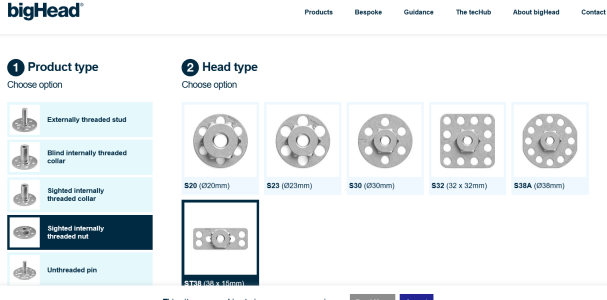
All the Rivnut-type devices work by deforming to grip the panel they are through, which is good for steel or aluminium but crushes GRP and makes the problem worse. If you can reach behind the moulding via the access panel, you could epoxy some Bighead nuts on Inserts and Fasteners - EC Fibreglass or even just use epoxy putty to make a blob that could be drilled and tapped.
 
All the Rivnut-type devices work by deforming to grip the panel they are through, which is good for steel or aluminium but crushes GRP and makes the problem worse. If you can reach behind the moulding via the access panel, you could epoxy some Bighead nuts on Inserts and Fasteners - EC Fibreglass or even just use epoxy putty to make a blob that could be drilled and tapped.
Yes - I was worried about the use of either in rather thin and weak GRP - although perhaps jack nuts might be better than rivnuts. Some of the holes are in places where I can get to the back, but many aren't. I know the standard advice is to refill the hole with epoxy, re drill and screw but I am concerned as to how well the epoxy will bind to the thin GRP
 
My boat has an internal GRP moulding maybe 3mm thick. In several places it has access panels etc screwed on using self tapping screws. Over the years with regular use the screws get looser and looser - so you go to the next size up and that only makes things worse.

I am sure there must be a better solution - has anyone tried rivnuts or jack nuts or similar solution?
Stick some tape over the front of the holes and put some P40 behind them, drill new holes in it when cured.
 
As above or Velcro, that’s what the deck heads are secured with on many boats including super yachts, so make your boat ‘super’!!
 
Blind buts with the prongs flattened out ... the threaded tube part ground back to match the GRP thickness ...

Epoxy around the outside of the threaded tube part ... insert from behind into the hole. Let set and use bolts to match the blind nuts.
If no access to some at back of hole .. then 'expander' fasteners ... they look like the scissor jacks cars have .. you thread onto the bolt ... pass through and then pull bolt so expander is hard to back of hole ... tighten - which then expands the legs to create a 'bar' behind the panel.
 
Rubber Rawlnuts are useful for delicate laminates etc. The rubber is gentle on brittle materials and the nut is usually brass, not perfect but better than steel in damp environments.
 
My boat has an internal GRP moulding maybe 3mm thick. In several places it has access panels etc screwed on using self tapping screws. Over the years with regular use the screws get looser and looser - so you go to the next size up and that only makes things worse.

I am sure there must be a better solution - has anyone tried rivnuts or jack nuts or similar solution?
I have successfully used stainless rivnuts to do the very same job. Pardon our interruption... I bought an M4 mandrel for setting them using my pop rivet tool. Obviously you expand them enough to grip but not enough to crush the grp moulding. Then use a nice neat M4 screw, I used Pardon our interruption... . All done with no need for access to the rear.
 
Last edited:
If you’ve got access to the back of the panel, then Putting the rivnut through then putting a washer on the back of said Rivnut before compressing would probably work quite nicely and be pretty easy.
 
I've used ordinary s/s nuts epoxied in place inside on most panels that occasionally need to be removed. With the panel off used a longer machine screw with nut behind, and a bit of heatshrink tubing over the exposed thread inside, then a good blob of fast set thickened epoxy over the nut and heatshrink. Then once these are set remove the screws and put the panel back with short machine screws the same size.

First time I had to do this was somewhere Jeanneau had put in brass rivnuts into a 2.5mm-ish GRP console panel, and they had come loose. Done it since in other panels where Jeanneau had just used self-tappers, thinking "....no-one will need to get behind this till the warranty expires".
 
My boat has an internal GRP moulding maybe 3mm thick. In several places it has access panels etc screwed on using self tapping screws. Over the years with regular use the screws get looser and looser - so you go to the next size up and that only makes things worse.

I am sure there must be a better solution - has anyone tried rivnuts or jack nuts or similar solution?
Not a cure to your problem, but an important tip to remember with self-tapping screws:

When reinstalling a screw, always feel for the old threads (turn lightly backwards until you feel the groove) and reuse them. Don't just twist the screw in, cutting new threads. It helps.

If filling holes with epoxy and redrilling, cram some short cut fiberglass bits into the hole with the epoxy. Doubles the strength.
 
Not a cure to your problem, but an important tip to remember with self-tapping screws:

When reinstalling a screw, always feel for the old threads (turn lightly backwards until you feel the groove) and reuse them. Don't just twist the screw in, cutting new threads. It helps.

If filling holes with epoxy and redrilling, cram some short cut fiberglass bits into the hole with the epoxy. Doubles the strength.
Or use P40, it's chopped strand mixed with polyester resin. Mix as if you would any filler, apply to the back of the holes and it'll be "dry" in about 10 minutes.
 
Thanks for the various suggestions - I will follow up on those.

For those advising P40 etc - if I can't get to the back would I be better countersinking the existing holes to give me more chance of getting the filler in - and sticking well?
 
Thanks for the various suggestions - I will follow up on those.

For those advising P40 etc - if I can't get to the back would I be better countersinking the existing holes to give me more chance of getting the filler in - and sticking well?
You really need to get to the back, could you not get a filler applicator behind the edge ?
 
You really need to get to the back, could you not get a filler applicator behind the edge ?
For some it is easy - for others just impossible. There are some complex sections in the inner moulding and no way of getting to the back of some important parts of it. (for example wooden trim screwed over a moulded cable channel where there is not actually any hole in the grp). So I need some solution that can be applied only from one side of the moudling.
 
Top