Running 230V through the bilge

You could mention to your partner that as a crew member a crew cut is a more sensible option....then run as fast as you can
Well, it would solve the problem - one way or another...

More seriously, if you're going to faff around with mains wiring, do it properly and fit plenty of sockets. They're cheap as chips and it's amazing how useful a socket in the right place is.
 
Well, it would solve the problem - one way or another...

More seriously, if you're going to faff around with mains wiring, do it properly and fit plenty of sockets. They're cheap as chips and it's amazing how useful a socket in the right place is.
Yup. It confuses people seeing just UK sockets on a boat that’s never been to the UK but unless they have brought over european or Caribbean gadgets they find it very helpful on the occasions we are in a marina.

We just have a single socket for the inverter and I am a mighty and jealous guard of it.
 
Thanks everybody. Seems like there's no problem running AC in the bilge as long as I use good quality cable in a conduit. So really the question is whether the engine, alternator and batteries are up to the task. I'm not really concerned about total power consumption, as I have ample solar during the day, it's more of a question of whether this will shorten the life of the 2 year old house bank. Perhaps a hot air brush at 600W is more realistic...
 
Can I just check what is quality cable in this instance. I ran 3 core blue outdoor cable (is that Artic?) 2.5mm through our shallow bilges. It would be very horrible trying to lead it a different way but changing it for a better cable is very doable.
The cables on my boat, both 24v and 240v, are circular PVC sheathed. Under the PVC, everything is encased in rubber. Under the rubber, they have individual coloured insulation per core. The wire is all tinned.
 
Well, it would solve the problem - one way or another...

More seriously, if you're going to faff around with mains wiring, do it properly and fit plenty of sockets. They're cheap as chips and it's amazing how useful a socket in the right place is.
Our boat is wired with 8 sockets, 3 of them doubles. Powered from either shore power, genset or 3kw inverter.
At the nav station we have a dedicated twin socket that connects to a smaller 800w inverter that is not so power hungry. This will run the sewing machine, chargers, laptop etc. It works well as a setup
 
Our boat is wired with 8 sockets, 3 of them doubles. Powered from either shore power, genset or 3kw inverter.
At the nav station we have a dedicated twin socket that connects to a smaller 800w inverter that is not so power hungry. This will run the sewing machine, chargers, laptop etc. It works well as a setup
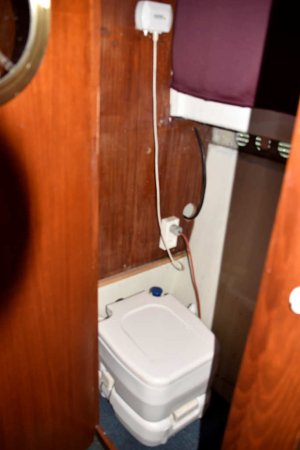
Lots of sockets on mine too, from the shore power inlet to a socket in the head, then an extension cable plugged into that socket to another socket in the galley, yeah a rewire is coming this winter.
At least it's not as bad as a Hardy Pilot I looked at earlier this year, it was so bad that it was the last straw on a few issues the boat had
 
Lots of sockets on mine too, from the shore power inlet to a socket in the head, then an extension cable plugged into that socket to another socket in the galley, yeah a rewire is coming this winter.
At least it's not as bad as a Hardy Pilot I looked at earlier this year, it was so bad that it was the last straw on a few issues the boat had
I am also in need of some rewiring. My circuit breakers in the electrical cupboard are well past the title 'obsolete'. They are full size breakers but pre DIN rail. I have ordered 24 new DIN rail mounted DC breakers to replace everything. It's a major rewire in a tight space. Just hoping I won't need to lengthen any of the cables at the breaker cupboard
 
Can I just check what is quality cable in this instance. I ran 3 core blue outdoor cable (is that Artic?) 2.5mm through our shallow bilges. It would be very horrible trying to lead it a different way but changing it for a better cable is very doable.
The sky is the limit when it comes to spending money on cable. Some will tell you it needs to be double insulated, or triple, must absolutely be tinned, or it will disintegrate in a couple of weeks.

The only place i have ever seen a boat with all tinned wire is on internet forums. Personally, i only use tinned where it's in areas of damp. I have rewired boats with 60 year old wiring, some of it domestic stuff, maybe a bit of industrial stuff, certainly not a bit of tinned in sight. Apart from exposed wiring in damp areas, it's mostly been surprisingly usable. My previous boat was built in 1980 and most of the wiring was original and untinned, with domestic cable for the 240v systems, almost everything was serviceable, apart from more recent stuff that had been bodged by previous owners. My current boat was built in 1988 by a very reputable builder and also came with domestic cable for the shore power sockets, all still in good condition, although i'll replace it all as i go round doing other updates. The DC wiring is all untinned and in good condition, no plans to change anything that hasn't been bodged by previous owners.

In your case, i wouldn't be changing the arctic cable. If it's properly secured and no exposed ends in damp places it should be OK for many years. How many blue shore power cables do you see in marinas, getting walked on, run over by trolleys, dangling in the water etc ?
 
Last edited:
I am also in need of some rewiring. My circuit breakers in the electrical cupboard are well past the title 'obsolete'. They are full size breakers but pre DIN rail. I have ordered 24 new DIN rail mounted DC breakers to replace everything. It's a major rewire in a tight space. Just hoping I won't need to lengthen any of the cables at the breaker cupboard
What is this thing called a circuit breaker?
I do jest, but there are none on my boat at all, I'm still in the planning stage of what is all needed and it will have to wait until I haul her out the water.
_DSC8216sm.JPG
 
The sky is the limit when it comes to spending money on cable. Some will tell you it needs to be double insulated, or triple, must absolutely be tinned, or it will disintegrate in a couple of weeks.

The only place i have ever seen a boat with all tinned wire is on internet forums. Personally, i only use tinned where it's in areas of damp. I have rewired boats with 60 year old wiring, some of it domestic stuff, maybe a bit of industrial stuff, certainly not a bit of tinned in sight. Apart from exposed wiring in damp areas, it's mostly been surprisingly usable. My previous boat was built in 1980 and most of the wiring was original and untinned, with domestic cable for the 240v systems, almost everything was serviceable, apart from more recent stuff that had been bodged by previous owners. My current boat was built in 1988 by a very reputable builder and also came with domestic cable for the shore power sockets, all still in good condition, although i'll replace it all as i go round doing other updates. The DC wiring is all untinned and in good condition, no plans to change anything that hasn't been bodged by previous owners.

In your case, i wouldn't be changing the arctic cable. If it's properly secured and no exposed ends in damp places it should be OK for many years. How many blue shore power cables do you see in marinas, getting walked on, run over by trolleys, dangling in the water etc ?
To some extent, the need for tinned wire or not, may depend on how you use the boat. My previous boat was built with plain copper wire. After an Atlantic circuit in 2004/5 we had major corrosion problems in many circuits. The boat was built in 1981. I ended up doing a full rewire with new tinned wire.
The constant salty atmosphere and dampness everywhere on the tough Atlantic West to East passage was the start of the problems.
 
Top