Rocna's bad press by video - anchor thread don't read if you don't like anchor threads!

We all make
Can I also say, while these anchor tests are very informative...I took advice from this forum in my buying decision....they told me to buy a Rocna (the bar stewards????)

We all make mistakes when buying bits for boats, for example I bought a good used genuine 35lb CQR cos that's what I had for a main anchor in my last yacht before really thinking about the size of my present boat. Luckily I only paid 20 quid for it, (I had to pick it up), and sold it for 95 including postage which was 15 quid. Luckily I found what could be the last almost new 15lb CQR. To make matters worse the 9kg Fishermans I bought was too long in storage terms, so that one is up for sale, and I'm still looking for a new or good used 4kg one.

This article is a good one in terms of different anchor types:
Anchor Selection Guide: How to Choose the Best Boat Anchor Type – Anchoring.com

Alas it was written befor the Rocna ran onto the rocks in reputation terms for bending, poor 180 degree veer tests and even a product recall from West Marine.

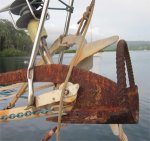
Funny picture of the worlds best furling gear, the Hood Profurl, with the worlds worst copy of a Rocna.
 

Attachments
  • Homemade scop.jpg
    Homemade scop.jpg
    84.4 KB · Views: 16
Last edited:
S
I also had a CQR and it dragged. At Studland where the holding is pretty good. In the end I brought it back up and used my kedge instead (a hooker anchor - I've not seen many of these - perhaps this is something to do with the name?) I replaced the CQR with a Rocna and have been happy with its performance, although if I was buying now I might choose a different modern anchor.

Based on my experience of the CQR (which echoes yours), I would be quite surprised if the RNLI were about use it as their strategic bower anchor of choice (unless they were basing their choices on this webpage Anchor choice: anchor types and bottom types that they are best suited | Yachting News)

You are not really supposed to be anchoring in Studland bay unless there is no free mooring available. It's a marine sanctuary for sea horses, so they don't want the eel grass carved up. Not too big an issue if your boat has a shallow draught or is beachable like mine.
Voluntary no anchor zone for Studland Bay - Yachting Monthly

The holding in Studland is good, so you were either not using enough scope or it fouled some debris in a temporary manner that then resulted in it dragging later. The CQR does take more setting than an anchor with a sharp point or points like a Danforth or Spade, so I always use several max continous RPM pulls and allow the boat to surge ahead between pulls. 4:1 all chain, but 5 to 1 if the forecast is looking interesting.

The new Lewmar CQR outperforms their Delta, which is the most common main anchor used by the RNLI at present. The other 2 are the Admiralty fishermans, (Very difficult to find), and the UK spade.

Changing topis slightly, I did not know that Lewmar are making what appears to be a different version of their Delta, its listed as the DTX:
Which is the right Lewmar boat anchor for me? (sail-world.com)
 
Last edited:
S


You are not really supposed to be anchoring in Studland bay unless there is no free mooring available. It's a marine sanctuary for sea horses, so they don't want the eel grass carved up. Not too big an issue if your boat has a shallow draught or is beachable like mine.
Voluntary no anchor zone for Studland Bay - Yachting Monthly
I should note that my attempts to anchor in Studland with a CQR was several years before the voluntary zones were implemented. I trust this puts your mind at rest.
 
Alas it was written befor the Rocna ran onto the rocks in reputation terms for bending, poor 180 degree veer tests and even a product recall from West Marine.
The product recall was during the period that Rocna shanks were made from sub-standard steel, well over 10 years ago now. None of those anchors remain in service having been exchanged by the makers FOC.

Since then I have carried out full destructive tensile tests on a current production Rocna 15 kg anchor that showed the shank to have good strength as designed. Reported in YM. It is a very long time since I saw a bent Rocna on any forums
 
I should note that my attempts to anchor in Studland with a CQR was several years before the voluntary zones were implemented. I trust this puts your mind at rest.
I was wrong about the holding in Studland as this is from oceanics very detailed guide for Studland bay:
Anchor according to draft and conditions. The bay offers good holding in sand. Avoid its large weedy patches, which should be made visible by the bright surrounding sand, that tends to foul anchors.

A oversize large anchor might penetrate thick weed, but in reality it's a job for a traditional fishermans or grapnel.
 
It
The product recall was during the period that Rocna shanks were made from sub-standard steel, well over 10 years ago now. None of those anchors remain in service having been exchanged by the makers FOC.

Since then I have carried out full destructive tensile tests on a current production Rocna 15 kg anchor that showed the shank to have good strength as designed. Reported in YM. It is a very long time since I saw a bent Rocna on any forums
It's very unlikely the majority of the Rocnas were recalled unless they paid for the postage, even then the foul up over the steel used has to cast doubt about the value of a used or even a new Rocna, although the article I linked to before about the very poor 180 degree test results is reason enough to regard the Rocna as an anchor worth avoiding.
 
I find it more rewarding to discuss almost any topic with a 7 year old child than try to follow the logic and beliefs of TNLI.

Jonathan
Indeed. TNLI extrapolates the results of one bizarre test and comes up with the answer he appears to want. This is from one of the reports/tests/articles he uses:
As part of that testing, Steve subjected each anchor to a true resetting torture test by motoring across the position of the set anchor and coming up on the rode at 180 degrees to the original line of set, in order to simulate what happens in a radical wind-shift.
In fifty years of sailing all over the world I don’t ever recall any boat I’ve been anchored on being subjected to a wind shift that was the equivalent of motoring to suddenly snatch the anchor 180 degrees. Even if such conditions occurred (eg a katabatic wind rolling down a hill one was sheltering behind) the article that TNLI is using to condemn all new generation anchors (but only tests a small sample) with actually concludes:
This part of Steve's testing confirmed that many modern anchors reset amazingly well, even after a radical and sudden pull-angle change.
So the article praises new generation anchors. The only anchor that ‘fails’ this bizarre and unrealistic test is a Rocna but that’s good enough for TNLI to condemn all modern anchors and make unsupported claims about his CQR.
And when it’s pointed out that CQR anchors sometimes drag and don’t set well or easily compared to new generation anchors and CQR anchors also bend their shanks then all sorts of excuses are trotted out. ‘It can’t have been a real CQR’ (It was). It was user error’ (How come the same exact technique of a very experienced seaman works so much more reliably with new generation anchors then?
TNLI even describes his own long winded and involved method of setting his CQR. By the time he’s done that I’ll be anchored securely, my Spade anchor well dug in and sitting in my cockpit with a gin n tonic or cup of tea.
With any respect due, reading through this thread would be a text book example of confirmation bias in TNLI and his obsession with CQR anchors. Despite all the evidence in multiple tests showing that new generation anchors are better, he grasps at any data that can be twisted to suit his CQR agenda.
 
Indeed. TNLI extrapolates the results of one bizarre test and comes up with the answer he appears to want. This is from one of the reports/tests/articles he uses:

In fifty years of sailing all over the world I don’t ever recall any boat I’ve been anchored on being subjected to a wind shift that was the equivalent of motoring to suddenly snatch the anchor 180 degrees. Even if such conditions occurred (eg a katabatic wind rolling down a hill one was sheltering behind) the article that TNLI is using to condemn all new generation anchors (but only tests a small sample) with actually concludes:

So the article praises new generation anchors. The only anchor that ‘fails’ this bizarre and unrealistic test is a Rocna but that’s good enough for TNLI to condemn all modern anchors and make unsupported claims about his CQR.
And when it’s pointed out that CQR anchors sometimes drag and don’t set well or easily compared to new generation anchors and CQR anchors also bend their shanks then all sorts of excuses are trotted out. ‘It can’t have been a real CQR’ (It was). It was user error’ (How come the same exact technique of a very experienced seaman works so much more reliably with new generation anchors then?
TNLI even describes his own long winded and involved method of setting his CQR. By the time he’s done that I’ll be anchored securely, my Spade anchor well dug in and sitting in my cockpit with a gin n tonic or cup of tea.
With any respect due, reading through this thread would be a text book example of confirmation bias in TNLI and his obsession with CQR anchors. Despite all the evidence in multiple tests showing that new generation anchors are better, he grasps at any data that can be twisted to suit his CQR agenda.

Changes in the wind in a wind against tide situation often produce a 180 degree veer, and that was the test the Rocna failed in a big way. I provide a link for all to read, so most modern anchors and the classics pass that test, with Danforth the best.

The really disturbing results are what happens in a 90 degree pull when many modern anchors and the alloy ones in particular finish up with bent shanks. The Rocna is not alone with that problem as there are a whole bunch of pictures of bent Danforths and the new generation modern anchors in internet. What appears to have occured in design terms is that the modern anchors are simply thinner, so for a given weight they hold better when compared with the clasics, but none of the tests seem to point out that the limiting factor when buying an anchor is not always weight, it's the dimensions of the anchor in terms of fitting in an anchor locker or on whatever set up exists for the bow roller or rollers.

Most high time offshore sailors or even power boaters like to set an anchor correctly, and that means subjecting it to more than the worst pull force expected in terms of wave action and wind force forecast. The vast majority of folks that complain about an anchor that drags failed to set it with enough force. I was probably guilty of that when I first started sailing and fishing, but fairly quickly noticed that the more expierienced skippers used a lot more power and took more time to set an anchor.

PS: Just noticed that there are Admiralty Fishermans anchors available from a known good manufacturer on Fleabay. They were designed for use in rocks or heavy weed. The Admiratly version is the only one certified and used by the RNLI, but alas they don't seem to make one light enough for my small boat, so I seem to be stuck with the more common type. The Osculati version is in 3 parts, so very easy to store, which is the very problem I've got with my 9kg one, as it's a bit too long.
Anchor Admiralty 20 KG Brand Osculati 01.114.20 8033137065217 | eBay

For some reason the RNLI and the various certification folks do not seem to like grapnels, although they are used a lot by commercial fishermen. I like the smaller folding ones for a stern emergency anchor, as they are very compact and work on a shorter scope than other anchors. Very useful if you get a sudden engine failure in a crowded location. Alas I made a mistake with the red painted one I purchased, as it is not galvanised and is rusting already, even though it's not been in salt water! I might well finish up using my 2kg stainless Bruce for a stern anchor.


The biggest mistake in selecting a main anchor if you ignore the bent shank issue, is failing to understand you need to have several different types to suit the conditions. The CQR is just one of a number of anchors I think are real stars, the others are the Bruce, Danforth, some Deltas and the Fishermans anchors.

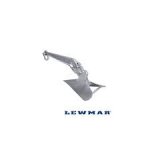
The CQR is also available in 2 good forms, the genuine CQR with a full patent number on the shank and the new Lewmar CQR that we don't have the test results for yet.

Boaters are often under the impression that modern designs have re invented the wheel, when the best that can be done is to modify it. The CQR, Delta, Bruce and Danforths have all been copied by a large number of companies for good reason, and that is they work very well. That's why the Danforth in particular was not included in many tests, and many magazines in particular failed to check structural limits. At the end of the day, most boaters would do well if they ignored all the advertising and daft forum comments and just looked at Lloyds or ABS certified anchors and what is used by the RNLI and some of the commercial operators.

The other thing that horrifies me is that in bad conditions, most skippers fail to set a second anchor. This is a classic case of putting all your eggs in one basket and along with not setting an anchor correctly is a major reason why boats are lost at anchor every year. Oddly enough if I had to operate with only one anchor, I would not pick a CQR, it would be a steel Danforth.
 
Last edited:
I cannot be bothered to correct the multiple misunderstandings in your latest post but will concentrate on shank strength. The plate shank of the new generation anchors, e.g Manson Supreme, Rocna has a tensile strength of 700 - 800 MPa, achieved by use of modern materials, Bisplate 80 and HSLA steel. The shank of the cheaply produced Danforth is mild steel, with luck having a UTS of 300 MPa. The Spade and Ultra have three-dimensional shanks, giving them great bending strength.
CQR of course has a massive forged shank that gives it good bending strength but diverts mass from the fluke tip, explaining its known resistance to setting. The tip weight of a Spade is 50% of its total, in the CQR it is 15%.
 
At the end of the day, most boaters would do well if they ignored all the advertising and daft forum comments and just looked at Lloyds or ABS certified anchors and what is used by the RNLI and some of the commercial operators.

The RNLI use a Spade, made in Tunisia, and not tested by either Lloyds or ABS. The RNLI carry 2 Spades. There are anchors tested to an identical rating as Spade, by Lloyds, Manson's Supreme or ABS, Ultra and Fortress all Super High Holding Power (SHHP) anchors. There is a suggestion that Lewmar's Epsilon has also been approved by Lloyds to SHHP - but I have never seen a certificate. These did not cut the mustard at the RNLI who chose Spade. The requirements of TNLI don't actually enjoy much support with the RNLI who find Bureau Veritas, who certificated Spade, perfectly acceptable.

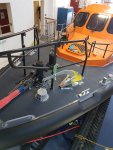
The Spade featured below, picture courtesy of a crew member, is carried on all of the RNLI's current state of the art Shannon lifeboats. The second, identical Spade (also made in Tunisia and similarly certificated by Bureau Veritas) is carried below deck in an easily accessible locker.

The Engineering Department at the Head Office of the RNLI have formally confirmed there is no investigation nor any current plan to replace Spade anchors in the Shannon Class vessels.

IMG-20220607-WA0009.jpeg

It merits note:

Vessels 'In Survey' - which includes the RNLI vessels are required to carry equipment certificated with a current certificate. Certification and maintenance of Certification is expensive and time consuming. Whereas CQR and Delta 'were' certificated (a cost incurred by Lewmar) I have not seen a current Certificate for these anchors (I have not looked). I simply don't see much motivation to certificate an anchor replaced by a better product (Epsilon) especially as, when I last heard, both the CQR and Delta were made in China. No reflection on China but the manufacturing processes would need to be re-checked by Lloyds - and simply accessing China over the last 36 months would have been a Herculean and expensive task (Covid).

Possibly an expert and with access to the RNLI can provide a current copy of a Lloyds certificate for both products.

Jonathan
 
Last edited:
Changes in the wind in a wind against tide situation often produce a 180 degree veer, and that was the test the Rocna failed in a big way. I provide a link for all to read, so most modern anchors and the classics pass that test, with Danforth the best.
Let’s just deal with your first misunderstanding. Of course wind and tide veer 180 degrees. But the test was done by motoring from set anchor to snatch it round. It’s not what happens in real life. The load doesn’t snatch from one way to another. You then draw a variety of conclusions that aren’t justified by the bizarre testing regime. The CQR wasn’t in the tests. Care to speculate how it would have performed?
 
Last edited:
Let’s just deal with your first misunderstanding. Of course wind and tide veer 180 degrees. But the test was done by motoring from set anchor to snatch it round. It’s not what happens in real life. The load doesn’t snatch from one way to another. You then draw a variety of conclusions. The CQR wasn’t in the tests. Care to speculate how it would have performed?
Funny, as this is exactly why I ditched the CQR - 180 degree tide change with a very gentle wind, hard sand base, low water (therefore loads of scope - 15:1 maybe). Sowester CQR - is this considered a copy or genuine? The CQR broke out, and as is often quoted needed coaxing to get back in - shame no one was on board at the time! Scary seeing your pride and joy some distance away from where you left her. Never been an issue with the Rocna - even just lobbing the (nearly) whole lot over the side with no precision or care and it invariably digs in (not that I would advocate this poor technique). Some of the comments on this thread are 'unrecognisable'.
 
A few god point s in previous posts, for example there are a lot of different Danforths types around, so if you can afford it I suppose the Lewmar alloy version which has an ABS approval is the best one. I can't justify the extra cost, so purchased one from my local chandlery, Force 4. I've warned in previous posts that the Danforths are not a good storm anchor because like many modern anchors they can be bent.

One big thing I don't like that is very common these days is the back speccing of products after they have started to sell well. The Rocna was a classic example where they changed to using a cheaper weaker steel. It might take some time before another new generation company is caught doing the same trick to make more money, which is one reason I like Lewmar anchors. Just a pity they don't make a small alloy Admiralty pattern Fishermans, or a grapnel to complete their range.

Just to answer the Pye_End post, I did describe what I regard as a genuine CQR in a previous post and the important part is the the weight is marked in whole pounds and it says Patent No with the full number, not patend pending etc.
I've not seen a genuine Danforth as such, as there were too many different manufacturers, so it's hard to define in materials quality terms, which is why I'm recommendinf Lewmar, but there might be other good manufacturers. The adjustable fluke angle does not seem to help according to recent tests.

Obviously this is a controversal thread, so I'm not suprised at how many anti CQR posts there have been, what suprises me is the assorted nit pickers and slaggers did not slag off at the Bruce or Danforth. Everyone that only has one main anchor thinks his is the best type, but I don't, as I would be happy with a nice new Lewmar Claw for a storm anchor, or even their new redsigned CQR.
 

Attachments

  • download.jpg
    download.jpg
    2.1 KB · Views: 0
A few god point s in previous posts, for example there are a lot of different Danforths types around, so if you can afford it I suppose the Lewmar alloy version which has an ABS approval is the best one.

One big thing I don't like that is very common these days is the back speccing of products after they have started to sell well. The Rocna was a classic example where they changed to using a cheaper weaker steel. It might take some time before another new generation company is caught doing the same trick to make more money, which is one reason I like Lewmar anchors. Just a pity they don't make a small alloy Admiralty pattern Fishermans, or a grapnel to complete their range.

Just to answer the Pye_End post, I did describe what I regard as a genuine CQR in a previous post and the important part is the the weight is marked in whole pounds and it says Patent No with the full number, not patend pending etc.
I've not seen a genuine Danforth as such, as there were too many different manufacturers, so it's hard to define in materials quality terms, which is why I'm recommendinf Lewmar, but there might be other good manufacturers. The adjustable fluke angle does not seem to help according to recent tests.

I am not aware that the aluminium LFX is ABS approved. Do you have confirmation this is the case? Fortress is ABS approved why buy the copy when you can buy the original.

There is no evidence that Peter Smith who owns the licence for Rocna production was aware that less strong steel was being used. The less strong steel was not chosen because it was cheaper. It was chosen because the end product looked 'better'. He should have known - but that is a different story.

Please can you offer a link to the tests where it is shown the adjustable fluke angle makes no difference to performance of the Lewmar LFX. There is copious data supporting Fortress use of the adjustable angle as being advantageous. I have to ask - why would you buy a Lewmar LFX, which is what you advocate, where one of its primary characteristics 'does not seem to help' when the same characteristic is advantageous on a Fortress?

Jonathan
 
In my choice of anchors (I carry three main anchors, all of different types, aboard), I am not at all influenced by what the RNLI fits on lifeboats. In practice, Lifeboats seldom anchor, and when they do, they are fully crewed, and are never left unattended. The RNLI has massive buying power, and no doubt anchor sellers are only too pleased to have the perceived kudos of having their anchors adorning Lifeboats.
I have to have the confidence in my anchoring equipment to let me sleep aboard at night, and to be able to leave my boat unattended when I am ashore.
 
I sometimes wonder if forum members should have a short CV attached to their membership avatar, so it would be possible for others to guage their competence in various matters.
e.g. We know that Vyv_Cox is a recognised authority so although we may not always agree 100% at least we know the basis of any post.
TNLI has a lot to say on the ’supremacy’ of CQR, its history and construction, but appears to dismiss various other later anchor designs, it would be interesting to learn of TNLI’s expertise in this field.
As it is if anyone wants my 20lb CQR they are welcome to collect it from me for the princely sum of £5. donated to the RNLI.
 
Back on topic, this article shows that the Rocna was bottom of their tests, and for the first time showed some information on the new Lewmar CQR, (The picture is of a genuine one for some odd reason). I knew some type of Danforth would be top, but stunned to see a Rocna at the bottom of the bar chart.
Top Anchors Tested | Boating Mag
 
Your reply is of
In my choice of anchors (I carry three main anchors, all of different types, aboard), I am not at all influenced by what the RNLI fits on lifeboats. In practice, Lifeboats seldom anchor, and when they do, they are fully crewed, and are never left unattended. The RNLI has massive buying power, and no doubt anchor sellers are only too pleased to have the perceived kudos of having their anchors adorning Lifeboats.
I have to have the confidence in my anchoring equipment to let me sleep aboard at night, and to be able to leave my boat unattended when I am ashore.
So which 3 anchors do you use and which 3 would you buy if money was no object ??
 
Top