Neeves
Well-Known Member
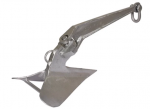
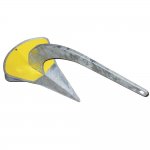
So which anchor apart from the UK spade, (Hope I'm right about the small s), Lewmar CQR or their Bruce copy has a direct, not an equivalent Lloyds approval for offshore use.
There is no UK spade, nor Spade - unless you visit a garden centre - and then the spade may be made in China - and primarily designed to dig your garden (or a hole in case you want to hide from Forum criticism.
You need to read the posts - Lewmar's Epsilon has Lloyds approval for SHHP (or that is what Lewmar has said). There was a post on YBW about 6-8 weeks ago saying Knox was Lloyds approved - I cannot verify this - but its a very good anchor. Classification Society does not differentiate between inshore of offshore use - but most of us anchor - inshore (no refection on our anchors - it just tends to be a bit more comfortable. The genuine CQR, Delta and the original Bruce were Lloyds High Holding Power (HHP) approved. We have moved beyond HHP, about 20 years ago, and Rocna, Manson's Supreme, Epsilon, Spade, Excel, Ultra, Fortress, Knox (?) (sorry if I missed something) are all Super High Holding Power, SHHP, approved. SHHP has twice the hold per kg of HHP. Anchors are tested 3 times in the three different seabeds against a SHHP or HHP anchor. They must also pass a Proof Test
I have been involved in Classification Society Proof Testing these are 3 different anchor subject to testing. Basically the shank or fluke is restrained and the fluke or shank tensioned against a tension criteria set by anchor size (weight) and then not deforming.

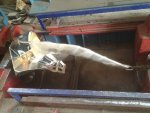

All anchors I list under SHHP will have been tested.
The testing protocol is not cheap so small companies making good anchors can struggle to justify the costs.
Jonathan