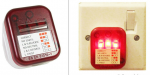
Reverse polarity. Dangerous?

Pontoon supplies are earthed to a local earth rod /rods or similar?
I thought they should be a TN -S system or is that simply not an available option.
.
Vic, This one of these areas where one regulation may seem contradictory to another section 709 of the 18th edition refers to a TN system however it is against the law (ESQCR) to connect a marina supply directly or indirectly to a PME system which effectively means that you have to have a TT system. All a bit academic for here I suspect. I referred to the TT system in marinas and the Earth Loop Impedance figures with respect to the video posted. I thought that it was somewhat misleading in this context. He does post some excellent videos so not knocking him.
I think that, bottom line, if the OP was referring to a UK marina is, they are in breach of regulations if they are not carrying out annual Installation Inspections and not rectifying faults such as "Reversed Polarity"
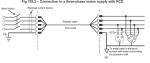

1631181896776.png
 
This is a very interesting thread. I have low knowledge of mains electrical supply beyond wiring up a 3 x pin plug. The video posted by John was very informative. My own boat's 240V power was fitted by an unknown person before I bought it, consisting of a consumer panel with RCD and MCBs for each of the consumers (ring main, fridge, hot water tank, spare out let) and a galvanic isolator. It appears to be a professional installation. I will be purchasing a polarity tester and a reversing lead as a result of this thread.
I don't think reversing leads are available to buy, you have to buy a male and female socket, a length of suitable cable and assemble it yourself. It's also a good idea to make up adaptors in similar style for connecting to foreign marina supplies with different sockets.
 
I don't think reversing leads are available to buy, you have to buy a male and female socket, a length of suitable cable and assemble it yourself. It's also a good idea to make up adaptors in similar style for connecting to foreign marina supplies with different sockets.

They are available to buy, cheap as chips as well, EU Europe Continental Caravan Camping Mains Hook Up Polarity Reverse Adapter 16A | eBay and a kit with all EU adaptors and tester, but not cheap as chips Caravan Reverse Polarity Test & Adaptor Set - Everything + More Than You Need | eBay
 
Excellent!.At those prices, buying the components and DIY'ing it makes absolutely no sense. Plus the time it would take and the possibility of getting it wrong?. Thanks!
 
Polarity is a misnomer in this context.

It's all a question of neutral being connected to earth as some point. (Sometimes this is way back at the substation!)

Lots of Youtube explanations but this is a good one:

Watch it through and the problems are mentioned at 12 minutes 30 onwards or thereabouts.

Reverse polarity is usually an LED wired across the 'Normal' Neutral and the earth. If there's a reverse in the sully from the Shore Power supply, then the LED lights up.
It has nothing to do with the Supply changing poles, 50 times a second ie AC Supply.
 
Reversed polarity not cured by swapping live and neutral wires
I have sailed to Norway from the UK and the reversed polarity indicator is on on my panel when I plug into shore power on any pontoon. I have tried reversing the live and neutral wires in my shore lead but the reversed polarity indicator still comes on. I know this sounds hard to believe but it is most definitely the case. I have spoken to other UK sailors here and they don’t have this problem so I’m guessing the problem isn’t how Norwegians wire things. Presumably there must be something else wrong with my panel on the boat. Has anyone got any ideas?
 
I have a short socket to plug cable that reverses the polarity. It's surprising how often it's needed!
I made one that fitted at the boat end, hidden in the aft locker, that way it was not visible at the shore socket or likely to be stolen. In Turkey it was almost a 50/50 bet which way a socket was wired.
 
Reversed polarity not cured by swapping live and neutral wires
I have sailed to Norway from the UK and the reversed polarity indicator is on on my panel when I plug into shore power on any pontoon. I have tried reversing the live and neutral wires in my shore lead but the reversed polarity indicator still comes on. I know this sounds hard to believe but it is most definitely the case. I have spoken to other UK sailors here and they don’t have this problem so I’m guessing the problem isn’t how Norwegians wire things. Presumably there must be something else wrong with my panel on the boat. Has anyone got any ideas?
Do you have a multimeter to check the voltage between the incoming wires and ground?
Is it possible that the supply is though a transformer and 'floating' without reference to ground? Bathroom shaver sockets are wired like this and if you touch one of the wires it will go to ground voltage and not give you a shock.
If the original supply to the marina is 3 phase and the phases are not balanced it is possible for the neutral to be some way above ground zero volts. The neutral should be connected to ground at some point but this connection might be missing or inadequate.
A check with a multimeter will give a good indication of where the fault lies. If the neutral is at zero volts then there probably is a fault with your polarity indicator.
Obviously take care when sticking probes into live circuits and do not attempt it if you are not confident with mains electrics.
 
Reversed polarity not cured by swapping live and neutral wires
I have sailed to Norway from the UK and the reversed polarity indicator is on on my panel when I plug into shore power on any pontoon. I have tried reversing the live and neutral wires in my shore lead but the reversed polarity indicator still comes on. I know this sounds hard to believe but it is most definitely the case. I have spoken to other UK sailors here and they don’t have this problem so I’m guessing the problem isn’t how Norwegians wire things. Presumably there must be something else wrong with my panel on the boat. Has anyone got any ideas?

Possible that this is because Norway uses the rather uncommon IT earthing system. Also worth remembering that a lot of Europe uses the schuko plug which is not polarised unless used in certain sockets (such as French), therefore it's possible to plug it in either way round. It is for this reason that appliances are fitted with double pole switches.
 
Possible that this is because Norway uses the rather uncommon IT earthing system. Also worth remembering that a lot of Europe uses the schuko plug which is not polarised unless used in certain sockets (such as French), therefore it's possible to plug it in either way round. It is for this reason that appliances are fitted with double pole switches.
Exactly, and it is the double pole switches that makes them comfortable with reverse polarity.
 
Exactly, and it is the double pole switches that makes them comfortable with reverse polarity.

My point was more that appliances can be plugged in with L and N swapped, so they shouldn't be bothered by it. As mentioned in by someone else it's AC so it changes direction 50 times a second anyway. It's purely a human safety issue, not an equipment safety one.
 
In the absence on a built-in warning system, a plug in device can warn you of marina problems. No neutral and earth reverse warning though.

1659688568498.png
 
Living in France, reverse polarity is a way of life. Provided the breaker works on both live wires it should not be a problem. The only problem I have noticed is that in one socket in the house I get a tingle from my metal cased, UK bought battery charger. Not sure why it does not operate the breaker, I just avoid using it there now.
 
My point was more that appliances can be plugged in with L and N swapped, so they shouldn't be bothered by it. As mentioned in by someone else it's AC so it changes direction 50 times a second anyway. It's purely a human safety issue, not an equipment safety one.
The issue is that if some of our older boats with single pole breakers, ie only a switch on the live, and then something such as toasters, are plugged in to the mains on my pontoon and then left plugged in whilst someone gets a knife in to it to remove a bit of burned toast , then they could be electro trocuted.
 
Top