Replace or alter existing switch panel ...

Most engravers will reverst engrave black painted panels that can be back light od just filled with white paint.

That is how all my panels were made by a local to me engraver I posted early in the thread
 
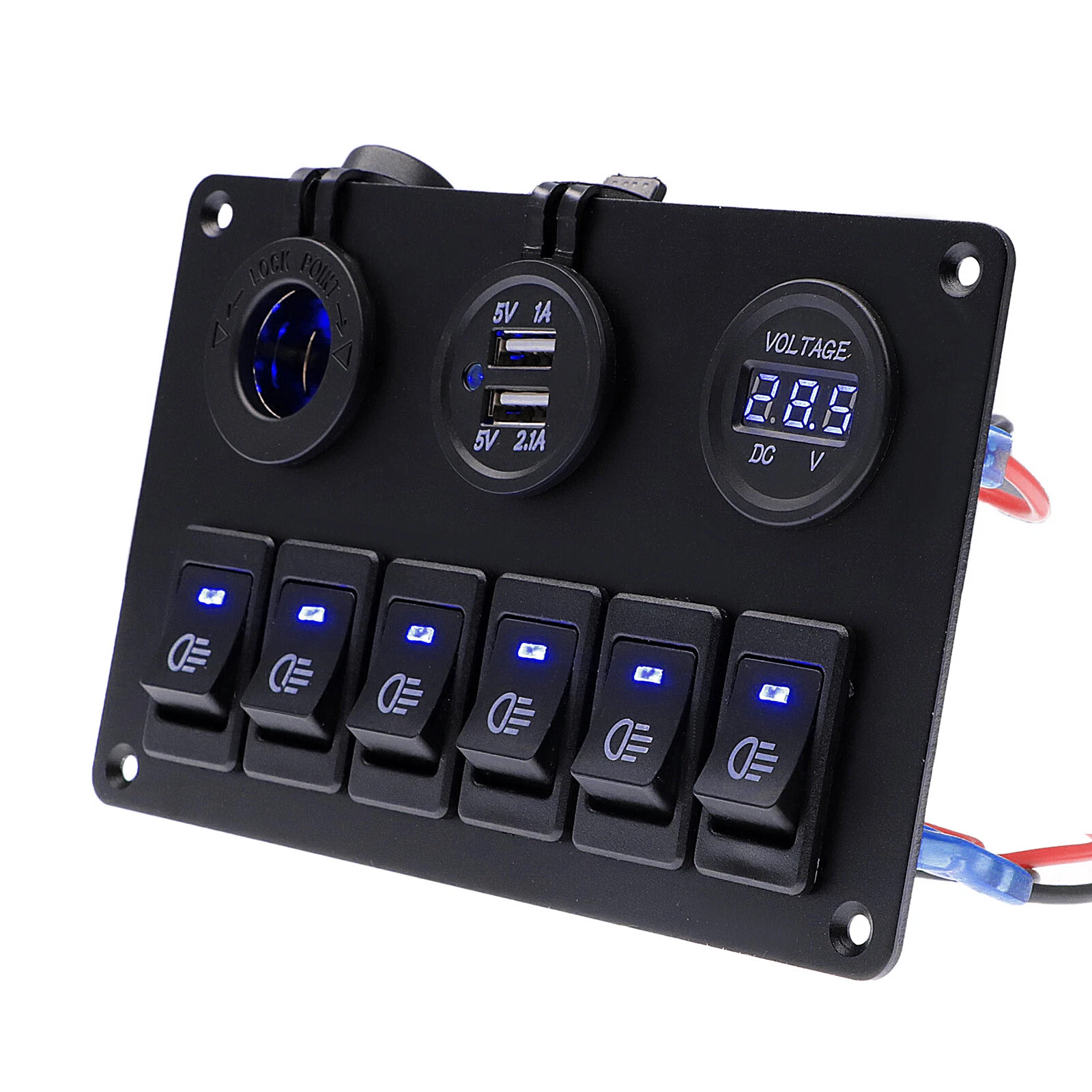
I dug out various panels I have collected over the years and found one I bought recently that was intended for the motor boat. It got put aside and I forgot I had it.

s-l1600.webp


It has no fuses or relays - but I can soon sort that ...

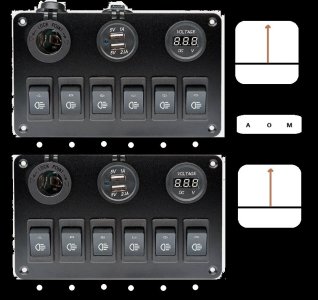
My idea now is to have two of them ... one taking power from domestic bank - second taking power from starter bank. The Voltage displays then relevant to which bank. I could by changing a few connectors on the rear - make both panels switches domestic powered - leaving Voltmeters separate.
Being smaller than the boats existaing panel - then allows me to add fuses under each switch ... two ammeters to register useage ... and a bilge auto-off-on switch.

possible new.jpg
 
Last edited:
Do you have enough stuff you want switched on the starter battery to have its own panel? If I was making a panel today I’d consider adding (good) USB-C outlets as well as USB-A: stuff increasingly using >5V.
 
Do you have enough stuff you want switched on the starter battery to have its own panel? If I was making a panel today I’d consider adding (good) USB-C outlets as well as USB-A: stuff increasingly using >5V.

The panels are easily swapped about in terms of the round 12v / USB / Volts .... and the switches are snapin so could be easily turned round 180 ... putting all switches together ..

Yes - fair question about the starter side .. there's only one real switched item that I would say is best served by starter panel - Steaming Light .. rest of items are questionable.

My 12 switch list so far :

Tricolour (I have one - but do not like tri's !! .. but better have it connected)
Running lights
Mast steaming light
Anchor light
Nav Instruments
Music
Main cabin lights
Fore cabin lights
Panel lights
Cockpit lights
Deck lights

Last one : Bilge Pump .... depends on whether I fit the 3 way switch or not ..

Notice I do not include VHF in the list - because that will be powered independently as a safety measure.
 
The panels are easily swapped about in terms of the round 12v / USB / Volts .... and the switches are snapin so could be easily turned round 180 ... putting all switches together ..

Yes - fair question about the starter side .. there's only one real switched item that I would say is best served by starter panel - Steaming Light .. rest of items are questionable.

My 12 switch list so far :

Tricolour (I have one - but do not like tri's !! .. but better have it connected)
Running lights
Mast steaming light
Anchor light
Nav Instruments
Music
Main cabin lights
Fore cabin lights
Panel lights
Cockpit lights
Deck lights

Last one : Bilge Pump .... depends on whether I fit the 3 way switch or not ..

Notice I do not include VHF in the list - because that will be powered independently as a safety measure.
Bear in mind the purpose of individual fusing of circuits is that in the event of a fuse/circuit short type failure your other systems remain serviceable.
I think you should weigh up likely hood of a failure (very remote) and dangers involved in loosing multiple lights or systems. In other words especially for lights with low current drain you could have common fuse for multiple services. Provided you have stout wiring a higher current fuse for all those services and switches should be fine.
ol'will
 
Circuit breakers in particular are often used to switch circuits. Switching circuits off at the power source has the advantage of reducing the potential for stray current corrosion.

The modern trend of reducing the number of the individually isolated circuits reduces costs, but if a fault develops, multiple systems can be disabled, which is not ideal.

Better is multiple circuits all with their own circuit breaker. Faults will disable only the equipment where the defect is occurring. Other equipment will continue unaffected. This enhances functionality in a fault situation (when it is most needed) and makes troubleshooting easier.
 
Last edited:
The picture I created of the two panels together shows each switch having a fuse protecting that items wiring. The existing panel has the ETA relays doing same job.

I will not be combining items to be covered by a common fuse.
 
Circuit breakers in particular are often used to switch circuits. Switching circuits off at the power source has the advantage of reducing the potential for stray current corrosion.

The modern trend of reducing the number of the individually isolated circuits reduces costs, but if a fault develops, multiple systems can be disabled, which is not ideal.

Better is multiple circuits all with their own circuit breaker. Faults will disable only the equipment where the defect is occurring. Other equipment will continue unaffected. This enhances functionality in a fault situation (when it is most needed) and makes troubleshooting easier.

That is the exact approach I took when I designed my MCB based circuit panel
 
Top