Rapid dinghy inflation - from a safety perspective

There was a bit earlier about using a pensioned off diving bottle.

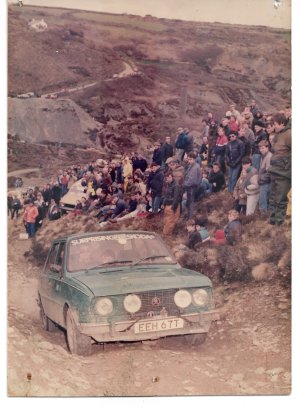
When First Mate and I did a couple of MCC Classic Trials in a car - Lands End Trials in the early 90's - I used a pensioned off diving bottle fitted with a car tyre inflator to re-pressurise the rear tyres once tarmac was reached. The driving tyres were deflated for a better 'footprint'.

The bottle was 'loaded' with the workshop compressor to about 150psi. It lasted the whole trial, about twenty sections, so forty tyre top ups.

Not sure it would inflate a dinghy after being filled by a workshop 150psi compressor. Any higher it would, IMHO, need to be certified.

We went back to the Tri-BSA Sidecar soon after. The bikes were more fun.

Pic shows the 110 BHP Skoda Estelle on Bluehills Mine.
 

Attachments

  • Skoda (2).jpg
    Skoda (2).jpg
    652.7 KB · Views: 8
I've seen Avon dinghies with CO2 bottles, including about 20 years before this thread started.
You might want a pressure relief valve too!
 
You might want a pressure relief valve too!
During my first Sea Survival course we were all in the pool. The liferaft was thrown in and the cord pulled. It started to inflate, but had a twist in it between the gas cylinder and the relief valve. The raft took on a strange balloon shape then burst. We rapidly left the pool ahead of a cloud of CO2 gas.
 
A 12V electrical inflator is obviously a waste of time as there is a high probability of the batteries being underwater by this time.
Not necessarily. I have one with its own burglar alarm-sized battery. However, it isn't the quickest pump around so, unless you can carry the dinghy part inflated, you could still end up swimming while waiting for it to do its stuff.

Probably not the best plan for blue water, but I get round the issue by towing our dinghy. I also have plans to build davits, which would be a better solution.
 
Fill it from the Camping or Calor gas bottle. You won't need it for cooking. Just do not decide to have a " Hamlet moment" when finally in the dinghy & the ship has gone down :rolleyes: ;)
You would be sitting in the dinghy thinking "Wow, that was a lucky escape" then :eek:
 
My perspecitve on this as a diver would be that the reason why such a system not sold is that it would be a tad expensive.
Dive cylinders are typically pumped to 230 bar - which would probably turn the dinghy into a rubber grenade! however a scuba regulator 1st stage, which sits on top of the tank reduces this to about 9 bar which would be altogether more usable, and the hoses which we use to connect the scuba unit to the BCD and Drysuit have a kind of push fit connector on the end. I guess you could fit a suitable connector to the dinghy.
Scuba tanks come in all shapes and sizes, Many divers use a 3liter 'pony' bottle for emergency use which will supply 3lires*200bar = 600 liters of air at atmospheric pressure, there are also small bottles for drysuit inflation and surface marker buoy inflation.
However this little lot is going to cost well over a hundred quid - maybe nearer 150 and the scuba tanks need testing every couple of years. If you are already a diver and have the gear it may be worth considering, but other wise it might be a bit expensive.

<hr width=100% size=1>
What about 2nd hand dive kit ? Inflation is straight forward using a dive cylinder, witnessed many times while diving in Scotland.
 
Thinking outside the box a little, if you can't afford a liferaft, what about Fladen or Mullion suits for the crew? Pretty handy things to have anyway, I've worn mine in every season sailing in Scotland.

Not a substitute for a raft but far better than bobbing about in oilies and a LJ.
 
Top