Radar isn’t just for fog

lustyd

Well-Known Member
Joined
27 Jul 2010
Messages
14,081
Visit site
There are two lighthouses at the top of the Sound of Luing. Navionics tells me they are 0.4NM apart, which at 10kt (about 5 through the water) feels close enough to touch, especially when the boat spins 90 degrees occasionally.

Yesterday we had to turn the radar on to see them through the rain 😱

It’s exciting this sailing stuff!
 
Combining your two experiences - I remember very vividly being out in a thunderstorm in the rather busy BVI's - no wind thankfully, but rain so heavy we couldn't see the forestay (on a 36'er) and lightning all around. Radar would have been very welcome as we had no idea where anyone was - bloody terrifying 🙈

We plugged the cockpit drains and enjoyed a very welcome warm bath when the excitement was over :)
 
We were in the middle of the Atlantic last year heading from the Caribbean to the Azores. A storm approached us from down wind. My wife was watching the lightning display at night whilst I was off watch. She got me up. She said the storm was coming our way. We watched on RADAR as this storm cell approached against the wind with hundreds and hundreds of lightning flashes. We could see the rain approaching on RADAR but couldn't out run it. It was 25nm across and moving way faster than us. It was fascinating to watch it on RADAR but super scary to be surrounded by so much lightning.
 
Last edited:
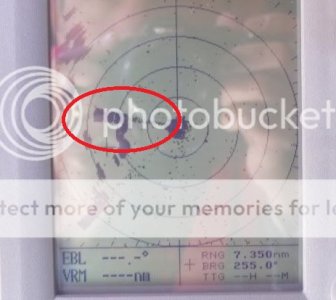
Among the unusual things I ''saw'' on radar: seagulls (flying or floating on the water-quite scary group of tiny still returns), helicopters, the Nazare wave, or more navigational a RACON, when hit by our radars they paint a specific Morse code echo return on the display (sorry terrible photo the Morse return appears under the initial ''ph'' of photobucket, ''T'' for Cabo Torinana in Galicia), nice to see tiny leisure radars are replied to the same way as the large ship ones :)

racon.jpg
 
Ah yes we had the birds once, scared the heck out of me as we were in thick fog at the time 🤣
 
Ah yes we had the birds once, scared the heck out of me as we were in thick fog at the time 🤣
Among the unusual things I ''saw'' on radar: seagulls (flying or floating on the water-quite scary group of tiny still returns), helicopters, the Nazare wave, or more navigational a RACON, when hit by our radars they paint a specific Morse code echo return on the display (sorry terrible photo the Morse return appears under the initial ''ph'' of photobucket, ''T'' for Cabo Torinana in Galicia), nice to see tiny leisure radars are replied to the same way as the large ship ones :)

View attachment 199498
I once spent a month at DYE3, one of the DEW line radar stations on the Greenland ice cap. The operators passed their time watching migrating birds on the radar! This was in 1987, and at that time the operators were civilian.

Seriously powerful radar - waveguides the size of ventilation ducts, and large areas off limits while the radar was operating, for fear of getting fried! We were operating an ice sounding radar nowhere near the operating frequency of the early warning radar and had to take serious precautions to avoid interference with our equipment.
 
Last edited:
I suspect depends on which radar but for accuracy when anchoring in tight spaces radar gives you the distance off.

In Twofold bay, south coast of NSW, a 'cargo' pier has been built almost enclosing the preferred anchorage. Twofold bay is the last decent sheltered anchorage before or after crossing Bass Strait. The pier has been built to allow naval vessels to remove ammunition at the end of a patrol. The required minimum distance off for non naval vessels is 200m and I won the right to stay where we were when told to move by an autocratic naval official when I was able to quote the precise distance between us and the patrol boat - we assume the official knew we were outside the required distance as he did not argue the piece.

Agree - ideal for spotting thunderstorms and focussing on the gap between cells

Jonathan
 
There are two lighthouses at the top of the Sound of Luing. Navionics tells me they are 0.4NM apart, which at 10kt (about 5 through the water) feels close enough to touch, especially when the boat spins 90 degrees occasionally.

Yesterday we had to turn the radar on to see them through the rain 😱

It’s exciting this sailing stuff!
Obviously no GPS chart plotter to tell you your exact position with 10 meters of where you are. I thought radar was to stop you hitting another boat, not looking for lighthouses.
 
Obviously no GPS chart plotter to tell you your exact position with 10 meters of where you are. I thought radar was to stop you hitting another boat, not looking for lighthouses.
The ship wasn’t on the chart, and neither were the other yachts. There’s a magnetic anomaly in the area that threw the compass off by 10 degrees, so the course on the plotter was wrong. The Radar was the reason I found out the heading was wrong. In a small gap with strong eddies at high speed heading was quite important.
 
The ship wasn’t on the chart, and neither were the other yachts. There’s a magnetic anomaly in the area that threw the compass off by 10 degrees, so the course on the plotter was wrong. The Radar was the reason I found out the heading was wrong. In a small gap with strong eddies at high speed heading was quite important.
I think I would have sold the boat and bought a caravan. Chart plotter no good, compass no good and bad visibility. Poor you. I hope I never suffer as you did.
 
I once spent a month at DYE3, one of the DEW line radar stations on the Greenland ice cap. The operators passed their time watching migrating birds on the radar! This was in 1987, and at that time the operators were civilian.

Seriously powerful radar - waveguides the size of ventilation ducts, and large areas off limits while the radar was operating, for fear of getting fried! We were operating an ice sounding radar nowhere near the operating frequency of the early warning radar and had to take serious precautions to avoid interference with our equipment.
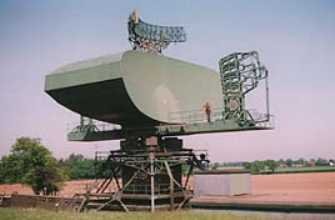
I've worked on this one ,
1758398965126.jpeg
2.5 mega watts peak transmission power.

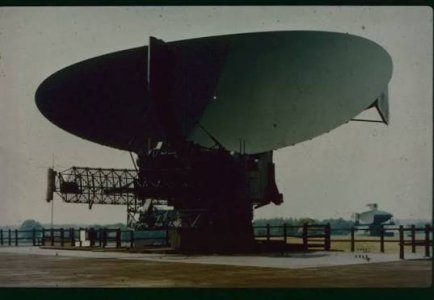
Other guys on shift worked on this one..
1758399119875.jpeg
On a good day it could produce 60 Megawatts peak power.
 
There are two lighthouses at the top of the Sound of Luing. Navionics tells me they are 0.4NM apart, which at 10kt (about 5 through the water) feels close enough to touch, especially when the boat spins 90 degrees occasionally.

Yesterday we had to turn the radar on to see them through the rain 😱

It’s exciting this sailing stuff!
The old vhf beacons the lighthouses used to have would have solved that. You could often pick up a light house when you couldn't see it.
 
I think I would have sold the boat and bought a caravan. Chart plotter no good, compass no good and bad visibility. Poor you. I hope I never suffer as you did.
It’s what happens when you leave the dock 🤷‍♀️ all systems working as expected and wasn’t a problem as I know how to use them. It took me a little while to realise just how affected the compass was by the anomaly but we got there in the end.
 
The old vhf beacons the lighthouses used to have would have solved that. You could often pick up a light house when you couldn't see it.
I’m sure it worked well enough but I’ll stick with the modern radar please!!
 
I’m sure it worked well enough but I’ll stick with the modern radar please!!
It was a great improvement on the Mk1 eyeball in fog, however, seem to remember the Nul point was give or take 10 degrees?

Things were more interesting in the old days, a great sense of achievement when you arrived where you intended. :)
 
Top