PSS shaft seal

No, it is perfectly straightforward. The O-rings inside the fixed seal are a tight fit so make sure the shaft is in good condition before trying to get it on, no nicks or scars. As it says, do not use oil but a detergent, e.g. washing up liquid, helps a lot. Make sure you wet the seal faces before starting first time. I always flush mine with fresh water when we haul out to prevent crevice corrosion, see the PSS section on this page for my photo Stern glands

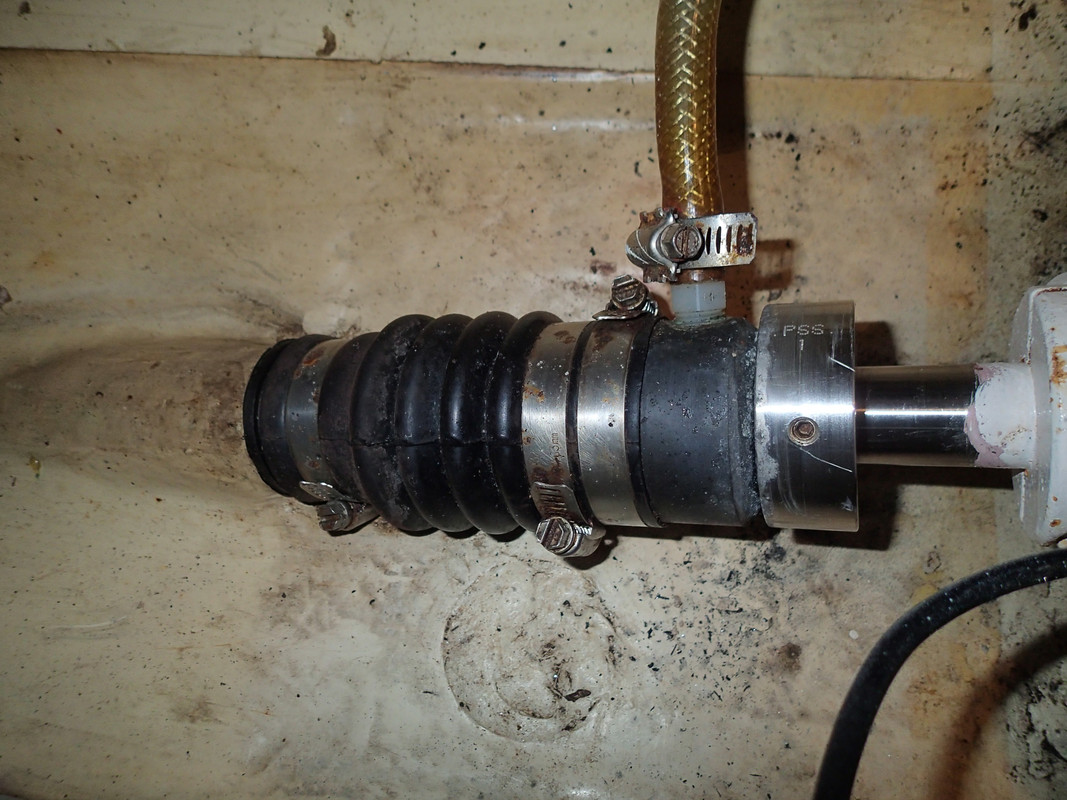
Here is mine, now been fitted for more than 10 years and apart from the corroded stainless steel seal, which I reversed, all original. I check the bellows occasionally and it still looks good.
 
Strongly recommend putting a hose clamp on the shaft in front of of the PSS - should the set screws get loose (as they did on Toodle-oo!) the hose clamps (installed after that incident!) will keep the seal in place. Cheap insurance.
 
My PSS has also been in operation for almost 10 years.

The only issue I have has was the stainless rotor slipped back over time and the eal started to spray sea water when running.

I solved this by clamping a secondary rotor clamp forward of the seal an the shaft like this.

DSSC300.jpg
 
My PSS has also been in operation for almost 10 years.

The only issue I have has was the stainless rotor slipped back over time and the eal started to spray sea water when running.

I solved this by clamping a secondary rotor clamp forward of the seal an the shaft like this.

DSSC300.jpg
+1
I fitted a jubilee clip behind it.
I changed the bellow after a number of years just for precaution, FWIW when I had the two (old and new) in my hands they seemed to have the same characteristics in terms of elasticity, compressibility, flexibility...
Also, write down somewhere that the set screws are doubled in each hole, it's easy to forget, one then removes only the first screw and struggles trying and move the steel collar :d
 
+1
I fitted a jubilee clip behind it.
I changed the bellow after a number of years just for precaution, FWIW when I had the two (old and new) in my hands they seemed to have the same characteristics in terms of elasticity, compressibility, flexibility...
Also, write down somewhere that the set screws are doubled in each hole, it's easy to forget, one then removes only the first screw and struggles trying and move the steel collar :d

The problem with the stainless steel 316 grub screws is the the stainless is quite soft where steel grub screws are hardened and dig in the the shaft better,

The best way to locate a collar onto a shaft is with a dog point grub screw and dimple the shaft to locate the dog point of the grub screw. This prevent the rotor being repositioned if necessary.
 
The problem with the stainless steel 316 grub screws is the the stainless is quite soft where steel grub screws are hardened and dig in the the shaft better,

The best way to locate a collar onto a shaft is with a dog point grub screw and dimple the shaft to locate the dog point of the grub screw. This prevent the rotor being repositioned if necessary.
+2 regarding the jubilee clip. I fitted a second one a few mm back from the first so that I could see if there was slippage. I have used the second clip as a fulcrum to pressure the bellows.
Also wash the contact surfaces if the boat has stood. Someone here reported an issue where the surfaces had 'glued' together after standing. When put in gear the bellows split!
After standing I just turn the shaft by hand to make sure all is free.
 
Not mentioned in my copy of the PPS Seal instructions (but nearly sunk the boat). If you have to re align the propeller shaft ALWAY check the seal as per the fitting instruction to see if the joint is still tight enough, above 2,000 rpm in gear it P****d in
 
I had them on my last boat, which I had to renew after ~ 20 year service and have just fitted them on my current boat. I would highly recommend them.

Just make sure the O rings sit on clean shaft without pits or scratches.

I used hand soap to lubricate the O rings.

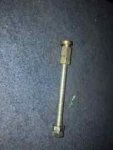
I used a threaded stud bar with elongated nut to jack the seal into tension.

Do not re-use the grub screws and fit the second locking screw over the first.

I also fitted a jubilee clip as a safety precaution.

The watercooling iss not needed below 12 knots.

Before & After

IMG_1241.jpg

IMG_1392.jpg
 
As part of the installation you have to compress the hose by a precise set amount before doing up the grub screws on the collar. I found it a bit difficult on my own but seem to have got it right - six years and all good. One tip I read was to work out the distance that you must compress it and then cut a length of suitable diameter plastic pipe. The pipe is then cut lengthwise so that it will fit over the shaft between The coupling and the collar, holding the collar in the exact position required whilst you tighten the grub screws. You could even leave it there.

if you want to fit a backstop as some suggest then a collar type anode would do the job.
 
As part of the installation you have to compress the hose by a precise set amount before doing up the grub screws on the collar. I found it a bit difficult on my own but seem to have got it right - six years and all good. One tip I read was to work out the distance that you must compress it and then cut a length of suitable diameter plastic pipe. The pipe is then cut lengthwise so that it will fit over the shaft between The coupling and the collar, holding the collar in the exact position required whilst you tighten the grub screws. You could even leave it there.

if you want to fit a backstop as some suggest then a collar type anode would do the job.
This is what I used to jack the bellows tight by 25mm ...

IMG_1387 (1).jpg
 
Not mentioned in my copy of the PPS Seal instructions (but nearly sunk the boat). If you have to re align the propeller shaft ALWAY check the seal as per the fitting instruction to see if the joint is still tight enough, above 2,000 rpm in gear it P****d in
Maybe time to check engine mounts?
 

Other threads that may be of interest

Top