
You are using an out of date browser. It may not display this or other websites correctly.
You should upgrade or use an alternative browser.
You should upgrade or use an alternative browser.
Possible good newsfor the ecology of the Deben.
- Thread starter Easticks28
- Start date

Frayed Knot
Well-Known Member
Yes, interesting. Thanks for sharing.

johnalison
Well-Known Member
I was trying to imagine how much a million tonnes of water is. The nearest I can get it a square kilometre one metre deep. This could be useful, especially in terms of what is dissolved or suspended in the water, but doesn't sound much over a year. However, I wish them well, and while they are about it, maybe they could enforce the speed limits.
Capt Popeye
Well-Known Member
Until that Kingsfleet was separted from the main River Deben , by the construction of the Sea Wall, it used to flow back n forth with each tide , as it was the Favoured Moorings for a certain King of long ago ) hence 'Kings Fleet' ; after the Sea Wall was constructed the Fleet was slowly but surely filled in, turning it into Farming Land ;
Over time I guess areas of Salt Marsh either side of 'Kings Fleet' were filled in to make farming land; resulted in the inability of those Salt Marshes and 'Kings Fleet' to actually drain those newly made Farming Lands, with each tide
Be good to see how this project fares
Over time I guess areas of Salt Marsh either side of 'Kings Fleet' were filled in to make farming land; resulted in the inability of those Salt Marshes and 'Kings Fleet' to actually drain those newly made Farming Lands, with each tide
Be good to see how this project fares
Capt Popeye
Well-Known Member
I was trying to imagine how much a million tonnes of water is. The nearest I can get it a square kilometre one metre deep. This could be useful, especially in terms of what is dissolved or suspended in the water, but doesn't sound much over a year. However, I wish them well, and while they are about it, maybe they could enforce the speed limits.
Which n What Speed Limits do one refer to ?
Guess its on the River Deben, not 'Kings Fleet' I understand that in the area of the Deben where the 'Kings Fleet' is , its a fairley high Speed Limit, with a 6 knot at Ramsholt, but not sure about any of it these days
I do understand that a High Speed Rib travels, at high speed, between Waldringfield and the Ferry, taking paying passengers
Aquaboy
Well-Known Member
but on the opposite side its Queens fleet......was it her favourite mooring spot then?

LittleSister
Well-Known Member
Funded by the EU!
Easticks28
Well-Known Member
?Funded by the EU!
tillergirl
Well-Known Member
Really interest project. I wonder the cost of building the infrastructure and maintaining it. Given the 'square kilometre one metre deep' I sense it expensive but we'll need it I guess.
Capt Popeye
Well-Known Member
Really interest project. I wonder the cost of building the infrastructure and maintaining it. Given the 'square kilometre one metre deep' I sense it expensive but we'll need it I guess.
Yes good point; but when the 'Kings Fleet' was a tributory of the Deben and the Fleet were laid up there in safety from Foreign fleets, guess the waters depth was much more that it is now; also as I understand it the Fleet has been systematically filled in and narrowed down by Farmers etc over quite a time.
Maybe if the Fleet is to be used as a Storeage for rain waters long term they will of necessity deepen it again by dredging
putting the spoil on the Farming Land
Last edited:
tillergirl
Well-Known Member
Just dug out the books: "When Walton (that's the Felixstowe Walton) became a Royal Manot after the Bigot rule, many important personages came there, particular Edward III, who appears to have had a great liking for the place. One memorable occasion was when his huge fleet lay at anchor in the Kingsfleet, watiing to set out for France........" In another book, it is recorded that Woodbridge was a major ship building centre for Charles I and the Commonweath. It records the 'Advice' (545 tons) and the 'Reserve' (533 tons) etc. 12 coal wharves in Woodbridge in the 18th and 19th century. The significance of the Deben in previous years are hard for us to imagine.
Jan Harber
Well-Known Member
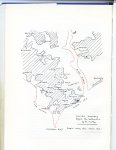
This map/chart, scanned from W.G. Arnott's very informative book Suffolk Estuary, gives you a good idea of how the Deben, and in particular the Kingsfleet, looked before the reclamation of the marshes.
tillergirl
Well-Known Member
I had always sort of regarded Kingsfleet as a sort of shallow mere as it was quite quickly converted into marshes and then farming land. But reading Arnott a little choser and realising Edward III fleet was anchored there, Kingsfleet must have had some significant depth.
Idly this morning at some risk of thread drift, I wondered if the Deben was like that in Edward's times, what did the Norfolk coastline look like in those times. The rate of erosion in some places of Norfolk is 'orrendous today so the coastline must have been really different.
Idly this morning at some risk of thread drift, I wondered if the Deben was like that in Edward's times, what did the Norfolk coastline look like in those times. The rate of erosion in some places of Norfolk is 'orrendous today so the coastline must have been really different.

Black Diamond
Well-Known Member
I remember trying to be a smart arse at school, when our geography teacher lectured us that any town name ending with 'wich' was a salt town (i.e Cheshire), if it wasn't a port, so I piped up 'What about Norwich, then, sir?' and was put right, short order!

AntarcticPilot
Well-Known Member
Many mediaeval ports were well inland - some still are. Wisbech is still a port, but it's well inland on the River Nene; I understand that it is regularly visited by small coasters. The village I live in - Littleport - is given away by its name; at one time it was the port where larger vessels trans-shipped cargos bound further inland. What we forget is that ships were far smaller than even the smallest modern coaster; comparable in size to the larger leisure yachts of today. And there were few artificial harbours, so finding shelter well inland was a good move!I remember trying to be a smart arse at school, when our geography teacher lectured us that any town name ending with 'wich' was a salt town (i.e Cheshire), if it wasn't a port, so I piped up 'What about Norwich, then, sir?' and was put right, short order!

Tomahawk
Well-Known Member
This map/chart, scanned from W.G. Arnott's very informative book Suffolk Estuary, gives you a good idea of how the Deben, and in particular the Kingsfleet, looked before the reclamation of the marshes.
View attachment 109456
When you consider the cost of the flood defences to reclaim that land** the set it against the value of agricultural product that is produced.. subsidised from the tax payer in general.. I suggest it doesn't seem to be a good use of public funds.
** a 3m high bank needs 18 CuM per linear meter at a cost of over £50 possibly much higher per meter placed and engineered or best part of £100 a linear meter.. then there is maintenance.
Tomahawk
Well-Known Member
Many mediaeval ports were well inland - some still are. Wisbech is still a port, but it's well inland on the River Nene; I understand that it is regularly visited by small coasters. The village I live in - Littleport - is given away by its name; at one time it was the port where larger vessels trans-shipped cargos bound further inland. What we forget is that ships were far smaller than even the smallest modern coaster; comparable in size to the larger leisure yachts of today. And there were few artificial harbours, so finding shelter well inland was a good move!
Newport Pagnell service station is next to.... Newport on the Ooze. there is still an old wharf in Buckingham

Kukri
Well-Known Member
If your choice was two tons of anything by horse or ox cart along a rutted road, or by water, you would choose water every time.
AntarcticPilot
Well-Known Member
I think that you will find that the land was reclaimed incrementally on a very small scale by private enterprise. Continuing to defend it has the costs you mention, but the original reclamation was probably done in the off season by individual farmers wishing to increase their land. Even in the Fenland of East Anglia, that's how it happened - a band of "adventurers" would club together to dig dykes and implement pumping arrangements to drain an area - hence the prevalence of placenames like "Adventurer's Fen". The whole thing then got too big to fail (remember the banking crisis?) and taken under the government's wing.When you consider the cost of the flood defences to reclaim that land** the set it against the value of agricultural product that is produced.. subsidised from the tax payer in general.. I suggest it doesn't seem to be a good use of public funds.
** a 3m high bank needs 18 CuM per linear meter at a cost of over £50 possibly much higher per meter placed and engineered or best part of £100 a linear meter.. then there is maintenance.
Capt Popeye
Well-Known Member
Funded by the EU!
Surely all those 'funded by the EU' projects , are in reality Funded through the EU ? as twas our UK /GB money surely ?