Plumb bow stupidity

geem

Well-Known Member
Joined
27 Apr 2006
Messages
9,245
Location
Caribbean
Visit site
I just watched a Beneteau 41.1 charter boat lifting it anchor. The anchor came up upside down so the girl on the bow let it down again and is smacked into the hull. She powered the windlass up and it came up upside down again. She lowered it again and banged the hull hard for a second time. Who thought it was a good idea to have plumb bows? If you have an extended bow roller to place the anchor further forward the offerings from the production boat manufacturers are often pretty flimsy affairs.
We have a traditional raked bow with a massive bowroller. We often bring up the anchor and it's full of mud or sticky sand. We dangle the anchor at the surface and motor along at low revs to clean the anchor. How do you do this with a plumb bow?
 
What’s the LWL and LOA of your boat though? I like the look of a plumb bow, and it maximises your waterline length. Pain in the arse for anchoring, as you say, but I wouldn’t turn a boat down because it had such a bow.
 
We dangle the anchor at the surface and motor along at low revs to clean the anchor. How do you do this with a plumb bow?
Same way as I do it, even without a plumb bow. I just let out enough chain that the hook is below bow level.

I assume that racing boats have plumb bows so they go through a wave rather then being lifted by it, and therefore slowed down. Personally, I like the idea of the bow lifting and keeping the waves in the sea where they belong, and not trying to wash me off the foredeck. I don't go sailing to get places quickly.
 
I like newfangled raked bows too. Can't be doing with plumb bows. Old hat. The world has moved on.
LLR_NELMS_A_102-001.jpg
 
I just watched a Beneteau 41.1 charter boat lifting it anchor. The anchor came up upside down so the girl on the bow let it down again and is smacked into the hull. She powered the windlass up and it came up upside down again. She lowered it again and banged the hull hard for a second time. Who thought it was a good idea to have plumb bows? If you have an extended bow roller to place the anchor further forward the offerings from the production boat manufacturers are often pretty flimsy affairs.
We have a traditional raked bow with a massive bowroller. We often bring up the anchor and it's full of mud or sticky sand. We dangle the anchor at the surface and motor along at low revs to clean the anchor. How do you do this with a plumb bow?
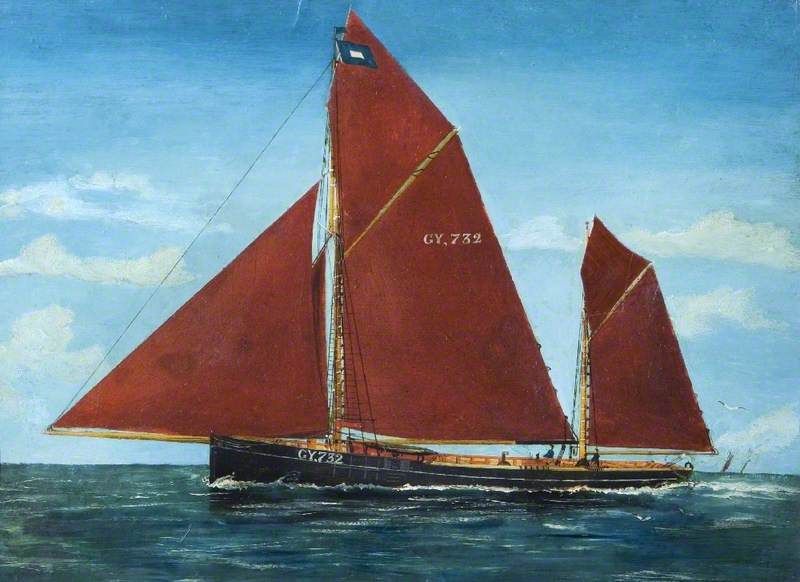
“Traditional raked bow”? Very selective thinking - the straight bow was used extensively long before racing rules encouraged long overhangs.
And benefits of faster average speeds and much increased space for the same LOA.
Just needs a bit of competence working the anchor.
PS Mr McDoon got to the same place quicker and more photogenically
 
“Traditional raked bow”? Very selective thinking - the straight bow was used extensively long before racing rules encouraged long overhangs.
And benefits of faster average speeds and much increased space for the same LOA.
Just needs a bit of competence working the anchor.
PS Mr McDoon got to the same place quicker and more photogenically
Back in those days boats were made from stout pieces of timber and didn't often have a bow roller pushing anchors over the bow. These days with wafer thin grp hulls its not quite the same. Not seen many oil tankers or commercial ships with straight bows. That racing waterline thing still seems to be popular in commercial ships😅
 
I suspect some of the problem is with it being a charter boat where there isn't an owner or skipper to sort out an effective system to retrieve an anchor. Although I would expect Benetau to have thought through some of the problems.

If you want a plumb bow then you'll learn to work around the challenges. I recall leaving Portsmouth in a similar boat and being shocked by the way green water sluiced down the deck from a short steep wind over tide. The boat sailed like a dream and fast, but I wouldn't swap for my raked bow, bulwarks and a massive bow roller. I do travel several knots slower though....

As a postscript, I have had occasional anchor retrieval dramas with shackles getting into the wrong position etc. Fortunately no witnesses!
 
A quick look around the port reveals that new yachts have plumb bows old ones don’t…in fact some catamarans have reverse bows (but the bow roller is in between the hulls so it doesn’t matter)
 
What is it with all this anchoring lark? Surely one does not need an anchor in a moderm marina with finger berths.
Ok, I am told that some Med places are still in the dark ages, with stern too berthing & bow anchoring,
But best avoided in my view. Too hot for starters.
 
I just watched a Beneteau 41.1 charter boat lifting it anchor. The anchor came up upside down so the girl on the bow let it down again and is smacked into the hull. She powered the windlass up and it came up upside down again. She lowered it again and banged the hull hard for a second time. Who thought it was a good idea to have plumb bows? If you have an extended bow roller to place the anchor further forward the offerings from the production boat manufacturers are often pretty flimsy affairs.

Did a lot of anchoring in my dad's Dufour 40, which had a pretty plumb bow. Don't recall this as being an issue, but the boat did have a steel plate mounted around the very bow so I guess someone thought it might have been a consideration.
We did put a very visible marker in the chain for when the anchor was about to break the surface (not normally sailing in places where you can see through the water...) And then went slowly from there. The key was to allow the anchor to rotate before you brought it onto the roller.


We have a traditional raked bow with a massive bowroller. We often bring up the anchor and it's full of mud or sticky sand. We dangle the anchor at the surface and motor along at low revs to clean the anchor. How do you do this with a plumb bow?
12v saltwater deckwash pump and a squirty hose nozzle. Had more uses than just washing the anchor too, for example washing the chain that's been lying in thick east coast mud as it comes aboard. Or washing the deck...

As with any feature you care to mention though, bow design is a compromise. You've identified a potential downside, but there are plenty of upsides.
 
I occasionally look at my old, pointy bow and wish I had more waterline length and v-berth legroom! Can't win...

On the other hand someone losing the plot with a swinging anchor can put big dents and scratches in literally any bow. So I don't think I would hold that against any design.
 
I am grateful for having a moderate design for easy anchoring and not having to pay marina fees for a bit stuck out at the bow. I can see the speed advantage of having a longer waterline and even finer entry, but many of the boats I see have very shallow to no forefoot at all, which doesn’t look very comfortable to me, though I have to admit to seeing some new-style boats slicing into a head sea quite effectively. I think that if I had a plumb bow I would want to include some kind of extendable bow roller, or should I say retractable?
 
What is it with all this anchoring lark? Surely one does not need an anchor in a moderm marina with finger berths.
Ok, I am told that some Med places are still in the dark ages, with stern too berthing & bow anchoring,
But best avoided in my view. Too hot for starters.
We are in the Caribbean. Probably the best cruising grounds in thr world. Constant wind, mainly on the beam, warm seas, pleasant temperatures all winter and a life at anchor. How much sailing do you do in the winter?
 
I always feel that the raked bow, apart from looking more graceful, probably gives a “variable rate” kind of cushioning when ploughing into waves. …akin to the suspension on some vehicles.
 
Back in those days boats were made from stout pieces of timber and didn't often have a bow roller pushing anchors over the bow. These days with wafer thin grp hulls its not quite the same. Not seen many oil tankers or commercial ships with straight bows. That racing waterline thing still seems to be popular in commercial ships😅
Where is your evidence supporting "wafer thin GRP hulls" - particularly at the bows where Kevlar is commonly used. Suspect the chance of damage to the structure from an anchor banging against it are minimal. Inconvenient, messy and loss of face possibly, but structural compromise?

Still it does give bored voyeurs something to post on yotty forums. Probably same people as sit on the quaysides in Greece laughing at the flotilla sailors messing up stern to anchoring in a strong cross breeze.
 
Top