
Paraffin Heater

CAPTAIN FANTASTIC

Well-Known Member
Joined
15 Jul 2009
Messages
3,311
Location
Bristol Channel
Visit site
images.jpg

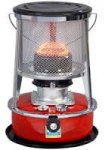
I have a paraffin heater which I use to heat up my garage. It is new and fairly compact with a fibreglass wick, 3 lts tank capacity, lasting 17 hours giving out 2.2 kw of heat. I am impressed with it in that it does not smell during operation except when you first light it up and the carbon monoxide alarm does not go off even when I place it near and above it. It burns very clean without any obvious particulate in the air.

I am aware that this type of heaters are used on boats (US, Germany, S Africa?); I have not used it on my boat but I will try it out this winter. I am fully aware that any open flame will consume oxygen, giving out al kinds of bi-products including water and therefore ventilation is essential. Does anyone uses paraffin/kerosene heaters onboard or for indoors?
 
Once or twice a year, I run my Eberspacher on paraffin / kerosene in the belief that it cleans off any build-up of soot on the heat-exchanger. My only comment on using paraffin is the difficulty in obtaining it, and the ridiculous cost of the stuff.
 
Using

Paraffin itself, is very common on boats, possibly from a bygone age , but some of us still use cookers and heaters that use paraffin as fuel.

Having ventilation and alarms still make sense.

Cheers
 
View attachment 54760

I have a paraffin heater which I use to heat up my garage. It is new and fairly compact with a fibreglass wick, 3 lts tank capacity, lasting 17 hours giving out 2.2 kw of heat. I am impressed with it in that it does not smell during operation except when you first light it up and the carbon monoxide alarm does not go off even when I place it near and above it. It burns very clean without any obvious particulate in the air.

I am aware that this type of heaters are used on boats (US, Germany, S Africa?); I have not used it on my boat but I will try it out this winter. I am fully aware that any open flame will consume oxygen, giving out al kinds of bi-products including water and therefore ventilation is essential. Does anyone uses paraffin/kerosene heaters onboard or for indoors?
Is it your intention to use it for warmth whilst staying on the boat or to warm up the boat in your absence? If the latter then the emitted water vapour will cause condensation - better just to rely on natural ventilation. If the former then be very wary of the various fumes.
 
I have a Victory boat heater which is just a Primus stove in a fancy box. It works fine though I mainly use it when fitting out over the winter months. It has a crude fitting for a flue, of sorts, but I have never used it. Ventilation is therefore essential.

This sort of device gets iffy if it runs out of oxygen and starts producing all sorts of harmful stuff, which you have alluded to. So have a care, which you obviously will. I have never found a problem with condensation
 
We have used a Corona-Japanese made-Parrafin heater on our boat for three seasons.

Just so the doomongers and naysayers know, it has not killed us-or even given the slightest symptom of carbon monoxide poisoning. A Honywell CO alarm, mounted directly above it within 80cm of the hot air rising from the grill does not go off. We also experience little extra condensation-some, but little extra above two adults breathing in a small space.

It has a motion sensor and will switch off if agitated or bounced about and an Oxygen depletion sensor which switches it off when Oxygen falls below a specified level.

It cost just over £100.00 and uses low odour fuel. It is ignited with a battery powered heat coil and the glassfibre wick, once "run in" has needed no attention.

When I was a kid Parrafin heaters were very common. As with all open flame devices a supply of fresh air into the area is a basic requirement.

Our house was so draughty that was never a problem! On or in a boat this must be supplied to keep life safe.

I can assure you that our Corona made less CO than the cooker with both rings and the oven on.

How do I know this-well the CO alarm triggered a couple of times with heavy cooker use in bad weather, but never with the Corona blasting away right under it. The cooker was 4 metres away.
 
I have a Victory boat heater which is just a Primus stove in a fancy box. It works fine though I mainly use it when fitting out over the winter months. It has a crude fitting for a flue, of sorts, but I have never used it. Ventilation is therefore essential.

This sort of device gets iffy if it runs out of oxygen and starts producing all sorts of harmful stuff, which you have alluded to. So have a care, which you obviously will. I have never found a problem with condensation

i had a Victory installed in my Eventide for a number of years using a flue. Worked very well. May re-install it when I finish the refit if I can find another flue as the original corroded away.
 
Paraffin is now sold as kerosene, and for a 20lt drum is cheap as chips from your local lubricants supplier.

I converted my Eber D2 to run on it full time on my last boat. Keeps the burner cleaner, and is recommended by Espar the US version of the Eber.

I would run any form of combustive heater within the cabin without a dedicated flue for the exhaust gas. Life doesn't need to be that short.
 
Paraffin is now sold as kerosene, and for a 20lt drum is cheap as chips from your local lubricants supplier.

I converted my Eber D2 to run on it full time on my last boat. Keeps the burner cleaner, and is recommended by Espar the US version of the Eber.

I would run any form of combustive heater within the cabin without a dedicated flue for the exhaust gas. Life doesn't need to be that short.

See post #10. Does your cooker have a flue?

I was very aware of the potential risk and so mitigated it by fitting a top quality CO meter immediatly above the heater. In many, many hours of use it never went off.

It did when the cooker was on in bad weather-the hatch and washboards were in to keep the rain and wind out.

The difference is the amount of hydrocarbon fuel used. The cooker uses far more and also is possibly not so clean burning-it is old generation. The Corona heater is VERY economical and uses ROLF-reduced odour liquid fuel. Basicaly this is highly refined paraffin. More expensive than you quote, but almost no smell.

Of course I would prefer a heater with a flue, but you cant get those for £100.00 new.

Anyway, it has served its purpose-our next boat will have a better heating system. The one we have our eye on has a Webasto.
 
I have a Taylor's paraffin heater on my boat. When I installed it I fitted a flue (minimum length 1000mm per manufacturer's instructions) leading up through the deck.

I needn't have bothered with this flue then, is that what some of you are suggesting?
 
View attachment 54760

I have a paraffin heater which I use to heat up my garage. It is new and fairly compact with a fibreglass wick, 3 lts tank capacity, lasting 17 hours giving out 2.2 kw of heat. I am impressed with it in that it does not smell during operation except when you first light it up and the carbon monoxide alarm does not go off even when I place it near and above it. It burns very clean without any obvious particulate in the air.

I am aware that this type of heaters are used on boats (US, Germany, S Africa?); I have not used it on my boat but I will try it out this winter. I am fully aware that any open flame will consume oxygen, giving out al kinds of bi-products including water and therefore ventilation is essential. Does anyone uses paraffin/kerosene heaters onboard or for indoors?

Used to find Tilley and Bialaddin pressure lamps most effective heaters as well as being excellent light sources - both run well on aviation kerosene... which can be cheaper than paraffin as sold by some filling stations.
 
We have been using an ancient Aladdin 32 heater for years as the sole form of heating at home burning 'commercial kerosene' (central heating oil). Our house is 350 years old, and is quite draughty. The CO detecter has never gone off. There is no sign of condensation (probably due to the draughts). No noticeable odour.
Fuel 40p litre. Burns less than a gallon in 14 hours. Price of wicks is getting expensive, but one lasts a season.
Wicks tend to burn out if the fuel level gets too low.
 
Last edited:
Sevenem has a dorade almost directly above the cooker. This is inadequate when the grill is on, but the CO alarm does not go off with the hatches closed when the gas heater and all other burners on the cooker are on.

Being the clumsy sort I would have to arrange some means of preventing me from kicking it over, even if the only consequence would be paraffin on the sole. When I was a kid we had an indoors 50 gallon paraffin tank develop a leak and empty itself - After a while I didn't notice the smell but I suspect the house still smells of the stuff...
 
It gives out carbon monoxide, which won't do you any good at all.

A properly cleaned and adjusted paraffin heater provided with adequate ventilation gives out no carbon monoxide at all. Captain Fantastic has already said he knows there is a need for ventilation.

The only sort of paraffin heater that needs a flue is one that is designed to operate with a flue. The UK branch of Aladdin (an American company) saved the parent company's bacon by developing the blue flame heater, and also by redesigning the Aladdin lamp burner to reduce manufacturing costs, in the early 1950s. Neither the heaters nor the lamps were designed to have a flue. Many thousands of people have lit and heated their homes with paraffin without killing themselves. It's people with badly-maintained gas heaters who do that.

PS. The Aladdin heaters were also self-extinguishing if they were knocked over - a statutory requirement in the UK from some time in the 60s, I think. I got mine in 1971.
 
Last edited:
I have a Taylor's paraffin heater on my boat. When I installed it I fitted a flue (minimum length 1000mm per manufacturer's instructions) leading up through the deck.

I needn't have bothered with this flue then, is that what some of you are suggesting?

The Taylors has a flue, is designed for a flue, is provided with a flue-its meant to be used.

My Corona, like many simple and inexpensive heaters has no flue and is portable.

Not comparing like with like. Of course I am not suggesting using a device with a flue without one.

I am, however, suggesting to the doomongers who appear to believe using a combustion device inside a boat without a flue will be sure to kill someone.

It might, but not the way I use it.
 
Top