Overcharge protection

PabloPicasso

Well-Known Member
Joined
12 Feb 2010
Messages
2,915
Visit site
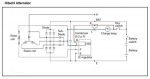
I saw on a thread on here, I think it was, that one can get an alternator protector to ma age that spike that occurs when the swith is inadvertently turned off with the engine running. Is this just for high powered alternators, or is it worth fitting to a standard 80a/h job. Would it work as intended in this application? Screenshot_20201013_235639_com.android.chrome.jpg

 
I've fitted one to protect the Balmar alternator against my LiFeP04 suffering a high voltage disconnect via the BMS. It's the last line of defence. They are small, sealed, easy to fit, and not too pricey. It will work with your alternator. Whether it is worthwhile will depend on your likelihood of an accidental disconnect
 
Last edited:
I saw on a thread on here, I think it was, that one can get an alternator protector to ma age that spike that occurs when the swith is inadvertently turned off with the engine running. Is this just for high powered alternators, or is it worth fitting to a standard 80a/h job. Would it work as intended in this application?

Is this a 1-2-Both switch?
 
Is this a 1-2-Both switch?
No its a device which can trigger an alarm in the event of a contiguous high alternator output voltage ( for example due to a defective regulator) and which will also protect the alternator diodes from a very high voltage spike if the output becomes disconnected from the battery and loads ( for example due the inadvertent opening of an isolator switch
 
No its a device which can trigger an alarm in the event of a contiguous high alternator output voltage ( for example due to a defective regulator) and which will also protect the alternator diodes from a very high voltage spike if the output becomes disconnected from the battery and loads ( for example due the inadvertent opening of an isolator switch

No, Vic, I was asking whether the switch he was talking about was a 1-2-Both switch. I know full well what the Sterling device is.
 
You could fit a Transzorb TVS (Transient voltage supressor zener diode ) from ground to the alternator live. A 16V or 18V should stop any spikes and they are very fast acting. Should cost under £1 for a 1500W peak power one.
Alternatively connect a diode across the switch so that if it is turned off the current will still flow from the alternator to the battery preventing a spike but also not allowing the battery to discharge into any other circuits.
TVS
 
No, Vic, I was asking whether the switch he was talking about was a 1-2-Both switch. I know full well what the Sterling device is.
It does not matter if the switch is a 1,2 both switch or an individual isolator . If it disconnects the alternator from the battery the resulting voltage spike is likely to blow the diodes. The Sterling device will prevent this.
 
It does not matter if the switch is a 1,2 both switch or an individual isolator . If it disconnects the alternator from the battery the resulting voltage spike is likely to blow the diodes. The Sterling device will prevent this.

The type of switch arrangement may be a relevant factor if it is a variable in the danger of an accidental disconnect. I touch the engine switch once when I first use the engine and a second time when I leave the boat (up to five weeks later). If It wasn't for the BMS I wouldn't bother with a Sterling Alternator Protect.
 
Last edited:
The diode damage to an alternator would be caused by excessive voltage from the stator coils (3 phase) when load is disconnected and before regulator can reduce field current to compensate. As such I find it difficult to believe that any device connected to the output of the alternator can protect the diodes from high internal voltage across the diodes unless it is set up to maintain a load on the output. It may be able to do that but not a great load and not for long. (based on the size of the package) A transzorb zener didoe might be able to provide enough load to keep high reverse voltages down on the diodes however.
Now it is easy and ok to have a protection device to cut off the load in the case of excess voltage out as in regulator failure which does sometimes happen destroying batteries and devices using power. But most people take the risk as it does not often happen. But this will not protect the alternator diodes.
Now alternator diode damage from load disconnect seems to be a fact from experience though I doubt it is as common as many believe. In any case the devices like diode across 1.2.both switch contacts could maintain a load on alternator under all conditions and would be afar better bet.
Of course I may have it all wrong about the device protecting alternator diodes but I think it might be a sales pitch, ol'will
 
Thanks Poey50 for that link. He certainly is emphasizing that it is to protect the alternator diodes. However did you ever disconnect a terminal carrying 150 amps? There is a lot of arcing sparking etc. I can't read 150 amps on the meter. And that alternator only had one belt. Would one be enough for 150 amps? Am I just a sceptic? He did not try disconnecting the alternator without the protector to prove the alternator would be destroyed! Still a bit doubtful. ol'will
 
Thanks Poey50 for that link. He certainly is emphasizing that it is to protect the alternator diodes. However did you ever disconnect a terminal carrying 150 amps? There is a lot of arcing sparking etc. I can't read 150 amps on the meter. And that alternator only had one belt. Would one be enough for 150 amps? Am I just a sceptic? He did not try disconnecting the alternator without the protector to prove the alternator would be destroyed! Still a bit doubtful. ol'will

Bogus devices and fake video. Quite a bold claim.
 
It does not matter if the switch is a 1,2 both switch or an individual isolator . If it disconnects the alternator from the battery the resulting voltage spike is likely to blow the diodes. The Sterling device will prevent this.
PVB is aware of that as well. It has the same effect.

He's just asking what this "switch" is so he can determine its purpose is as the OP might well be talking about the ignition switch, for example.

Richard
 
I am very interested to hear the replies to this thread. Can any one advise on the most suitable diode to fit across the terminals of a 1-2 -both - off switch. My engine is a Yanmar 1GM10, I think the alternator probably has 30amp output.
 
Are there any alternator experts out there who can say which diodes are damaged when the load is disconnected?
1603621122410.png
I would think that a power zener across E and BAT would protect the six 3 phase diodes and the regulator. Not so sure about the sub-diodes. I can't imagine that the Sterling device is anything but an expensive packaged zener diode with perhaps a capacitor to limit the rise time of the spike.
I have put 30A schottky diodes across my main switch (30A alternator) but I expect they would get quite hot if they had to carry the full current for any length of time.
 
I am very interested to hear the replies to this thread. Can any one advise on the most suitable diode to fit across the terminals of a 1-2 -both - off switch. My engine is a Yanmar 1GM10, I think the alternator probably has 30amp output.
This was the one I used.
Diode package

I need to sort out some proper heatsinking, although for day sailing the alternator probably puts out less than 10 amps after the first few minutes as the batteries never get flat.
 
Are there any alternatore xperts out there who can say which diodes are damaged when the load is disconnected?
The unlucky ones?
You'd think the sub diodes would be vulneraable, being smaller, but OTOH they are likely to turn off faster and small diodes with a high reverse rating are cheap, big ones less so.
The 'IC' regulator looks vulnerable, but may have some useful protection built in.

Alternators are quite tough, they get quite a hard life in normal use, the spike which happen on a car's '12V' at the moment the starter motor disconnects are not always small.
But there are anecdotes of alternators mysteriously failing, some time after a mishap with the 1B2 switch.
 
I am very interested to hear the replies to this thread. Can any one advise on the most suitable diode to fit across the terminals of a 1-2 -both - off switch. My engine is a Yanmar 1GM10, I think the alternator probably has 30amp output.
I think you should be quite clear about what you are trying to achieve here.
Battery isolator switches that don't isolate the battery are not your best friend when the smoke starts coming out.
 
Top