
Kukri
Well-Known Member
I’d say the Ore entrance has a stronger tide, usually. The Ore looks more desolate because there are fewer signs of habitation there.


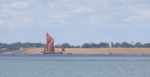
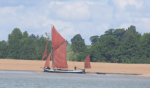

On our first visit many years ago, we were early on the tide so was hanging about killing time when a largish yacht, about 40ft came by and went straight in. I thought if he can, so can we, so followed him.:-( he's big but he only draws 3ft - less than half oour draft


Just follow your instinct and blaze the trail as you describe, you'll not go far wrong.
There's far too much hype and mythology talked and written about this place. Most of it is just that; hype and mythology.
It gets a reputation because careless people are careless about the manner in which they enter or exit and sometimes get stuck.
There's no witchcraft about it. Enter or leave on a rising tide is a good starting plan...
However it would be a daunting place to get pinned on a shingle bank so just ensure you don't!
The latest surveys are readily available on t'internet (Visit My Harbour.com being one of the best) and unless there's been a huge storm since they were made the bottom won't have changed appreciably, just as with any other chart. You can also call up the harbourmaster if you really feel the need for up to the minute advice.
Just don't be too adventurous on your timings, allow a decent margin of (depth) error but above all comply with the bouyage. PUNCTILIOUSLY.
You don't have to be much off track on the sight-lines to find shallower water so be accurate - really accurate at keeping to the tracks given and don't allow yourself to be swept off it by the often fairly strong cross current. Drift angles of 30 degrees are not unlikely with a 2.5Kt tide if you're taking it slowly - in my book you're better having the confidence to proceed at a sensible clip and keep large drift-angles to the minimum. Don't let the tide sag you below the required track.
It's just careful and thoroughly aware boat-handling, that's all.
Make yourself aware of the current flow in the river too, it'll be hoofing out at 3-4 or more Kts for some time after low tide and pouring in at the same rate long after high tide - progress in the narrows of the entrance and soon inside can be quite alarming/surprising in both directions. Throttle setting tends to be either idle and hurtling ahead or full ahead and barely making headway depending on how the current is running! The strong current area doesn't extend much beyond the shingle banks near the entrance. Big, sudden cross currents exist there too - bit it's fun!
DON'T look too much at precipitous and alrming gravel banks close by - as long as you're on track. Sometimes you're in 5-8 or more metres of water a mere boat length from the shore.
It feels a bit of a challenge first time but if you take the published advice and are accurate in your track-keeping there is not much to be concerned about. Once you've done it once you'll relish coming back for more. What you'll discover inside is more that worth the effort, believe me!
Sounds like the river Ythan at Newburgh , but we dontI’ve not been in here before and would normally just be brave and trail blaze this myself with the pilot book in the cockpit!
However the ECP suggests ‘frequent massive changes’ and essential consulting of recent surveys... which have not taken place this year for obvious reasons.
Can anyone local offer any reassuring words of wisdom for XYD and his 2 metre draft boat please?
Thanks!
seems like the river Ythan at Newburgh , but it does not have marking bouys !!Just follow your instinct and blaze the trail as you describe, you'll not go far wrong.
There's far too much hype and mythology talked and written about this place. Most of it is just that; hype and mythology.
It gets a reputation because careless people are careless about the manner in which they enter or exit and sometimes get stuck.
There's no witchcraft about it. Enter or leave on a rising tide is a good starting plan...
However it would be a daunting place to get pinned on a shingle bank so just ensure you don't!
The latest surveys are readily available on t'internet (Visit My Harbour.com being one of the best) and unless there's been a huge storm since they were made the bottom won't have changed appreciably, just as with any other chart. You can also call up the harbourmaster if you really feel the need for up to the minute advice.
Just don't be too adventurous on your timings, allow a decent margin of (depth) error but above all comply with the bouyage. PUNCTILIOUSLY.
You don't have to be much off track on the sight-lines to find shallower water so be accurate - really accurate at keeping to the tracks given and don't allow yourself to be swept off it by the often fairly strong cross current. Drift angles of 30 degrees are not unlikely with a 2.5Kt tide if you're taking it slowly - in my book you're better having the confidence to proceed at a sensible clip and keep large drift-angles to the minimum. Don't let the tide sag you below the required track.
It's just careful and thoroughly aware boat-handling, that's all.
Make yourself aware of the current flow in the river too, it'll be hoofing out at 3-4 or more Kts for some time after low tide and pouring in at the same rate long after high tide - progress in the narrows of the entrance and soon inside can be quite alarming/surprising in both directions. Throttle setting tends to be either idle and hurtling ahead or full ahead and barely making headway depending on how the current is running! The strong current area doesn't extend much beyond the shingle banks near the entrance. Big, sudden cross currents exist there too - bit it's fun!
DON'T look too much at precipitous and alrming gravel banks close by - as long as you're on track. Sometimes you're in 5-8 or more metres of water a mere boat length from the shore.
It feels a bit of a challenge first time but if you take the published advice and are accurate in your track-keeping there is not much to be concerned about. Once you've done it once you'll relish coming back for more. What you'll discover inside is more that worth the effort, believe me!
No sea trout though!seems like the river Ythan at Newburgh , but it does not have marking bouys !!
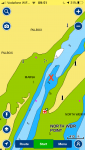
I suspect that catches a few people out, it has made me gulp a few times. You think you are past the worst bit and relax because you are safely in the river, then the sounder alarm goes off!Was it here (X) you touched? Because there's an annoying heap of shingle that often trips you up.
View attachment 98561
I left the Ore last weekend at LW+1, using Navionics and carefully following the deeper channel, and there was so much water beneath me I didn't even bother to make a note: at least 3m I'd say.

Was it here (X) you touched? Because there's an annoying heap of shingle that often trips you up.
View attachment 98561
I left the Ore last weekend at LW+1, using Navionics and carefully following the deeper channel, and there was so much water beneath me I didn't even bother to make a note: at least 3m I'd say.
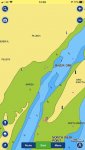

With a sounding of 5m right on the contour! Something wrong there - and not the first time for Navionics. Looks like someone has miscoded the depth area when ingesting new data into their system.Well that's interesting. My (up to date) Navionics shows the area you have in white with 5.1m as 0-2m:
View attachment 98568
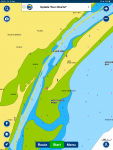
Don't think Navionics can be up to date as there wasn't a survey this year.

Doesn’t it depend on how you have your water level depth shadings set in map options?Well that's interesting. My (up to date) Navionics shows the area you have in white with 5.1m as 0-2m:
View attachment 98568
Was it here (X) you touched? Because there's an annoying heap of shingle that often trips you up.
View attachment 98561
I left the Ore last weekend at LW+1, using Navionics and carefully following the deeper channel, and there was so much water beneath me I didn't even bother to make a note: at least 3m I'd say. (EDIT: 3m in the river, that is. Between the buoys the minimum depth was 1.5m)