On-Board Scuba Air Compressor

TravisT

New Member
Joined
26 Sep 2020
Messages
3
Visit site
Hello. I'm looking for a 40-60 foot yacht to buy that I will be setting up for scuba diving. I would like to get some advice and hear your experience with air compressors.

  1. Which type of compressor would you recommend - gas, diesel, or electric? I have read plenty of good reviews of gas-powered Bauer compressors for onboard use. Do any of you have experience with these? We will generally only be filling a few tanks per day, but wouldn't mind having the option to fill more for big diving days or diving with others.
  2. Where do you house your compressor? I have read that some people like to bolt them down in the lazarette, and others keep them in the engine room. But I suppose that depends on whether you are running a gas or electric compressor?
  3. Have you had any issues with oil burping? Should I just aim to get an oilless compressor in the first place? What are the drawbacks of an oilless compressor?
 
The first thing you need to do is decide how large a compressor you‘ll need to match you requirements. The smallest one on the market will take 30 minutes or more to fill a single 12l tank: however they come with the option of a petrol engine or single phase electric motor. The next larger compressors which will fill 2 x12l tanks in the same time but the only feasible options on board are a petrol engine or driving it off the boats engine: a single phase electric motor won’t be up to the job of running it.
All compressors need bleeding regularly whilst they’re running, as the interstage coolers cause water to condense out in the water separator, so you’ll need to take account of that. Oilless compressors produce a “clean” condensate as there’s no trace of oil in it but it’s an almost unnoticeable difference. You’ll have to weigh that against the greater initial cost and higher maintenance costs as oilless compressors have to have their piston rings changed as they wear faster without the oil bath.
On liveaboard dive boats, the compressors are usually driven by Diesel engines and are permanently mounted affairs in their own lockers.
On yachts I’ve encountered small petrol engined compressors which live in a cockpit locker and are placed on deck to fill tanks. Noisy but ok for occasional use.
if you’re going to be operating as a dive boat for paying customers, then I’d look at giving over a cockpit locker to the compressor and having a water cooled Diesel engine to drive it. That’d do two things: you’d minimise the noise whilst the compressor in working and by having a proper instillation with a water cooled exhaust you would minimise the risk of getting exhaust fumes into the compressor air intake. Also look at where your tanks will be whilst you’re filling them: it may be best to have long filling whips to take the air to the tank rather than bringing tanks to the compressor.
As to makes, there’s not a vast amount to choose between them. I’ve used Coltri Sub, Bauer and Rix as well as a few of indeterminate make, all are solid pieces of engineering and will give good service if properly cared for.
Final thoughts. If you’re running a commercial operation of any sort you’ll need to have your air certified as safe on a regular basis. You may want to consider buying your own test equipment so that if you’re operating in remote places. Look at the cost of consumables before you choose your compressor. Bauer filter cartridges are notoriously expensive, whilst you can get away without a filter on the Rix as you’ve no oil to remove. Also look at support wherever you’re heading for. No good buying a Bauer if there’s no local rep because the local dive schools all run Coltri Sub.
 
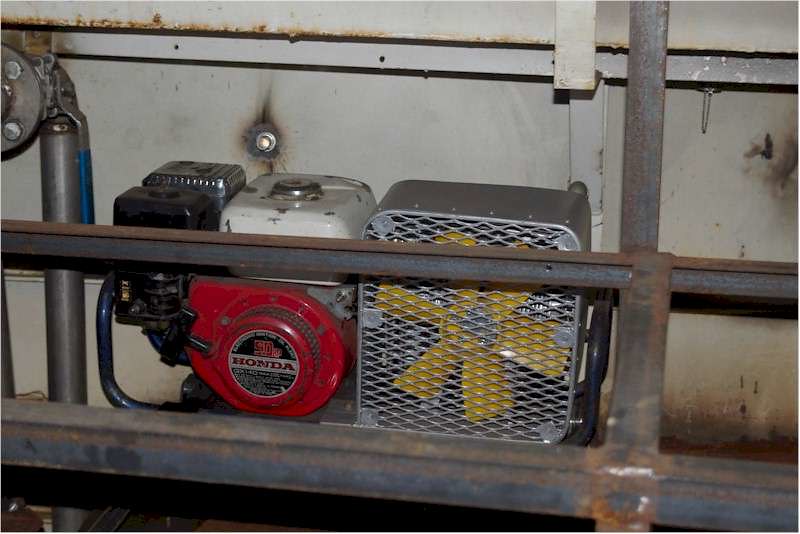
I have a Coltri Sub on board which is similar to the Bauer compressors

I have a petrol (gas) powered but converted so I can also replace the petrol with a suitable single phase electric.

I did it this way so I could us it on board running it from my onboard diesel water cooled generator or I can take it to a remote beach site and change the electric motor to the petrol engine.

Must admit never used it in anger but have used it to fill my part empty tank.

I also have a hookah set I use from my boat or remotely as it has a floating compressor and powered from a 12Vdc battery charged from the boat.

This was during building and installation before I fitted the electric motor.

36086111805_658f275989_c.jpg
 
Thanks for your responses. Very helpful. I have some followup questions.
The first thing you need to do is decide how large a compressor you‘ll need to match you requirements. The smallest one on the market will take 30 minutes or more to fill a single 12l tank: however they come with the option of a petrol engine or single phase electric motor. The next larger compressors which will fill 2 x12l tanks in the same time but the only feasible options on board are a petrol engine or driving it off the boats engine: a single phase electric motor won’t be up to the job of running it.
All compressors need bleeding regularly whilst they’re running, as the interstage coolers cause water to condense out in the water separator, so you’ll need to take account of that. Oilless compressors produce a “clean” condensate as there’s no trace of oil in it but it’s an almost unnoticeable difference. You’ll have to weigh that against the greater initial cost and higher maintenance costs as oilless compressors have to have their piston rings changed as they wear faster without the oil bath.
On liveaboard dive boats, the compressors are usually driven by Diesel engines and are permanently mounted affairs in their own lockers.
On yachts I’ve encountered small petrol engined compressors which live in a cockpit locker and are placed on deck to fill tanks. Noisy but ok for occasional use.
if you’re going to be operating as a dive boat for paying customers, then I’d look at giving over a cockpit locker to the compressor and having a water cooled Diesel engine to drive it. That’d do two things: you’d minimise the noise whilst the compressor in working and by having a proper instillation with a water cooled exhaust you would minimise the risk of getting exhaust fumes into the compressor air intake. Also look at where your tanks will be whilst you’re filling them: it may be best to have long filling whips to take the air to the tank rather than bringing tanks to the compressor.
As to makes, there’s not a vast amount to choose between them. I’ve used Coltri Sub, Bauer and Rix as well as a few of indeterminate make, all are solid pieces of engineering and will give good service if properly cared for.
Final thoughts. If you’re running a commercial operation of any sort you’ll need to have your air certified as safe on a regular basis. You may want to consider buying your own test equipment so that if you’re operating in remote places. Look at the cost of consumables before you choose your compressor. Bauer filter cartridges are notoriously expensive, whilst you can get away without a filter on the Rix as you’ve no oil to remove. Also look at support wherever you’re heading for. No good buying a Bauer if there’s no local rep because the local dive schools all run Coltri Sub.

Thanks for the response! A few followup questions for you:

1. How do you manage the condensate? Do you store it onboard until you can dispose of it properly? Where do you dispose of it?
2. Have you seen any examples of someone installing the gas compressor on the deck somewhere inside of a housing? I read about someone who built a customized box around the gas compressor. The compressor had a detachable base so that it could be moved for maintenance, but it was usually stationed on deck in the box (under the bow). Is this something you would recommend looking into?
3. Can you give me a resource for testing kits? I can't seem to find test kits that can properly assess all contaminants. It seems like you need to send it to a lab for analysis, is that right?

For reference, I will only be using the compressor to fill personal tanks. Maybe 4-6 tanks in a day. I wont be running a full dive operation at any point.
 
I have a bauer Oceanis. I went up from the junior as it fills a tank about ten minutes quicker, when you have four divers aboard doing two dives s day it makes a big difference. I have the petrol version and in hindsite would get the electric running off my genny with soft start if I started again. Its stored in a deck box and is lifted out to use, but it's a heavy piece of kit so have a plan to turn the box upside down so it can be removed and the compressor stays in place. They are noisy, like really noisy, you wont make friends if you run it in a busy Anchorage early morning/evening.

Also they need ventilation, heat kills them very quickly so for heavy use outside is best. I second the view of a long hose, you can leave the tanks in the dinghy to fill them, saves a sore back and banging the tanks about a moving boat. Also the filters are expensive and you'll go through alot in the tropics, so I got hold of a reusable filter housing and pack my own medium.

For condensate I dump, bare in mind you are using edible oil in the compressor side so no nasties, other than potential air pollutants.

Make sure you have a long air intake hose and also a rain shield on it.

I don't test air on board, but I'm very conservative with my filters, but every year I take a tank to a friendly dive shop and get them to test it for me.

There are several long chats on cruisers forum, and also scuba board is full of friendly folk who are only too happy to help.
 
Top