Not your average Anchor question

Early (Napoleonic war) design had an actual sail, fan-shaped bamboo-sparred thing, just behind the conning tower dome

330px-FultonNautilus1.JPG

French one, built and tested successfully.
Also had an anchor
800px-FultonNautilus.jpg

Later design for the British, (not built) had an anchor and was sloop rigged.
Fultondesign7.jpg
 
Last edited:
I think the aircraft is a Catalina and the anchor a Northhill, both American. The anchor folds and is still held in high regard. A further developments almost recent) for seaplanes or flying boats was the Flook.

.

Depending on the year I suspect Shorts would have used a CQR or Admiralty Pattern fisherman's.

Neither anchor has any similarity to a mushroom.

It all proves interest in anchor design lives on.....even if the designs die (or in modern PC parlance...."Pass"

Jonathan
How useful is that "flying " feature of the Flook?

I would have thought not very, and it seems to preclude a chain rode.
I assume even a few metres next to the anchor to resist seabed abrasion would cause it to stall

The "vintage" Northhills on Ebay seem to be made of "Ductilon". an (aluminium?) alloy search doesnt find anything on. Those will probably be rare items in the UK though Coastal Command did use some Catalina,

Dashew says they tend to foul their rodes because they set with one fluke up
 
Dashew was correct.

It simply underlines - anchors remain a compromise. The Northhill folded and would be a welcome characteristic when storing the device in a flying boat. If you want it to fold you sacrifice some other feature. The Flook is no different - if you want it to 'sail' or 'swim' you sacrifice the chain, though today you could, advantageously, consider Dyneema.

Nothing has changed we don't yet have an anchor that does not compromise some facet.

Roughy 50% of current popular anchors need ballast (to have them set) - the ballast contributes no hold. The roll bar does not increase hold but does influence clogging in the fluke. Stainless can be gorgeous - but is not cheap etc etc.

More optimistically - if you look at anchor design from the time of, CQR, Fishermans, Danforths (and if you like Northhill) - all around the 19030s - we are slowly getting close to the ideal.

Developments have not ceased, there are still very active 'inventors'

Active Anchors Pty Ltd
 
Nothing has changed we don't yet have an anchor that does not compromise some facet.... Developments have not ceased, there are still very active 'inventors'

Oh, goodie!

We'll still have something to quibble about, going forward ( or backward, depending on wind 'n tide! )
 
Early (Napoleonic war) design had an actual sail, fan-shaped bamboo-sparred thing, just behind the conning tower dome

330px-FultonNautilus1.JPG

French one, built and tested successfully.
Also had an anchor
800px-FultonNautilus.jpg

Later design for the British, (not built) had an anchor and was sloop rigged.
Fultondesign7.jpg
Sorry, that was a Fulton design. Yanks, not Napoleonic wars, to which the Yanks were indifferent.
 
Dashew was correct.

It simply underlines - anchors remain a compromise. The Northhill folded and would be a welcome characteristic when storing the device in a flying boat. If you want it to fold you sacrifice some other feature. The Flook is no different - if you want it to 'sail' or 'swim' you sacrifice the chain, though today you could, advantageously, consider Dyneema.

Nothing has changed we don't yet have an anchor that does not compromise some facet.

Roughy 50% of current popular anchors need ballast (to have them set) - the ballast contributes no hold. The roll bar does not increase hold but does influence clogging in the fluke. Stainless can be gorgeous - but is not cheap etc etc.

More optimistically - if you look at anchor design from the time of, CQR, Fishermans, Danforths (and if you like Northhill) - all around the 19030s - we are slowly getting close to the ideal.

Developments have not ceased, there are still very active 'inventors'

Active Anchors Pty Ltd
A thoughtful post.

I agree, except why does ballast not contribute to holding? A denser anchor will penetrate better, all other things being equal.

The weight of the anchor is fairly trivial in the context of an all-chain ground tackle. Making the anchor heavier with ballast, and at the same time improving its balance - that's a good deal, at little cost.

Let's take my situation - 55kg of anchor and 330kg of chain. If I could add 27kg of tungsten or depleted uranium to the lead which is already in there - that anchor would work a whole lot better, and my windlass wouldn't even notice the single digit percentage increase in ground tackle weight.
 
Sorry, that was a Fulton design. Yanks, not Napoleonic wars, to which the Yanks were indifferent.
Not sure of the precise definition of "Yank". In the Yook we tend to use it (probably incorrectly) as a synonym for American, and use the ryming slang analogue "Septic" even if we arent Cockneys. I believe that strictly speaking the term excludes the former Confederate states, so I suppose, to the extent I'd thought about it at all, I'd guessed it to have a Civil War origin.

This ignorance means I'm not sure if the term "Yank" was in use at the time of the Napoleonic wars. IIRC the device shown was originally designed in 1800, and resulted from a "pitch" by Fulton to Napoleon, leading to the construction of a French prototype, by the French, in France, which was destroyed in testing, and at least one later hull, similar to the two images.

The Napoleonic wars were 1803-1815, so both the timing and the constructing and operating nation would make it a Napoleonic War submarine, though it was never used in combat.

Alleged American indifference to the Napoleonic wars has no relevence.

IIRC submarines were used in combat on a very small scale both in the earlier American War of Independance and the later American Civil War, the latter resulting in the sinking of at least one blockading naval vessel
 
Last edited:
A thoughtful post.

I agree, except why does ballast not contribute to holding? A denser anchor will penetrate better, all other things being equal.

The weight of the anchor is fairly trivial in the context of an all-chain ground tackle. Making the anchor heavier with ballast, and at the same time improving its balance - that's a good deal, at little cost.

Let's take my situation - 55kg of anchor and 330kg of chain. If I could add 27kg of tungsten or depleted uranium to the lead which is already in there - that anchor would work a whole lot better, and my windlass wouldn't even notice the single digit percentage increase in ground tackle weight.
Ground penetration is due to design, not weight. The trend for lighter anchors, aluminium in the case of Fortress and others, and of course the recent Viking lightweight range, provides excellent holding without backbreaking weight. Whether you trust his test methods or not, Panope is full of praise for the Viking, putting at the top of his listing.
 
A thoughtful post.

I agree, except why does ballast not contribute to holding? A denser anchor will penetrate better, all other things being equal.

The weight of the anchor is fairly trivial in the context of an all-chain ground tackle. Making the anchor heavier with ballast, and at the same time improving its balance - that's a good deal, at little cost.

Let's take my situation - 55kg of anchor and 330kg of chain. If I could add 27kg of tungsten or depleted uranium to the lead which is already in there - that anchor would work a whole lot better, and my windlass wouldn't even notice the single digit percentage increase in ground tackle weight.

All the theory, and there is a lot of it, underlines that its fluke area that produces hold, not weight. Your anchor would work better if the fluke was thinner, the toe sharper the leading edges sharper. The only reason a heavier works better than a lighter anchor is that, usually, the heavier anchor is bigger and the hold, developed by the increase in surface area - is potentially higher.

The simple example is a Danforth vs a Fortress. So take two very similar anchors and the Fortress is better because the fluke is thinner. Take an aluminium Spade or Aluminium Excel and most people who have used both aluminium and steel versions cannot tell them apart blindfold (there are exceptions).

The hold developed by anchors is determined by the engine (and how deep the anchor is set) and/or the windage of the yacht.

Because ballast takes up space, the big ballast chamber 'under the toe of a spade', some of the engine usage and windage is being used to force that 'obstruction' into the sea bed. Redesign that toe into larger surface area and you will develop more hold.

Another example, Mantus vs Viking - similar fluke areas but the Viking's fluke is thinner, most Viking flukes are fabricated from 5mm plate whereas a Mantus is made from much thicker plate - the thicker plate resists penetration into the seabed.

A different example - your garden spade - do you really think a spade made from thicker steel will be as effective as a similarly sized spade made from thinner, and sharpened steel.

Gravity has no impact - the reason your anchor sets is through design (not Sir Isaac) and the windage or engine power imposed on that anchor. A well designed light anchor of the same physical size as a heavier anchor - the good design will win hands down.

We are conditioned to think weight is important - its totally irrelevant - its design (does the anchor set easily and deeply) and surface area. I exaggerate - weight is important but only in as much that often a heavier anchor is bigger, it has more surface area. Because we are conditioned to think 'bigger is better' - people oversize the anchor - and then it is becomes difficult to set deeply and take advantage of the potential hold (it cannot be set deeply). A shallow set anchor is more likely to trip with a change in tension direction - the bigger shank acts as a lever (not evident if the anchor is completely buried.

A well designed anchor, say Spade, of the same weight as a CQR will develop more hold. A smaller (lighter) Spade can develop more hold than a much heavier CQR - its design not weight. A 30kg Spade has the potential to develop more hold than a 10kg Spade - but if the yacht is small both anchors will develop the same hold. The small Spade might be deeply set the bigger Spade will sit with most of the anchor above the seabed - weight is of no value.

If you want more hold, more bang for your buck, choose a better design, use a Fortress not a Danforth, use a Viking, where weight is 'reduced' in terms of surface area - because they use a steel about 4 times the strength of the steels normally used - allowing a thinner fluke. The ballast of a Spade (and CQR, Excel, Delta etc) is only there to allow the anchor to set. Arguably the roll bar reduces the need for all that ballast - but introduces other negative characteristics - clogging of the fluke). A Rocna is a bastardised version of a Spade, a good copy, with ballast in the toe - and a roll bar!

Anchors are, still, a compromise.

Viking have addressed the issue with their new design, christened Odin, as it uses that same HT steel and has fins to allow it to set - and the fins also resist constant movment of the anchor in fluky winds (they act like vertical flukes). You don't want a constantly moving anchor - it reduces shear strength in the immediate seabed, reducing hold. Odin's fins do not detract from its ability to rotate to a new and stable wind direction - so they seem to have got the balance 'about' right.


I could go on - but I'll be criticised for being too wordy and repetitive. :)

Jonathan
 
I think the aircraft is a Catalina and the anchor a Northhill, both American. The anchor folds and is still held in high regard. A further developments almost recent) for seaplanes or flying boats was the Flook.

.

Depending on the year I suspect Shorts would have used a CQR or Admiralty Pattern fisherman's.

Neither anchor has any similarity to a mushroom.

It all proves interest in anchor design lives on.....even if the designs die (or in modern PC parlance...."Pass"

Jonathan
Post 13 shows the shank and flukes, but what are the other two parts for?

I can only see them as detrimental to the flukes digging in?

Do you know what the two extra pieces are for please?
 
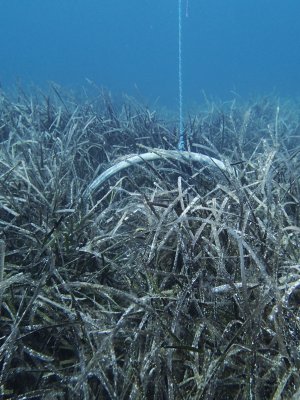
A heavier anchor has more chance of penetrating weed or sea grass than a lighter anchor. And that's without writing a book about it. 😄
(y)

I have observed many anchors underwater. In thick weed a larger, heavier anchor consistently has the edge.

The size of the weed roots stays the same, but a heavier hammer is the better choice if other factors are identical.

IMG_7706~photo-full.jpeg
 
Last edited:
Post 13 shows the shank and flukes, but what are the other two parts for?

I can only see them as detrimental to the flukes digging in?

Do you know what the two extra pieces are for please?

I'm not sure what you mean by the other 2 parts but I think you refer to the two inserts

The anchor has a trace, a bit of rope or a steel wire strop, that is attached he'd to the end of the shank. It seems to be about 2m long. This strop has a 'fancy' means of attachment to the rode. The two inserts on the drawing simply show how this 'joining' device works and operates. Today we might use a trace or short strop but we would have eyes at the end and going the whole assembly using shackles (moused).

I assume the anchor is stored in one location and the rode in another. and the device is meant to be a simple and fool proof method of joining rode to strop (with strop already attached to the anchor).

Jonathan
 
All the theory, and there is a lot of it, underlines that its fluke area that produces hold, not weight.
It is a combination of anchor design (the most important factor), fluke area, and weight.

The aluminium Spade and Excel anchors consistently perform worse than their steel equivalents in anchor tests, despite their identical fluke areas.

Danforth (steel) and Fortress (aluminium) anchors are the exception, and these perform similarly, but the Fortress has a considerably more sophisticated design, including sharpened flukes, profiled anchor shanks, and larger fluke areas, together with an adjustable fluke shank angle.
 
(y)

I have observed many anchors underwater. In thick weed a larger, heavier anchor consistently has the edge.

The size of the weed roots stays the same, but a heavier hammer is the better choice if other factors are identical.

View attachment 200571

Certainly a bigger hammer, in this example, a bigger engine will help - But a bigger hammer would be more usefully applied to a sharper nail - designed to penetrate in this case, weed. In fact if its a better anchor you have no need for a bigger engine.

However as responsible members of the public we should not be anchoring in weed - at all.

If you insist on anchoring in dense weed and want security - use a Admiralty patter Fishemans or Luke.

But you will never have 100% security in weed, you are reliant on the strength of the weed root - not the potential effectiveness of your anchor.


Norman - if you don't like books - don't read them. If one person enjoys reading books - why should you deny them that pleasure. Even better - put me on 'ignore'. I understand now the derivation of 'the wingeing pom'. :)


Jonathan
 
However as responsible members of the public we should not be anchoring in weed - at all.
Weed is a common substrate that cruising sailors need to deal with. It is perhaps the most common "difficult" substrate.

Choosing an anchor that sets quickly and does not drag enhances security results in minimal seabed damage.

Note my photo in post #33 by setting quickly my large Mantus M1 anchor has caused little damage to the environment . A less competent anchor would have dragged a much larger distance before setting.

The biggest danger is using a less competent or smaller anchor is that if it becomes overwhelmed and drags it may plow up a large area of substrate. This type of damage needs to be avoided.
 
Last edited:
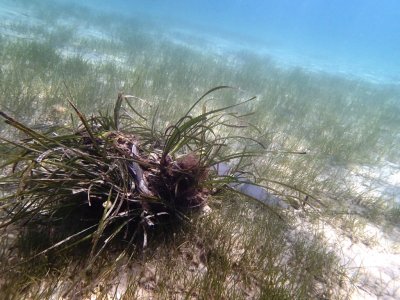
This photo is an example of bad and environmentally damaging results in weed.

Despite only very light weed, this convex plow Delta anchor did not have sufficient holding ability. The resulting drag collected a large "flower" arrangement. It has little hope of subsequently setting.

Choose an anchor design that has good weed performance and a size that can comfortably hold the boat despite the poorer weed substrate, and you will avoid these problems.

IMG_8861.jpeg
 
Last edited:
All the theory, and there is a lot of it, underlines that its fluke area that produces hold, not weight. Your anchor would work better if the fluke was thinner, the toe sharper the leading edges sharper. The only reason a heavier works better than a lighter anchor is that, usually, the heavier anchor is bigger and the hold, developed by the increase in surface area - is potentially higher.

The simple example is a Danforth vs a Fortress. So take two very similar anchors and the Fortress is better because the fluke is thinner. Take an aluminium Spade or Aluminium Excel and most people who have used both aluminium and steel versions cannot tell them apart blindfold (there are exceptions).

The hold developed by anchors is determined by the engine (and how deep the anchor is set) and/or the windage of the yacht.

Because ballast takes up space, the big ballast chamber 'under the toe of a spade', some of the engine usage and windage is being used to force that 'obstruction' into the sea bed. Redesign that toe into larger surface area and you will develop more hold.

Another example, Mantus vs Viking - similar fluke areas but the Viking's fluke is thinner, most Viking flukes are fabricated from 5mm plate whereas a Mantus is made from much thicker plate - the thicker plate resists penetration into the seabed.

A different example - your garden spade - do you really think a spade made from thicker steel will be as effective as a similarly sized spade made from thinner, and sharpened steel.

Gravity has no impact - the reason your anchor sets is through design (not Sir Isaac) and the windage or engine power imposed on that anchor. A well designed light anchor of the same physical size as a heavier anchor - the good design will win hands down.

We are conditioned to think weight is important - its totally irrelevant - its design (does the anchor set easily and deeply) and surface area. I exaggerate - weight is important but only in as much that often a heavier anchor is bigger, it has more surface area. Because we are conditioned to think 'bigger is better' - people oversize the anchor - and then it is becomes difficult to set deeply and take advantage of the potential hold (it cannot be set deeply). A shallow set anchor is more likely to trip with a change in tension direction - the bigger shank acts as a lever (not evident if the anchor is completely buried.

A well designed anchor, say Spade, of the same weight as a CQR will develop more hold. A smaller (lighter) Spade can develop more hold than a much heavier CQR - its design not weight. A 30kg Spade has the potential to develop more hold than a 10kg Spade - but if the yacht is small both anchors will develop the same hold. The small Spade might be deeply set the bigger Spade will sit with most of the anchor above the seabed - weight is of no value.

If you want more hold, more bang for your buck, choose a better design, use a Fortress not a Danforth, use a Viking, where weight is 'reduced' in terms of surface area - because they use a steel about 4 times the strength of the steels normally used - allowing a thinner fluke. The ballast of a Spade (and CQR, Excel, Delta etc) is only there to allow the anchor to set. Arguably the roll bar reduces the need for all that ballast - but introduces other negative characteristics - clogging of the fluke). A Rocna is a bastardised version of a Spade, a good copy, with ballast in the toe - and a roll bar!

Anchors are, still, a compromise.

Viking have addressed the issue with their new design, christened Odin, as it uses that same HT steel and has fins to allow it to set - and the fins also resist constant movment of the anchor in fluky winds (they act like vertical flukes). You don't want a constantly moving anchor - it reduces shear strength in the immediate seabed, reducing hold. Odin's fins do not detract from its ability to rotate to a new and stable wind direction - so they seem to have got the balance 'about' right.


I could go on - but I'll be criticised for being too wordy and repetitive. :)

Jonathan
I think everyone agrees that ultimate holding comes mostly from fluke area and geometry, and not as much from weight.

And everyone with experience of light-weight Fortresses, which is most of us, since this is the almost universal kedge in our time, knows that even very light anchors can set very well -- at least in certain bottom types -- if they have sharp flukes with the right geometry. The highly regarded Viking apparently works on the same principle.

But that does NOT mean that weight is irrelevant in all cases. More weight, and certainly more weight per unit of fluke area, helps get the anchor set in the first place even if it plays little role in holding AFTER the anchor is set. Especially a conventional anchor with less sharp fluke than Fortress or Viking. What John Harries of Morgan's Cloud says about it:

"Holding Is Not Linear​

"I’m not sure why, but out there in the real world it does seem that the force that an anchor will withstand before dragging does not scale in a linear fashion with size. So the bottom line is that bigger is not just better, it’s a lot better.

"Heavier Anchors Set Better

"Of late there has been a lot of chatter stating that anchor weight does not matter. That’s true, but only once the anchor is set (when fluke area and shape govern ultimate holding). When we are actually trying to get the anchor to set, weight matters big time."
Specifying Primary Anchor Size

This corresponds to my own experience in a lifetime of cruising. I've not used the highly regarded Viking, but I've used Fortresses for decades, and they don't work in all types of seabeds. They will not, for example, penetrate weed. They also don't work very well on very hard bottoms. Back in the last century, we used to use a heavy Fisherman for weedy bottoms; nowadays a 100 pound or larger Spade is what I find works best.

Whether saving weight in the anchor is beneficial or not very, depends on your setup. If you don't have a windlass, or have a hand-operated one (as we had on the previous boat in the last century), if you use a rope rode, then weight can be very important and a light weight anchor may be appealing. If you have all-chain rode and a powered windlass, weight of the anchor may be almost completely irrelevant, as the entire anchor may be a small fraction of total ground tackle weight, and doubling or halving the anchor size may make no difference at all.

For such cases, an extra-heavy anchor -- say add tungsten to the lead in a Spade -- might be very beneficial to setting behavior, even if it would add little to ultimate holding power.

It's widely observed -- mentioned by Harries ("The 'Hundred Pound Factor'") and Dashew and many others -- that anchors start to set much better once they are over 100 pounds. That is, they don't scale. I've observed this myself; it's a very noticeable thing. My theory is that this is because fluke area does not scale with weight, with conventional anchors. The 121 pound Spade has 2.5x the weight per unit of fluke area, than the smaller ones do, for example. My theory is that higher specific weight on the flukes makes them set better.

Weight is not the only way to get an anchor to set -- as anyone who's used a Fortress knows, as I said. But since on my particular setup with a 2kW windlass and 330kg of chain I don't notice the weight of the anchor AT ALL, the heavier, the better. I notice the SIZE of it, and I wasn't able to use the 75kg Spade because it badly fitted my bow roller, but the weight was not a problem. YMMV if you haul your anchor by hand.

P.S. A small quibble -- the ballast in a Spade is not only to help setting -- increasing weight of the anchor per unit of fluke area -- but also for BALANCE. Balance is why the Spade doesn't need a roll bar. The Rocna has no lead ballast, although it does have a bit of extra plate welded at the tip, which I guess helps balance some. Good balance helps a lot with setting behavior because it keeps the flukes oriented correctly. Also helps retrieving the anchor, as a well-balanced anchor will come up the right way and not need a swivel. The Spade's balance is also enhanced with the fabricated shank, which is much lighter (and much stronger) than a simple plate. Downside is it's much more expensive to make.
 
Last edited:
I'm not sure what you mean by the other 2 parts but I think you refer to the two inserts

The anchor has a trace, a bit of rope or a steel wire strop, that is attached he'd to the end of the shank. It seems to be about 2m long. This strop has a 'fancy' means of attachment to the rode. The two inserts on the drawing simply show how this 'joining' device works and operates. Today we might use a trace or short strop but we would have eyes at the end and going the whole assembly using shackles (moused).

I assume the anchor is stored in one location and the rode in another. and the device is meant to be a simple and fool proof method of joining rode to strop (with strop already attached to the anchor).

Jonathan
I meant the long crossbar at right angles to the flukes and lying on the seabed. I assume they are hinged, but they are longer than anything on any similar anchor I have seen.

Would they not stop the flukes digging in?
 
Top