New VHF aerial on mast not working well

oldmanofthehills

Well-Known Member
Joined
13 Aug 2010
Messages
5,291
Location
Bristol / Cornwall
Visit site
I have just replaced the aerial on top of my mast after nasty shock last year when it did not transmit when I tried to call in a mayday on behalf of a person in water.

The new one is a Glomex 0.9m and carefully installed with its supplied new cable, before mast was re-erected, and then wired direct to plug at radio. Miles up River Lynher on a quiet night so no radio traffic but I noted that the only AIS signal it was picking up was from a boat in the yard. My "emergency' backup aerial on the stern rail listed 5 boats by comparison. Mostly moored down at Jupiter Point about 3.6 miles away. The mast aerial is mounted about 9m higher so should be better than the backup, though I note the backup seems 1.1m not 0.9m though that should not make much difference

I remembered that the aerial on our old boat worked better if one did not connect the coax sheath, which I thought an oddity, however I tried disconnecting it on new one andaerial then picked up two boats. Better but hardly good and I need it working for major cruise.

I can get yard to look at it with cherry pickers, which will no doubt cost another £80 or so, but what should I get them to check? Both aerials read 80 ohms on continuity meter.

Is it a ground plane issue? Any suggestions?
 
I would start by checking the plug at the radio.
These type of antenna do not usually need a ground plane.
Is the coax moulded into the base of the antenna ?
Could the coax have been "pinched" when the mast was put up ?
Disconnecting the outer sheath and gaining reception sounds like a short between the inner and outer wires more likely to be at either end
 
Last edited:
Thanks,
I installed the radio plug myself and soldered the core inside the hollow pin. The cable could have been pinched on mast lifting, but I was not present during that sadly as there were other issues with anchor light etc, however continuity test on both is 80.00 ohms and surely shorting of inner and coax would reduce the damaged one?

The upper end was glomex clamp, with core inserted into base of aerial and outer ring clamping coax and sheet and pushing it all together.
 
What model radio do you have and is the AIS receiver part of the radio or do you have a splitter? Is it an AIS transmitter? Also you say AIS receive is affected but you don’t say if VHF transmit/receive is now working.

if your vhf was connected to a dodgy antenna for an extended period of operation it may have been damaged. Does your AIS have a VSWR diagnostic measurement??
 
Standard horizon GX2200 with inbuilt AIS. Which as I stated works perfectly on low down backup aerial to receive AIS yesterday as receiving AIS from boat moored at mouth of river 3.6miles away, and in recent past has worked perfectly on VHF before we took it to yard. However backup on stern rail will give much less range than ideal and I intend to sail 800 miles up Irish Sea to N Scotland so I want the best range and that will be with one on mast.

As up deep valley the boat will not get VHF from main traffic on Tamar River so no way to properly test receive/transmit on new aerial, and we would never expect CG weather reports up there. Obviously if it get AIS from boat on same yard it will get VHF from handheld. I doubt any one on the lower Lynher was transmitting on VHF yesterday morning, but if it sees AIS on backup aerial it would pickup VHF.

Its an aerial problem
 
Often, the best way to check is by substitution. Another option is to google to find your nearest amateur radio club, establish contact and ask if someone will visit your boat with a NanoVNA to check the aerial. These days, a vector network analyser is very low cost and will sweep VSR across the frequency and show result on a screen.
 
Looking at glomex aerial specs the pure AIS aerial bandwidth at 161.975-165.02mhz overlaps the general purpose bandwidth for VHF of 156-162Mhz. So if it wont receive AIS it wont receive VHF. Thus checking the bandwidth by instrumentation wont get me anywhere and besides even if the aerial could only receive one but not the other it is still useless as I need AIS to cross shipping lanes at night and in fog and I need VHF both to call up coverging ships or if there is incident.

Testing by substituition is great idea andd I have no problem buying another brand new aerial. However I live 150 miles from boat and cant get up mast but must commision the yard to do it. Worse, I possibly/probably cannot get another cable through the mast with it up.

So suppose yard takes aerial and cable aloft one weekday while I check, and it works fine, but what then? I doubt the aerial is faulty as manufactured so swapping the aerials while using existing new cables risks the same misfitting or exposes unit to the same damaged component. It thus makes more sense to take 20m of VHF cable aloft and clamping it to existing new aerial. Possibly only £20 for cable £50 for lift, £70 for fuel to attend plus one days lost wages. The alternative is £45 for cable and aerial, £80 for mast down, £40 to fit aerial and cable, then £80 to re-erect mast and I might want to attend so possibly plus 1 days lost wages

I was hoping someone could suggest what had gone wrong instead
 
Last edited:
I doubt that you’ll know what went wrong until you’ve found the problem. Fault finding requires a systematic process of checking the individual components. Radio, cabling, joints, aerial.

Could even be a fault on the radio, can’t rule it out until it’s been checked. Although it makes sense to check recent changes first. Plugging the coax into a VNA can often be enlightening and is where I would start (but I already have one).

I’m 250 miles from my boat and it took me 2 journeys last season to find and fix a coax connection issue.

Good luck
 
OMOFH I have exactly the same problem. I replaced my Vtronix Hawk Antenna when the original snapped off but didn't replace the cable. It is now 17 years old. The radio is rubbish but the AIS works brilliantly. Once the boat is back in the water we are going to run an experiment to establish the current range, with and without the AIS splitter, using a bike and the handheld VHF. We will then repeat using the new cable direct to the radio and see if matters improve. If so it will be time to feed the new cable in the mast. If not I will be scratching my head. Some threads I have read say upgrade the cable to the best quality but I think this has to be balanced against the supplied cable has the correct connections pre molded. Sorry not much help to your position but you are not alone and it made me feel better writing it down!
 
The first thing to establish is can you make a vhf call with your new set up?
If you can you know its better than what you had before.
If not or still not sure of any improvement then make yourself an emergency vhf aerial dipole out of a new length of coax stripped at set length one end with a new connector at other carefully fitted and tested so you have a known good installation.
Hoist it to your mast head and compare result with both a vhf voice call and ais target acquisition.
If better reception then you know your new antenna and coax is at fault.

I personally am much happier to have a separate pole mounted ais aerial as I still get more than adequate range aquisition min 10miles often 30 miles and I also can use this as an emergency vhf aerial in the event of either mast lost or main antenna failure.
 
OMOFH I have exactly the same problem. I replaced my Vtronix Hawk Antenna when the original snapped off but didn't replace the cable. It is now 17 years old. The radio is rubbish but the AIS works brilliantly. Once the boat is back in the water we are going to run an experiment to establish the current range, with and without the AIS splitter, using a bike and the handheld VHF. We will then repeat using the new cable direct to the radio and see if matters improve. If so it will be time to feed the new cable in the mast. If not I will be scratching my head. Some threads I have read say upgrade the cable to the best quality but I think this has to be balanced against the supplied cable has the correct connections pre molded. Sorry not much help to your position but you are not alone and it made me feel better writing it down!
Thanks for those consoling words. I know the radio is fine as used it all season on the backup aerial - after the shock of not successfully calling in a mayday on the mast aerial - just as well harbour master had spotted the victims. I could to get diversity by installing another emergency aerial but it still wont give optimum range.

In 35 years sailing apart from that mayday I have 2 panpans (crab pots), one heated discussion with port control as engine failed,and one cg telling me I was heading into risk due to port of refuge closed then RNLI on standby, so I see radio as vital tool.

I think I will ask yard if they can get local to sort it and just accept my minimum costs are now £250
 
The first thing to establish is can you make a vhf call with your new set up?
If you can you know its better than what you had before.
If not or still not sure of any improvement then make yourself an emergency vhf aerial dipole out of a new length of coax stripped at set length one end with a new connector at other carefully fitted and tested so you have a known good installation.
Hoist it to your mast head and compare result with both a vhf voice call and ais target acquisition.
If better reception then you know your new antenna and coax is at fault.

I personally am much happier to have a separate pole mounted ais aerial as I still get more than adequate range aquisition min 10miles often 30 miles and I also can use this as an emergency vhf aerial in the event of either mast lost or main antenna failure.
I know I can make VHF call, I just cant tell the range. I did not know the range when mayday failed but know harbour master 400m away could hear me. So wondering away from it in a moble phone dead spot with handheld VHF is not going to get me far with the new aerial as it become impossible to coordinate both ends. Under 3.6 miles if I cant get AIS from Jupiter point but the local steep valleys could restrict any land mobile base.

To repeat myself, the new aerial set up is useless and about as bad as the old set up with ageing cable. The exact degree is neither here nor there
 
If you are driving down the A38 and want to make a 5 mile detour to Dartington I can lend you a VSWR meter. This will give you some actual figures for the performance of your 2 antennas. PM me if interested.
 
I know I can make VHF call, I just cant tell the range. I did not know the range when mayday failed but know harbour master 400m away could hear me. So wondering away from it in a moble phone dead spot with handheld VHF is not going to get me far with the new aerial as it become impossible to coordinate both ends. Under 3.6 miles if I cant get AIS from Jupiter point but the local steep valleys could restrict any land mobile base.

To repeat myself, the new aerial set up is useless and about as bad as the old set up with ageing cable. The exact degree is neither here nor there
Where were you calling? Do you know the distance to the Coastguard (CG) antenna? Was there anything between you and the antenna that could stop your transmission?

I'm based in Plymouth and often hear vessels call Falmouth CG from within the sound and get no reply despite the antenna being at Rame Head.

If you have a National Coastwatch Station nearby a useful test is to arrange a series of radio checks at ever increasing distances after working out the maths on theoretically how far you should hear each other.
 
Another option is to google to find your nearest amateur radio club, establish contact and ask if someone will visit your boat with a NanoVNA to check the aerial. These days, a vector network analyser is very low cost and will sweep VSR across the frequency and show result on a screen.

I've seen suggestions before to contact a radio club and get someone with an swr meter on the boat. If this kit is cheap and our needs are simple (i.e. we're looking for fairly gross faults rather than fine tuning) can we buy a box for about the same as we'd have to pay to compensate a radio enthusiast for their time and travel and skip the hassle of interaction with men with beards and poor fashion sense? Any recommendations for A Thing to purchase and an idiot's guide to VHF antenna fault finding?
 
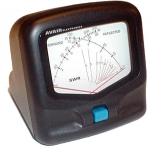
This is the one I have:
VSWR meter
1642328909162.png
There are more expensive ones out there but it is fine for detecting gross faults.
For work I used a Bird 43 meter which is almost indestructable but they are rather expensive even second hand.
 
Any recommendations for A Thing to purchase and an idiot's guide to VHF antenna fault finding?
This is the first thing from a google “buy NanoVNA” search. They generally come with a tiny screen that can only be read with the eyes of a child or, for little more, with a useable, 4 inch screen. They are not Lab quality so expect “in the order of” rather than calibrated readings.

Nano VNA 400mAh Battery Touch Screen NanoVNA-H4 Network Vector Antenna Analyzer. | eBay


I am very much “old school” but since I bought one my trusty old, analogue SWR meter has been gathering dust. The VNA has capability that could only be bought for thousands 20 years ago. Most useful for us is that it sweeps and graphs VSR against any frequency you care to set.

There are a lot of YouTube, easy to follow, videos showing how to use them, they are not difficult to master.

……….skip the hassle of interaction with men with beards and poor fashion sense?
None taken ?
 
Where were you calling? Do you know the distance to the Coastguard (CG) antenna? Was there anything between you and the antenna that could stop your transmission?

I'm based in Plymouth and often hear vessels call Falmouth CG from within the sound and get no reply despite the antenna being at Rame Head.

If you have a National Coastwatch Station nearby a useful test is to arrange a series of radio checks at ever increasing distances after working out the maths on theoretically how far you should hear each other.
Not much useful in yard sadly and i dare not launch before sorting problem as cannot get up mast or get technicians to attend once launched
 
Top