New standing rigging

As others have said the first stop is speak to the rigger about it; it's possible for stainless steel to be contaminated and get rust staining if non-stainless tools are used, but that shouldn't be the case on the threaded sections. The staining will probably be removable with pickling solution, but you should not have to do that with new rigging.
 
Dead parrot treatment. I got that when i bought it. Think you need to remember they are doing us a favour. Forget the fact they grt paid sometimes. Funny ive allways thanked my customers for work.
Steveeasy
I believe the appropriate term is "unreasonable customer expectations" :ROFLMAO:
 
When my rigging was replaced the riggers provided a set of test results for each swage. I don't know if this is usual, but was impressed by the care that was taken. I paid similar to you for supply and fix on a 30 foot masthead rig. No rust or staining.
 
It is not unusual for rigging wire to develop surface rust staining. Very fine crevices can develop during the drawing process resulting in low level crevice corrosion. This is not normally critical and will polish out.
 
I think the 10 year rule comes from insurance companies insisting you replace at that interval before they will cover you. Doesn't cost them anything but reduces their risks and hence having to make a payout significantly. Saying that, I dont have any evidence to say it's a bad idea.

Is there a market for used rigging...for example to make garden shade sails and decorative fencing? If not, there's a business plan for someone eco minded;)
 
Having done this using heavy waterpump grease I remember it being there years later, still working well.
I was thinking WD40, or similar, would seep down the strands into the swage as far as possible and when the solvent evaporates a water repellent lanolin coating is left.
 
Last edited:
I was thinking WD40, or similar, would seep down the strands into the swage as far as possible and when the solvent evaporates a water repellent lanolin coating is left.
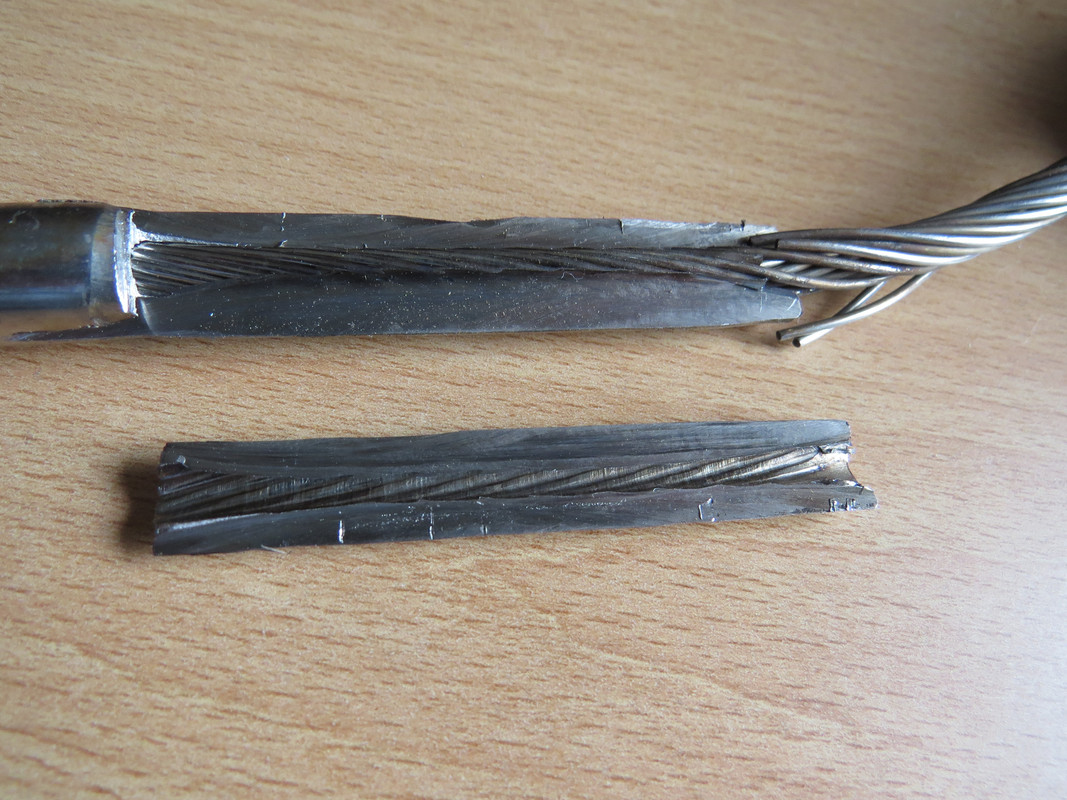
If the swage has been made up correctly its metal extrudes into the lay of the wire. Although I have seen corrosion at the open end of the swage I have yet to see it well down inside. This photo does not show this particularly well because the wires sprung open when I cut half of the swage off but they are extremely well compressed as made.

I have warmed the swage up before greasing to attempt to do as you suggest but I doubt that much was achieved.

 
Where does this 10 year requirement come from?
My experience is that the wires don't fail but the attachment fittings do.
 
If the swage has been made up correctly its metal extrudes into the lay of the wire. Although I have seen corrosion at the open end of the swage I have yet to see it well down inside. This photo does not show this particularly well because the wires sprung open when I cut half of the swage off but they are extremely well compressed as made.

I have warmed the swage up before greasing to attempt to do as you suggest but I doubt that much was achieved.

Thanks Vyv, that's very informative!
 
Over many years of boating - I have heard many comments about replace this .. replace that ... you need this ... you need that ... after x ... xx years and NONE have I been able to get to the source of where it came from.

Standing rigging 10yrs
Running rigging 5 yrs
Gas pipes annually ... bi-annually
Certified Inspection for Gas Installation

are the most common examples that in fact have no reqt at all on a boat not subject to Inland Waterways Rules. (IWW of course is for Gas Installations).

My belief is that some 'person' took the extremes of racing or similar and then started quoting .. it gets then part of some Surveyors Report trying to look smart ... Insurance Co' picks it up as most surveys are for Purchase and Insurance purposes. Its a self perpetuating bit of bunkum.
 
  • Like
Reactions: RAI
Squirty wax(sold as car anti-rust treatment or dry chain lubricant) is less likely to mess up your clothes than grease; it comes out runny but the carrier solvent flashes off leaving a film of wax.
Having done this using heavy waterpump grease I remember it being there years later, still working well.
 
Vyv, your the man, so ill do this to my new rigging in the hope it will prevent any staining. I dont quite understand why its happened though. cant help thinking it should not happen. Ref replacing rigging after 10 years. I can appreciate why why its a requirement. reducing any risk of failure is a wise move especially if it reduces claims.

You can carry on with older rigging in the hope all is well and im sure it might be. However if you want to prevent a catastrophic rig failure which would be very expensive, not to mention extremely dangerous when ones rig colapses and indeed if you are in challenging conditions at sea or say several 100 miles offshore.
New rigging over 10 years is very cheap. it adds some value to your boat and you can sail knowing not only youve done everything you can, but your rig has been checked over fully. Ive very shallow pockets and 1500 over 10 years is around £10 per month. A new mast to replace the existing one would be £10,000 and youd need new sails, new rigging and hopefully no one was injured. God it is a no brainer really.
Steveeasy
 
Top