My -not good- thoughts on inflatable PFDs

Foolish Muse

Well-Known Member
Joined
27 Dec 2012
Messages
375
Visit site
First off, as a singlehander I don't wear a PFD; I am ALWAYS attached to the boat with a tether and harness. After 1,000 days on the water I feel naked if I'm not wearing it.

But I was reading this on XS Sailing just now, and it corroborated a long held belief of mine about inflatable PFDs:
Sure enough, the day was full of surprises. First came person-in-the-water training. My group of 30 sailors donned full foul weather gear and inflatable PFDs/safety harnesses, dove into a swimming pool, and labored our waterlogged selves toward life rafts. After my PFD didn’t inflate, I realized I’d forgotten to replace the CO2 canister I’d removed for a flight last year. Had this been cold ocean water, my negligence could very well have cost me my life.

To me, it just seems odd to rely on something that might not work - ever! I've got regular old style life jackets on my boat and I know they will work every time. The nylon can rot, the stitching can rip, the buckle can break, and I might not have looked at them for 5 years, but the thing will still float. I used to be a whitewater kayaker and I never had to worry about my lifejacket. This is the same old lifejacket that I have on my sailboat now.

Second, the one time I wore an inflatable, I found it to be really heavy. There is lots of heavy webbing, the heavy rubber inflatable sacks, the heavy cartridges and the heavy metal buckles. But old style lifejackets are nothing but nylon and a bit of plastic. Really light.

When you look at the guys in the Americas Cup, they are wearing snug, normal lifejackets under their shirts, not inflatables. The way I think of it, inflatable PFDs are only popular because they are fashionable. But not for any real purpose. Of course the most important part of any PFD is that it must be worn. So if people are more likely to wear an inflatable, then this is their only benefit.

That's my rant.
 
OK. I'll bite. I wear a combined lifejacket/harness moving round on the boat or in the dinghy. It's an automatic one that I service every year and check occasionally in between times. It's light, comfortable and an eminently sensible bit of kit. If I manage to wind up in the water, it'll inflate and keep my head above water should I perchance be unable to do so myself.

The kit worn by kyakers and the Americas cup crews are not lifejackets. They're buoyancy aids, which aim to help a person stay on the surface. Their buoyancy is typically less then one third that of a lifejacket.

I use a buoyancy aid when I'm helping out on the safety boat at the club. It provides me with enough buoyancy to be able to stay afloat without much effort if I have to enter the water to help a dinghy sailor sort out a problem. Clearly a lifejacket in those circumstances would not be appropriate. However, if I got dumped overboard at offshore in heavy weather, I'd much rather have a decent automatic lifejacket with a fitted spray hood which would support me with no effort in my part than a buoyancy aid which would require input from me.

Of course, the objective is to avoid going over the side in the first place, hence a combined harness/lifejacket. But there may come a time when I get dumped over the side despite my precautions, use of lifelines etc.

All of the above is my opinion and the OP has clearly thought through his own position.
 
A non-inflatable lifejacket is a very bulky thing. (Which is why inflatable lifejackets are popular, sod all to do with fashion.)

You can buy a 'snug' buoyancy aid (and that's what I wear kayaking), but it won't have the same level of buoyancy as a lifejacket, or float you reliably face out of the the water, or have a becket by which you can be lifted out of the water (both a requirement for lifejackets, I believe).

P.S. Must type faster and not allow myself to be distracted.:rolleyes:
 
Your username reflects your knowledge of your life saving gear.

So firstly:
EVERY time you put on a gas inflatable LJ you should check the used tag and the cylinder hasn't worked loose. You'd have spotted the issue. Even if you hadn't with the cylinder attached you can manually inflate.

Secondly:
You refer to old lifejacket - do you mean a CE Marked 50N Buoyancy Aid? Or a 50N Lifejacket with an inflatable extra, or a full 150N Jacket. Do you know the difference? So you slip getting off the boat onto the dinghy, bump your head and hit the water. Only with 150N do you stand any hope of being turned face out the water. So unless you have 150N solid foam or an auto gas component it will help your relatives find your body that may be all.

Americas Cup have a different risk profile. Much more likely to enter the water, need maximised movement, but the safety recommedations following deaths are pretty extensive: Emergency O2 on the Buoyancy Aid (Crewsaver just launched one to do this), Compulsory Buoyancy Aid Wearing, 2 Rescue Boats per racing boat, Diver and Rescue Swimmer on the RIB, AED on one of the RIBs. I'm guessing you don't sail with 2 rescue boats. They can't wear a LJ under their rash vest and they wear a rash vest over their buoyancy aids to reduce risk of entrapment.

Thirdly:
Tethers have their limitations. Does it stop you falling over or keep you attached as the boat sails on? How do you get on dinghy (plenty on here say never had a MOB while underway but have had dinghy entry issues!)

Fourthly:
Solid foam lifejackets etc do compress over time and straps wear etc. They do need replaced occassionally

Fifthly:
My LJ has a hood to keep the spray off my face while I await the helo that I've called via the PLB on my waist belt...
 
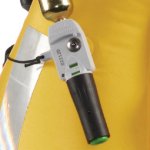
As ShinyShoe says, it highlights the importance of checking the cylinder is secure every time you use your lifejacket. A few lifejackets now have a window so you can see the red/green indicators for cylinder and auto mechanism on the inflation head without even having to open the cover. No excuse really.

ProSensor_1.jpg
 
Good responses. The lifejacket from my kayaking days is a real, bright orange lifejacket. It does everything that a lifejacket should do. It's not just a buoyancy aid. But there are lots of stylish ones out there in nice colours with pockets and things.

EVERY time you put on a gas inflatable LJ you should check the used tag and the cylinder hasn't worked loose.
That is exactly my point. You have to inspect your PFD??? I never have to inspect my lifejacket, even after owning it for 15 years and hundreds of hours on the water and many many rolls in my kayak. It will float. If I want to take a bunch of kids out on my boat, I've got a bag of child sized lifejackets in my garage. They came with my boat. I don't have to "check the cartridges". I just have to strap them on. They float! I could throw the kids off the boat without a care in the world.

Tethers have their limitations. Does it stop you falling over or keep you attached as the boat sails on?
There is a great story about a singlehander wearing an inflatable PFD with harness who fell overboard and was dragged beside his boat off the coast of France. The first thing he had to do in order to climb back on board was puncture his PFD with his knife. It was just in his way.

A few lifejackets now have a window so you can see the red/green indicators for cylinder and auto mechanism on the inflation head without even having to open the cover.
Holy Crap. Now you have to look at "indicators" to see if your lifejacket will work? This is an argument in my favour.

I'm not a cruiser, so I have never stepped from my boat to a dingy. (I've got an inflatable dingy that was given to me, but I have never used it on the water) But I guess if I did I'd just pull my old, dirty lifejacket out and put it on. Another nice thing; I can leave it anywhere without fear of theft.

Your username reflects your knowledge
A misinterpretation of the username.
 
Last edited:
Mmmm... Why do I suspect this cartoon is appropriate:
unearthed-trolls-1309-1-web.jpg


The lifejacket from my kayaking days is a real, bright orange lifejacket. It does everything that a lifejacket should do. It's not just a buoyancy aid. But there are lots of stylish ones out there in nice colours with pockets and things.
Thats gonna need some links / pictures etc. Both to what you have and what you claim are stylish, multicoloured and apparently 150N+ of buoyancy.

That is exactly my point. You have to inspect your PFD??? I never have to inspect my lifejacket, even after owning it for 15 years and hundreds of hours on the water and many many rolls in my kayak. It will float.
So you've never inspected it in 15 years? Have you read the manufacturer's instructions? Is it better to inspect it every time or once in a blue moon?

I did YEARS ago have a hybrid Bouyancy aid (50N) that became a lifejacket (150N) on manual (mouth) inflation. Even it struggled to be comfortable. Unless you inflated it from time to time you couldn't be sure it would if you needed to. I've just replaced a 50N that was 11 years old and the straps were showing some wear. Its still usable and will be relegated to spare. If its to be used it will be inspected prior to use.

You managed to eskimo roll a kayak with 150N on - WOW!
If I want to take a bunch of kids out on my boat, I've got a bag of child sized lifejackets in my garage. They came with my boat. I don't have to "check the cartridges".
Are they also 150N, with no inflation? I have 50N kids jackets for situations where it is appropriate. On a Yacht where turning round will be slow and a kid could be knocked over and unconscious they would be in an auto lifejacket, once they are old enough to pull the toggle if auto fails. Till then they would be in 150N foam if I perceive a risk. They don't need to manouvre on deck quickly though.

There is a great story about a singlehander wearing an inflatable PFD with harness who fell overboard and was dragged beside his boat off the coast of France. The first thing he had to do in order to climb back on board was puncture his PFD with his knife.
Great story but why didn't he use the valve on the inflation tube to let it down thereby stopping his jacket being pointless if something went wrong on the recovery as he would have been able to re-inflate it.

you sure your magically PFD will not be the same. It wont deflate!

Holy Crap. Now you have to look at "indicators" to see if your lifejacket will work? This is an argument in my favour.
Its a green tag. Not exactly high tech.

I'm not a cruiser, so I have never stepped from my boat to a dingy. (I've got an inflatable dingy that was given to me, but I have never used it on the water) But I guess if I did I'd just pull my old, dirty lifejacket out and put it on. Another nice thing; I can leave it anywhere without fear of theft.
Plenty have fallen off getting on a pontoon or even from the pontoon!

Some people will nick anything! If its so amazing we should all want one.
 
Last edited:
I don't know how many Newtons. But I know from long experience that it provides exactly 1 Andy of flotation.

You really should get up to date with modern PFDs. Just do not recognise your description of them. You are living in the past with all this talk about weight, complication unreliability etc.

You say you are not a cruiser, and your attitude does not reflect that of cruisers as well described by Duncan in post #2.
 
I don't know how many Newtons. But I know from long experience that it provides exactly 1 Andy of flotation.

Face up, while unconscious?

My 50N keeps me afloat, but if I'm unconscious I will fall forwards and inhale the water and drown.

Don't come on a forum trying to tell us all we are wrong and making the wrong decision on our safety kit and not be able to answer the absolute basics of how much floatation you buoyancy aid provides. You might as well have said we should all replace our smelly diesel engines with an electric outboard because its less smelly even if its not fit for purpose.
 
Andy, you have spent thousands of hours learning your boat and her systems, so at least you are coming from a position of practical experience rather than theoretical musings, foolish or otherwise!

However, I believe that my old kayaking orange BA is nowhere near as buoyant as it was when I first bought it (second hand) thirty-odd years ago. May be worth checking yours?

Delighted with a Spinlock deckvest which was a recent massive treat purchase. Extremely comfortable and I sometimes forget that I'm wearing it.

That said, I often wear a modern Gill BA (and always when teaching or safety boating) as it means I can get into the water if necessary, without worrying about setting off CO2 cylinders. It also serves to keep me warm.

As you say, horses for courses.
 
Face up, while unconscious?

My 50N keeps me afloat, but if I'm unconscious I will fall forwards and inhale the water and drown.

Don't come on a forum trying to tell us all we are wrong and making the wrong decision on our safety kit and not be able to answer the absolute basics of how much floatation you buoyancy aid provides. You might as well have said we should all replace our smelly diesel engines with an electric outboard because its less smelly even if its not fit for purpose.
Easy there! He's not telling us anything is wrong with our decision; he's only sharing thoughts about his own decisions and why he made them. To each their own.Live and let live, and all that jazz.
 
Easy there! He's not telling us anything is wrong with our decision; he's only sharing thoughts about his own decisions and why he made them. To each their own.Live and let live, and all that jazz.

No he is telling us he has a life jacket that is not a life jacket. He interchanges between PFD and Life Jacket, but he seems to have completely missed the fundamental requirements of a life jacket. If he'd come on an said - Realised the risk with an inflation LJ is it might not inflate and so have decided a 50N BA is the way to go fair enough. But he seems to believe his BA is as good as an inflated LJ so is compating weight, bulk etc between 150N and 50N devices and concludes the reason for an inflatable is coz it looks cool rather than because it serves a higher level of safety purpose. I'm not for 1 minute suggesting a BA is not the right kit for his sailing it may well be. But a LJ is for others . He said "So if people are more likely to wear an inflatable, then this is their only benefit." He is wrong.
 
No he is telling us he has a life jacket that is not a life jacket.
No, it's definitely a lifejacket. I don't have it with me at home, so I can't look at the label. But I know when I bought it for Kayaking that it was definitely a lifejacket. Back 20 years ago that's all they had.

He said "So if people are more likely to wear an inflatable, then this is their only benefit." He is wrong.
I remember very clearly a number of years ago when the rules changed allowing for lifejackets other than bright orange. The reason for this rule change was that more people would wear them if other colours were allowed. So any rule change that will encourage more people to wear them is a good change, and if more people wear them because they are inflatable, then that is certainly a good thing. I look around my club on race night and I see lots of people wearing inflatables. I'm certain that this many wouldn't be wearing bright orange lifejackets.

(If you haven't figured it out yet, I use Lifejacket to refer to old style real life jackets. I use PFDs to refer to inflatables. When I grew up there was no such thing as a PFD. There was only a lifejacket. PFD just became the trendy cool way to say lifejacket. "Do you wear a lifejacket?" "No, I wear a PFD." Probably about the same time that LOL came into vogue.)

But back to my original post, I think that any sort of critical lifesaving device that requires an inspection, or a visual check for a red/green indicator every time you use it, is rather silly. And if you look at the quote back in the original post where a fellow jumped into the water as part of a safety at sea course but he had not reconnected his cylinder, is just proof of my point.
 
This thread indicates that people have a lot of passion about life jackets in their various guises. I think that the inflatable PFD that has become so popular is really over rated. Yes it will be perfect if you find yourself in the water for a long time so needing your head kept out of the water. The problem is that once inflated a inflatable PFD makes you just about useless in terms of working to save yourself. As in swimming to safety or boarding a boat. The buoyancy vest on the other hand is the best for dinghy sailing or kayaking as you can work to recover yourself.
I carry inflatable PFD on my boat as they are obligatory for sail training and cat 5 night racing but for normal sailing I supply and wear a buoyancy vest. it is very comfortable, crew often forgetting to take them off after a sail. You can fit a coat over it but actually it provides a lot of warmth and protection from bumps etc.
At our club we are in the process of buying buoyancy vests for at least one crew so that he can safely enter the water to help a casualty in lieu of the standard inflatable LJ.
http://canoe.org.au/2010/10/28/new-pfd-standard-for-australian-boaters/
Gives definitions of PFD type 1 ,2 and 3 in Oz. (Life jacket is not a recognised term in legislation) Whilst here in west oz there in no obligation to wear PFD the boat must carry type 1 PFD for each person when off shore.
I can appreciate and understand the intent of the original post and every boater needs to assess his own needs re buying and wearing PFD. olewill
 
Well there is an international standard... ISO 12402. It defines what you call a life jacket, a buoyancy aid and the overarching term PFD.

In terms of colours it allows yellow, orange or red. All in florescent shades. This does not apply to (12402-5) Buoyancy Aids.

So you are right they don't have to be orange. But other than inflated ones which are often yellow, I'd challenge you to find a different shade... 150N Solid Foam. They come in orange, orange and orange. I suspect SOLAS requires them in Orange.
 
I have to demonstrate a non inflating lifejacket at work as part of a safety briefing. It's a 150N foam filled thing and I know from experience on sea survival courses that it will turn you face up in the water. But there is no way in hell you would attempt to go kayaking whilst wearing one. You feel like Dolly Parton and have to watch that you don't stand too close to people.

Note to the OP: Newtons of buoyancy is EXACTLY proportional to volume. A 150N lifejacket (the legal definition of a lifejacket, anything less is a buoyancy aid) must have a volume of 15 litres. The only way to make one more compact is to, um, make it inflatable. Which is the sole reason that inflatables dominate the market.
 
I'm beginning to think that perhaps we work with a different set of rules over on this side of the ocean.
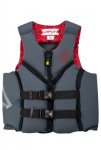
Here is an example of a Canada or US Department of Transport approved PFDApproved.jpg
You can see that it would be easy to paddle a kayak with this, and it is also great on a sail boat. It meets all the requirements for a lifejacket here in Canada and the US.

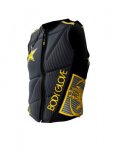
And here is a non-approved

Non-approved.jpg
Very stylish but doesn't meet any requirements.

I don't know how many Newtons they support, I just know if they are approved or not.
 
Top