Must paint be stored in tins?

Greenheart

Well-Known Member
Joined
29 Dec 2010
Messages
10,384
Visit site
Five years back I bought a litre of very good all-surface white paint. It wasn't until too late to return it, that I realised it was black.

I used a little of it last summer, and I'm usually careful about opening and reclosing paint-pot lids.

Today I found the lid was stuck fast. I couldn't access the paint without deforming the lid, or reseal it except by taping a plastic cap round the top.

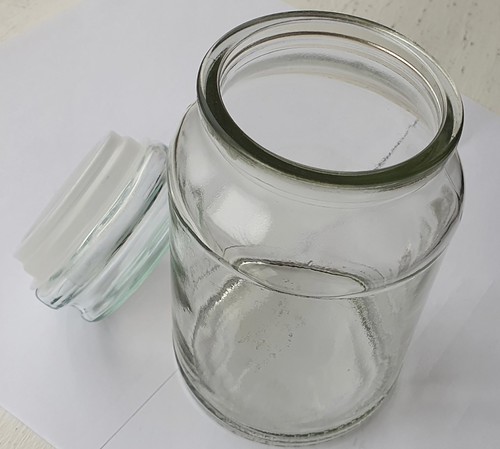
Also today, I happened to finish a large glass Douwe Egberts coffee jar with a rubber-sealing lid. It looks to me like a perfect receptacle for paint.

Assuming it's in the dark, and away from extreme temperatures, is there any reason not to store paints in something better than they're sold in?
.
 
I find a lot of paint these days is water-based and therefore the lids rust.

I have often decanted paint from a tin to a seal-able jar.
 
With paint, not least water based, "good laboratory procedure" is required:
  • Store it frost free and upside down
  • Mixing or stirring the main container must be by known good tools, preferably new or cleaned
  • Transfer the amount you need to a seprate container - don't put the brush/tool in the main jar as you easily can introduce foreign objects that will make it god bad.
  • Do not transer unused paint back to the main container for tha bove reason
  • Never delute in the main jar as the shell life will be cut to a fraction

Tip: Good shops sell sample pots for people to take home and do tests. Not the cheapest per volume but limited amount, so better than than buying bulk and never getting to use it up.
 
Last edited:
I first decanted VC 17 mixed with the copper powder into a plastic squeezy type bottle, originally just so I didn't have to much evaporating in use. However, I left some in last year. It was still good this year. Using a squeezy bottle also means you only dispense what you want, onto brush or roller and you don't transfer dust and dirt into the paint.
As I come to use them all paints are going into washing up liquid, or large ketchup squeezy bottles.

All my Yacht paints are kept in a paint cupboard, it has a temperature controlled reptile heater pad in the bottom,
Even though the garage may get down to below 0C the cupboard stays at 20C the heat pad is only 7W, so it doesn't cost too much to run...
 
Five years back I bought a litre of very good all-surface white paint. It wasn't until too late to return it, that I realised it was black.

I used a little of it last summer, and I'm usually careful about opening and reclosing paint-pot lids.

Today I found the lid was stuck fast. I couldn't access the paint without deforming the lid, or reseal it except by taping a plastic cap round the top.

Also today, I happened to finish a large glass Douwe Egberts coffee jar with a rubber-sealing lid. It looks to me like a perfect receptacle for paint.

Assuming it's in the dark, and away from extreme temperatures, is there any reason not to store paints in something better than they're sold in?
.
I find that glass jars with metal lids are best. (Jam, mayonnaise, pickled-onions). Ensure the lid seal is completely free of paint before you fit the lid otherwise it may be difficult to unscrew. Plastic is OK but a small amount of solvent will pass through the plastic.

www.solocoastalsailing.co.uk
 
I tried storing paint in poly-bottles with screwed tops but it wasn't successful long term.

The bottles began to collapse inwards and the paint dried out.
 
Presently using a Sainsbury kilner storage jar as I apply successive daily coats of Deks Olje D2 to a teak item laid out in the dining room.The tin was decanted as recommended during last winter when new having previously wasted well over half a tin from an earlier purchase as it lost solvent prematurely.Thats the difficulty of using small quantities over several years. with no smaller sizes available.The jar working well so far although as the air space increases .................. .
The quoted storage is only two years anyway.
 
Last edited:
Thanks all...there's so much good advice here.

I reckon I'm safe using the coffee jar - the lid isn't screw-top, but is another piece of glass with a very tight rubber seal, which strongly resists opening and closing.

Given the age of the paint already, and the fact that it is nevertheless still excellent, plus the rarity of my having any use for black paint, I'll take a chance and decant it.
 
I've stored emulsion in plastic ice-cream containers.
It annoys me that water based paint is supplied in metal containers as they rust and it means disposing of the paint when it is still otherwise useable.
 
Thanks all...there's so much good advice here.

I reckon I'm safe using the coffee jar - the lid isn't screw-top, but is another piece of glass with a very tight rubber seal, which strongly resists opening and closing.

Given the age of the paint already, and the fact that it is nevertheless still excellent, plus the rarity of my having any use for black paint, I'll take a chance and decant it.
Dowe-Egberts?
 
I tried keeping the remains of some gloss enamel in a jar with a metal lid for a short time. When I came to use it after a couple of months (longer than I expected) the lid was immovable and I broke the glass trying to get it off.
 
Douwe-Egberts?

Yep, delicious.

Unless the lid of said glass jar is foil lined (some are, some are not) the solvent can leave through the large lid.

You begin to worry me. The jar is pictured below. About six inches high, with an opening of less than three inches, and a stiff rubber seal around the lid.

Assuming it's not exposed to much temperature variation (and associated uncontainable pressure) is the solvent likely to leach out?

52759737986_486c9721f6.jpg
 
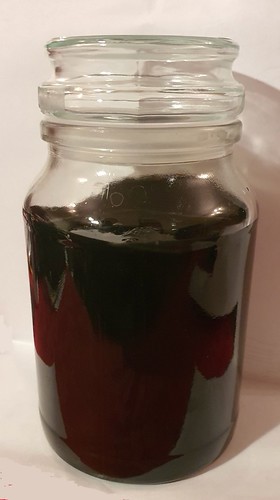
The paint's now in the coffee jar:

52759695827_e18bc8350a.jpg


It's better than the soft bendy tin, but do I definitely need aluminium tape to stop the solvent escaping, despite the airtight seal?
.
 
The paint's now in the coffee jar:

52759695827_e18bc8350a.jpg


It's better than the soft bendy tin, but do I definitely need aluminium tape to stop the solvent escaping, despite the airtight seal?
.
That was the perfect jar for making kefir!
 
Do some extra coats and save the space...

I was only using it to touch-up scratches on the Tohatsu.

I could probably disguise all the scratches on all the Tohatsus and Mercury outboards in the country, with what's in the jar.

If I hadn't made the original cock-up of buying black instead of white, it wouldn't have lasted long enough to be a problem.

Still, it'll be good to know for the future. I really hate the way paint tins and their lids lose their circularity.
 
Top