mooring rope recommendation

Karnic

Well-Known Member
Joined
16 Sep 2015
Messages
292
Visit site
Hi
What type of rope/lines to use as a permanent mooring to a 19 ft boat is recommended. I leave boat moored to a concrete block in harbor but sometimes to quite strong Northern easterly winds. At the moment im mooring boat to a main cleat and apart from the main it is also tied to 4 other cleats ( 2 bow port/starboard and 2 stern port/starboard). My experience in this field is rather limited and i would like your help re which is the best material, as at the moment i am facing a dilemma because every time i want to untie/tie boat to mooring i am struggling lots to remove the rope from the cleat. Pictures of material of rope and cleats im using are similar to the attached. When i thimble the rope it is nearly impossible to pass from the hole of the cleat in order to make knot. i manage but its a lot of a struggle and was wandering if some sort of mooring rope that is strong and easily flexible in order to handle better. What are your views and could you help please?
file_4_2cleat_dc7d09af293a35ed8445807d6c3c5993fbfafc82.jpg

thumbnail_mooring_rope__cc6020b70eebe963c61fba78025798bdbce5cc61.jpg
 
I use braided rope, much more flexible and easier to handle. See Jimmy Green Marine for recommendations. Your rope is three strand nylon or polyester - not flexible at all. For your size boat you could use 10 or 12mm which is plenty strong enough - but Don't use polypropylene rope, it does float but is subject to UV and degrades very quickly and not as strong as nylon or polyester.
 
Used to ’work’ (loose term, I was in Uni) in my club on the club moorings in a pretty open harbour. The boats were mostly keelboats but most are pretty heavy. Practically all used a bridle with a spliced in a loop in thick 3 strand nylon rope. Then they had a lighter line with a hand bouy on it that they could catch. The loop would go around the cleat and the lighter line was just made up on the cleat in a figure of eight. Some of the heavier boats had chamois to help with chafing. The bridle usually ran through a bow roller.

Some also used chain with a section of hose around it to protect the boat but I found that these tended to hop off the cleat - didn’t like them. Also the rust stains were unsightly.

All bridles were shackled to the base of the main mooring bouy. Shackles were whipped shut with wire. The whole setup needed inspection for wear/corrosion at the end of the season. I cannot remember any incidents where a bridle broke. My boss at the time made up the bridles as a sideline, they were a great job.
 
Used to ’work’ (loose term, I was in Uni) in my club on the club moorings in a pretty open harbour. The boats were mostly keelboats but most are pretty heavy. Practically all used a bridle with a spliced in a loop in thick 3 strand nylon rope. Then they had a lighter line with a hand bouy on it that they could catch. The loop would go around the cleat and the lighter line was just made up on the cleat in a figure of eight. Some of the heavier boats had chamois to help with chafing. The bridle usually ran through a bow roller.

Some also used chain with a section of hose around it to protect the boat but I found that these tended to hop off the cleat - didn’t like them. Also the rust stains were unsightly.

All bridles were shackled to the base of the main mooring bouy. Shackles were whipped shut with wire. The whole setup needed inspection for wear/corrosion at the end of the season. I cannot remember any incidents where a bridle broke. My boss at the time made up the bridles as a sideline, they were a great job.


I think your idea will work great. As you said i have a lighter line attached to all mooring ropes in order to catch when lifting buoy with boat hook. I should just place the thimble of rope round the cleat and secure with a figure of 8 round the same cleat with the lighter flexible line. That was my concern as i taught that by just placing the wide thimble round the cleat would risk rope to go out with movement of boat , but i assume that if i place thimble round cleat and secure the lighter line (which previously i left hanging ) with a figure of 8 OVER the mooring thimble rope it wont let the thimble out from the cleat with boat movement. Honestly this idea never crossed my mind and i will try later and will spare me couple of bucks from changing all ropes. Bless mate and thanks.
 
Hope it works. Another precaution is to somehow ensure the bridle stays in the bow roller. This would further prevent the loop coming off the cleat. Do you have a split pin (or piece of light rope) on your bow roller?
 
My mooring lines are 3 strand nylon with a loop spliced in to get the correct length and left at the mooring. When I come back I just put them back over the cleats. Nice and easy with no adjustments to worry about as this was done when I made them.
 
Hope it works. Another precaution is to somehow ensure the bridle stays in the bow roller. This would further prevent the loop coming off the cleat. Do you have a split pin (or piece of light rope) on your bow roller?
Dear Ferris
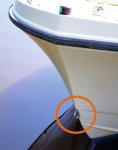
I have the main central rope from mooring to bow attached with a large carabiner to the tow eye. Than i have the other 4 ropes to every cleat ( 2 bow 2 stern ).
 

Attachments

  • tow-eye-.jpg
    tow-eye-.jpg
    22.2 KB · Views: 11
My mooring lines are 3 strand nylon with a loop spliced in to get the correct length and left at the mooring. When I come back I just put them back over the cleats. Nice and easy with no adjustments to worry about as this was done when I made them.
Yes true . Thats the preferred method and the method i wish to adopt but the man that spliced the loop made the loop big so i insert the loop through cleat hole ( where im having problems) and then put sides of loop over the cleat to secure. Is it possible to arrange the loop and make it smaller and splice again using the same rope? I think i have adequate lenght to cut loop and splice a new smaller loop just to put over cleat only and wont come off.
 
Yes true . Thats the preferred method and the method i wish to adopt but the man that spliced the loop made the loop big so i insert the loop through cleat hole ( where im having problems) and then put sides of loop over the cleat to secure. Is it possible to arrange the loop and make it smaller and splice again using the same rope? I think i have adequate lenght to cut loop and splice a new smaller loop just to put over cleat only and wont come off.
Could always put a binding over the loop to make it smaller. My cleats are like the one with the rope wrapped round it so I just cross over one part of the loop. Never had a problem with this method for many years on my alongside mooring.
 
Don’t use nylon for the boats own mooring lines as it will harden and stiffen due to UV
Nylon ok for fixed lines if just dropping an eye over a cleat.
Polysester stays flexible but as it is softer is more prone to chafe. Don’t get pre stretched, the springiness of the line act as a shock absorber
use correct size line approx 1/16“ dia for every inch of cleat. For permanent lines go for 12mm
if using an eye over a cleat put through Center hole first to stop it flicking off or bollards shown put in a twist between the bollards.
Make off cleat correctly OXXO:
first turn on furthest away horn:
one not quite full turn (so that a cross is not formed)
2 full fig 8s
one full turn.
some will insist a ”locking turn“ is essential, in the history of the world I have never seen one needed
i only teach them if line too short (get a longer line)
too much line on the cleat (take some off)
line too large for cleat (get smaller line)
Never ever use a locking turn, if going to freeze, a big ship, haliard (maybe needing quick release.
fit springs and head rope and stern line.
spring tight and bow and stern line a bit slack will act as a shocker absorber.
get some training

hope this helps
 
I leave boat moored to a concrete block in harbor but sometimes to quite strong Northern easterly winds.


I have the main central rope from mooring to bow attached with a large carabiner to the tow eye. Than i have the other 4 ropes to every cleat ( 2 bow 2 stern ).

Personally I think you have too many lines on. If, as I suspect reading between the lines you are using a mooring buoy you want one strop (bridle) over the bow and a safety line in case it breaks slightly longer. You need to rely on the catenary of the mooring chain to provide shock absorption to any rough weather so your strop should be short enough to partially lift the mooring buoy. i.e. always under some tension. A good rule of thumb for length is 1.5x the height of the bow from the waterline. Adding lines promotes fouling and can induce momentum snatch and shock. Securing the lines to the tow eye is the worst possible idea, especially with a carabinier. Obviously you need to ensure your cleats are up to the task. Many are not and are designed for pontoon mooring. Strengthening those should be a priority.

If you dont have a central mooring cleat and bow roller you will need a bridle ( Y ) . The ends of the strop should be spliced into an eye that just fits over the cleat (i.e. eye = ~ 2/3 the cleat length) the end that connects to the mooring chain should be spliced round a rope thimble and attached via a D shackle which is secured from unscrewing with a mouse wire (stainless steel seizing wire) preferred or single use nylon zip tie will suffice.

Whoever said anything about not using nylon got it wrong. Nylon is what you want in a mooring strop and it does have some stretch. You want to sleeve the strop over rubbing points to prevent chafe. This can be either plastic tubing or canvas socks. Make sure they are secure and cannot slide up the rope. Finally you are best not using nylon 3 strand as this rope can cockle as it spins round the buoy. (unravel or tighten) You are best using nylon octoplait / anchorplait etc that is made from 8 or more strands. This will not cockle.
 
Oh, and you will need on of these on your bow. A mooring buoy collects fouling that will damage your bow gelcoat

14233.jpg
 
Noted. You are correct in that respect. Because nylon stretches, too many lines around a single cleat, or wraps of loose warp around a cleat can cause a bit of a knot when the boat has been snatching. However that is more a function of poor seamanship than a fault of the rope. i.e. Nylon does not have to be spliced into an eye. To the OP I've said there are too many lines imo and the likelihood is his cleat will give long before any of the lines give if he has protected them against chafe in poor weather. Longevity of line is a separate issue.
 
Personally I think you have too many lines on. If, as I suspect reading between the lines you are using a mooring buoy you want one strop (bridle) over the bow and a safety line in case it breaks slightly longer. You need to rely on the catenary of the mooring chain to provide shock absorption to any rough weather so your strop should be short enough to partially lift the mooring buoy. i.e. always under some tension. A good rule of thumb for length is 1.5x the height of the bow from the waterline. Adding lines promotes fouling and can induce momentum snatch and shock. Securing the lines to the tow eye is the worst possible idea, especially with a carabinier. Obviously you need to ensure your cleats are up to the task. Many are not and are designed for pontoon mooring. Strengthening those should be a priority.

If you dont have a central mooring cleat and bow roller you will need a bridle ( Y ) . The ends of the strop should be spliced into an eye that just fits over the cleat (i.e. eye = ~ 2/3 the cleat length) the end that connects to the mooring chain should be spliced round a rope thimble and attached via a D shackle which is secured from unscrewing with a mouse wire (stainless steel seizing wire) preferred or single use nylon zip tie will suffice.

Whoever said anything about not using nylon got it wrong. Nylon is what you want in a mooring strop and it does have some stretch. You want to sleeve the strop over rubbing points to prevent chafe. This can be either plastic tubing or canvas socks. Make sure they are secure and cannot slide up the rope. Finally you are best not using nylon 3 strand as this rope can cockle as it spins round the buoy. (unravel or tighten) You are best using nylon octoplait / anchorplait etc that is made from 8 or more strands. This will not cockle.
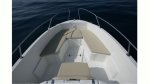
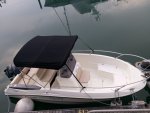
Thanks a lot. Attached please find mooring area i moor into. Summer times would be even more crowded. And have to be facing one direction and not rotate thats why i place 2 ropes at stern and 2 from bow which are quite long so as to boat relax and not get tensioned easily. Bow ropes(3) and stern ropes (2)are attached to a different mooring block. All ropes are attached together to a line and a single buoy. You are right in strengthening cleats but im afraid i cant reach after the cleats . Attached find exact pictures like my boat. Bow roller is holding a 5kg bruce anchor thats why i clip to the tow eye. Would have preferred to the main cleat in which i can reach and was strengthened. Any suggestions are greatly appreciated. My only concern is the fatigue im encountering in inserting side ropes loop into cleat hole and then placing in cleat. will try what rocksteadee said about placing loop into hole (easy ) and for loop to not come out from cleat would make a figure of 8 with the lighter rope over the rope enabling loop to stay in cleat.
 

Attachments

  • mooring area.jpg
    mooring area.jpg
    54.3 KB · Views: 20
  • mooring area2.jpg
    mooring area2.jpg
    274.2 KB · Views: 21
  • boat.jpg
    boat.jpg
    48.5 KB · Views: 23
  • boat1.jpg
    boat1.jpg
    82.7 KB · Views: 23
That's confusing. I think you are trying to say you are on a trot mooring and the boat on the pontoon is like yours. (and that's a terrible job of mooring up.)

If so nothing changes with the exception that you have a light bridle loosely attached at the stern to hold direction. Not to take any loading.

This might help you further

How to master fore and aft trot moorings - Practical Boat Owner


If the boat on the pontoon is actually your berth then you need someone to show you how to set up a springer line bow cleat to pontoon stern cleat and stern cleat to pontoon bow cleat as the main holding lines. From there you can add a bow and stern line for attitude.
 
That's confusing. I think you are trying to say you are on a trot mooring and the boat on the pontoon is like yours. (and that's a terrible job of mooring up.)

If so nothing changes with the exception that you have a light bridle loosely attached at the stern to hold direction. Not to take any loading.

This might help you further

How to master fore and aft trot moorings - Practical Boat Owner


If the boat on the pontoon is actually your berth then you need someone to show you how to set up a springer line bow cleat to pontoon stern cleat and stern cleat to pontoon bow cleat as the main holding lines. From there you can add a bow and stern line for attitude.
Dear Bruce

Thanks a lot for the very interesting and informative link to the article which found very useful. yes i use a trot mooring and the picture of the moored boat is not mine but same model in order for you to see where the cleats are. Yes i assume the rope that i tie to the stern i think they are to hold direction but as you are aware i dont have a lot of experience and trying to learn. Do you think that in my set up i should go for a ' thinner ' rope at the stern in order for ease of getting the rope round the cleat securely. Honestly my main problem is to insert loop of rope in cleat hole( double size of rope as it is a loop ) in order to pass it through hole and then get it round cleat. sorry for my english and maybe im confusing you but when at home i will take a photo to let you understand how i tie.
So if i am understanding correctly does the main rope that i attach to tow cleat would be the main rope that secures boat to mooring?
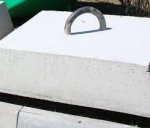
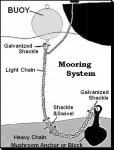
Seeing the picture you sent set up is very near to my set up although instead of the trot buoys at the sea bed there are 2 mooring blocks( bow and stern) with chain and then rope attached to chain. Block is identical to picture. Chain is shackled to ring and rope is attached to chain by a stainless thimble.
On the 2 nd picture instead of the light chain i have the rope we are talking about. 1 buoy that i catch with boat hook that when lifting ropes come out of sea. will get the main rope and cleat and then do the other lines accordingly and not in hurry as boat will be moored already and dont move with currents etc.
 

Attachments

  • block.jpg
    block.jpg
    5.4 KB · Views: 13
  • System.jpg
    System.jpg
    25.6 KB · Views: 12
Last edited:
Honestly my main problem is to insert loop of rope in cleat hole( double size of rope as it is a loop ) in order to pass it through hole and then get it round cleat.

I am not sure quite what you mean by that. You should not try and thread any rope through the cleat pillars ( "hole"). Use a bridle ( Y) with spliced eye or O-X-O tie off.

So if i am understanding correctly does the main rope that i attach to tow cleat would be the main rope that secures boat to mooring?

Your strop covers from your cleats to the main line under the mooring buoy. The bow is the load bearing line and should be under relative tension or at least with minimum slack. The stern line commonly connects to the following boat's bow trot and should not be under tension, just enough to limit swing. However local methods may vary and you should also take advice from your port authority.
 
Honestly my main problem is to insert loop of rope in cleat hole( double size of rope as it is a loop ) in order to pass it through hole and then get it round cleat.

I am not sure quite what you mean by that. You should not try and thread any rope through the cleat pillars ( "hole"). Use a bridle ( Y) with spliced eye or O-X-O tie off.

So if i am understanding correctly does the main rope that i attach to tow cleat would be the main rope that secures boat to mooring?

Your strop covers from your cleats to the main line under the mooring buoy. The bow is the load bearing line and should be under relative tension or at least with minimum slack. The stern line commonly connects to the following boat's bow trot and should not be under tension, just enough to limit swing. However local methods may vary and you should also take advice from your port authority.
Thanks for all your help. Good idea to use a bridle y with splice eye. Later in evening will take a photo how i attach rope to cleat.
So If use bridle with spliced eye i will just put on cleat, will there be a chance that rope come out of cleat during movements?
 
Top