
Mildew Cleaning. I have tried most things. Please help

Thallac

Well-Known Member
Joined
16 Jun 2013
Messages
81
Visit site
I purchased a 30 year old boat last year.

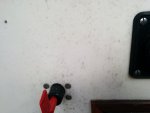
In the aft cockpit there is mildew on the walls.

I have tried:

-steam cleaning
-mildew cleaner
-grp cleaner
-black streak remover

None of them work as it seems engrained into the material.

I have inserted a picture here. IMG_20150110_130435.jpg
Any suggestions?

Could I paint or replace the walls.

Thanks for your help.
 
you might want to try a mild cutting compound then polish it out. It will basically take off the first couple of microns of GRP and anything attached to it so not something to do on a regular basis.

To do it you would really need to remove any fittings to make the work easier rather than work around them so it wouldn't be a quick job.
 
Oxalic acid is mildly toxic - try not to swallow any.

"Mildly"?
From Material Data Sheet
"Acute toxicity is primarily due to its caustic (alkaline properties). Oxalic Acid Dihydrate is a corrosive solid and contact can cause eye and skin irritation and burns. Product is a respiratory tract irritant, and inhalation may cause nose irritation, sore throat, coughing, and hest tightness and possibly, burns to the respiratory system. Inhaling large amounts of vapor from solution or swallowing dust or articulates can cause stomach pain, vomiting, coma and death. Chronic: Repeated or prolonged skin exposure can cause dermatitis and slow healing ulcers. Severe cases may show symptoms such as albuminuria, chronic cough, vomiting, pain in back, and gradual emaciation and weakness. The skin may be bluish in color and the nails brittle and yellow. Long term ingestion, skin absorption or inhalation overexposure can cause stone formation in the kidney and urinary tract."

Enjoy!
 
"Mildly"?
From Material Data Sheet
"Acute toxicity is primarily due to its caustic (alkaline properties). Oxalic Acid Dihydrate is a corrosive solid and contact can cause eye and skin irritation and burns. Product is a respiratory tract irritant, and inhalation may cause nose irritation, sore throat, coughing, and hest tightness and possibly, burns to the respiratory system. Inhaling large amounts of vapor from solution or swallowing dust or articulates can cause stomach pain, vomiting, coma and death. Chronic: Repeated or prolonged skin exposure can cause dermatitis and slow healing ulcers. Severe cases may show symptoms such as albuminuria, chronic cough, vomiting, pain in back, and gradual emaciation and weakness. The skin may be bluish in color and the nails brittle and yellow. Long term ingestion, skin absorption or inhalation overexposure can cause stone formation in the kidney and urinary tract."

Enjoy!

I've had worse!!!
 
The surface has 'crackled' or 'crazed' it looks as if it has been over-coated either with paint or more gel coat as the crackling is so thin.
Either one, it has cured during a cold snap creating a crackled surface.

The 'dirt' / mildew is trapped within the crazing, but is forming the majority of the defect.

It is similar to scoring the surface with a razor blade then trying to work out what would remove the stains.

It wont stay clean for long, regardless of what you use, the surface is at fault.

Please, please don't let us slip into the 'I purchased a product which I cant remember what, but looked like it could have possibly contained Oxalic and I got some on my foot dissolving it instantly, with the next poster stating "I used to sprinkle it on my weetabix and it never did me any harm" etc etc


OP, yes you can repaint or re-gel coat the walls for a permanent solution.
It will require removing the very top layer of gel coat
 
Last edited:
I used Starbirght mildew remover. Said it will remove with one wipe. Yeah right - I had tried everything, not as chance.

Oh - it did exactly what it said on the bottle!

Amazing stuff!

My vote would be for Dettol mould and mildew remover - spray it on and the marks disappear! Wipe over with a damp cloth maybe 10 minutes later; amazing!
 
Forget polishing it out; it is crazing that is deeper than it appears and will be a waste of time. I had even tried full-strength bleach and got clean crazing. It was clean all right, but it was still crazed.

I removed all the fittings and sanded the surface down. Two coats with Perfection two-pack undercoat followed by three coats of finish, rubbing down with wet-or-dry abrasive used wet and with a drop of washing up liquid in the bucket. After three weeks you can polish out any remaining brush marks. You can, of course, apply the finishing coats with a spray-gun but, for a small area, it's not worth the hassle.

I'm afraid that there are no short cuts.
 
If you do not want to go to the trouble of repairing the surface as Marine reflections suggests clean it with a mould and mildew cleaner.

A chlorine bleach based product or even ordinary household bleach might be the quickest way of cleaning it initially but the surface then needs treating with a mould inhibitor which will prevent it returning. Polycell 3 in 1 Mould Killer for example .

I use this one http://www.kleeneze.com/products/h/houseproud-anti-mould-amp;-mildew-spray/ simply because the Kleeneze man calls regularly and delivers what I want a few days later and it does what it says on the bottle.

Probably once clean a quick once-a-year treatment will keep it away.

Note that the Detol product mentioned is chlorine bleach based,. hence it effectiveness in cleaning initially, but it contains nothing to stop the mould from returning.
 
Last edited:
washing up liquid mixed with thick bleach brush it on agitate leave to soak in for a few hours and then wash off. You need to kill it or at least bleach out the dead material. I used this method on similar with good results, maybe put on the oilskins and get the karcher out, do the bilges and the engine compartment whilst you are at it. Stick in the dehumidifier, fresh clean boat quickly. (remove cushions first)
 
This is just my humble opinion, but I think we are missing the fact that the OP has tried the following:

-steam cleaning
-mildew cleaner
-grp cleaner
-black streak remover

All with no success.

Perhaps my screen is allowing me a good picture, but if you click to enlarge the OP's picture and then zoom in you will note that the surface is crazed as Puff mentioned above.

It is these cracks that is the biggest defect and is the reason all the cleaners and mildew removers are not working.

If I were to take a flat panel of GRP and score the centre to the fibreglass there would be an obvious colour difference as the scores would be almost black as light gets absorbed. Also this would offer a resting place for moisture and therefore a perfect environment for growth.

Now I agree with Vic, the best foot forward on any cleaning front here would be to use a chlorine based cleaner to remove the worst of the growth and with one that included an inhibitor to limit future growth.
That said I can't help but think it is like having a hole in the gel coat and asking which cleaner would remove the hole, of course cleaners can't repair the hole, just as they can't repair the crazing.

What is needed here, is a repair.

There are a couple of things that make me think that the crazing is not as deep as the original gel coat would have been:

On the battery key base (black section) there is a flap of product, either gel coat or paint where it has been missed by masking tape and left in place. This would not have been here unless the surface has been re-coated.
Also there are a couple of small flecks of product on the top of the key base, again suggesting an extra coat of something has been offered in the past.

It is why I believe that the crazing is not deep, only the depth of the last coating.

It may be that coating was applied over the top of mildew and it is coming through the cracks from beneath, so whilst the best intentions to bleach and prevent from the outside, the problem might well be from within.

A sand down and a few coats of matched flow would put the issue to bed.
 
Last edited:
It won't be resolved without correcting the surface. If you just want to remove the black bits, one of the best mould removers is HG Mould Spray, bleach-based but a bit stronger than most.
 
Top