Mast Restoration/repair advice.

Bowen20

New Member
Joined
29 Mar 2020
Messages
5
Location
Wales
Visit site
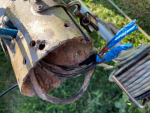
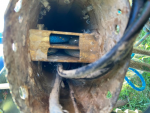
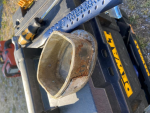
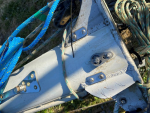
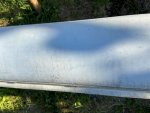
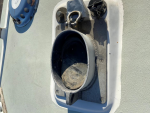
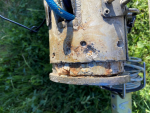
In the process of a restoration on a Sadler 25 (somewhat extensive), over the weekend I decided to take a look at the mast. The mast base isn't in the best of conditions, due to corrosion and possible past repairs. The mast had a stainless steel shoe inserted at the base, I'm unsure why? The stainless also hasn't helped with the condition of the mast base. The rest of the mast appears to be in good condition.

I'm thinking of removing the damaged section, from the base of mast up. Roughly 40mm will need to be removed. Then copying the principles of the stainless steel shoe. By having an aluminum shoe milled, with the 40mm height difference added to the new shoe. Would this work?

Also, the mast was sat on a 10mm rubber base. Within the deck fitting.
1589536799349.png
1589536829302.png
1589536849020.png
1589536868429.png
1589536890688.png
1589536910496.png
1589536929104.png
 
Don't see why not.
Only question I've got is whether taking 40mm off would mean that the new insert would foul on the halyard entry pulleys and assembly.As they're welded in they will be difficult to relocate. You could make a cutout in the new base insert section to accommodate it though
I'm sure you've considered that already though.
 
The ali plug for the bottom of the mast looks OK and yes removing a small amount of the mast material might bring you back to better metal. As said there might be a problem with the sheaves for halyards. If you go to get rid of the sheaves I would advocate use of exit slots for the halyards up to a metre above the base with turning sheaves on the deck. If you only remove a centimetre or so of mast then this should easily be taken up with shroud adjustment or you could make a wooden or GRP base under the mast. On many boats this has to be wedge shaped to bring base level on a sloping cabin roof
Re the stainless steel shoe I would get rid of that and make the base into a hinge for mast lowering. A bit of welding work on the base to give an axle and lugs between 2 bases. You may be able to buy a ali hinge but beware these are quite fragile if mast swings sideways when lowering. Being able to lower your mast by yourself even under way can make maintenance on mast top very easy and enable you to traverse under bridges. This does not seem so common in UK but here in Perth (oz) almost all sail boats of any size up to 80 ft boats are able to lower mast for bridges. Definitely nice when you have a mast top problem. Nuts to that climbing the mast thing. PM me for more ideas on mast hinge base. ol'will
 
Don't see why not.
Only question I've got is whether taking 40mm off would mean that the new insert would foul on the halyard entry pulleys and assembly.As they're welded in they will be difficult to relocate. You could make a cutout in the new base insert section to accommodate it though
I'm sure you've considered that already though.
Greeny,

Yes. I think the new insert would need to be notched around the halyard sheave (y)
 
The ali plug for the bottom of the mast looks OK and yes removing a small amount of the mast material might bring you back to better metal. As said there might be a problem with the sheaves for halyards. If you go to get rid of the sheaves I would advocate use of exit slots for the halyards up to a metre above the base with turning sheaves on the deck. If you only remove a centimetre or so of mast then this should easily be taken up with shroud adjustment or you could make a wooden or GRP base under the mast. On many boats this has to be wedge shaped to bring base level on a sloping cabin roof
Re the stainless steel shoe I would get rid of that and make the base into a hinge for mast lowering. A bit of welding work on the base to give an axle and lugs between 2 bases. You may be able to buy a ali hinge but beware these are quite fragile if mast swings sideways when lowering. Being able to lower your mast by yourself even under way can make maintenance on mast top very easy and enable you to traverse under bridges. This does not seem so common in UK but here in Perth (oz) almost all sail boats of any size up to 80 ft boats are able to lower mast for bridges. Definitely nice when you have a mast top problem. Nuts to that climbing the mast thing. PM me for more ideas on mast hinge base. ol'will
Hi William,

I will keep that in consideration. Hopefully, the sheaves can remain. But that's an option, all the deck hardware is to be removed anyway!

To be honest with you. I didn't really think about having a mast hinge assembly, it makes sense when it comes to the maintenance side of things. Is there structural strength lost by doing this?
 
I agree with the other posters, your plan sounds reasonable. A couple of further points:

1. Don't know about the rubber. Not something I have seen before.
2. Water drainage. A cause of the corrosion is that water cannot drain from the shoe (as far as I can see in the pics) The deck fitting has drain holes, make sure your new shoe has matching ones, as quite a bit of water comes down inside the mast.
 
I would consider having the corrossion welded and cleaned up.

This is my aluminium engine heat exchanger where the sealing face for the end cap O rings that I had welded and the filed for allow the O-rings to seal.

 
I agree with the other posters, your plan sounds reasonable. A couple of further points:

1. Don't know about the rubber. Not something I have seen before.
2. Water drainage. A cause of the corrosion is that water cannot drain from the shoe (as far as I can see in the pics) The deck fitting has drain holes, make sure your new shoe has matching ones, as quite a bit of water comes down inside the mast.
Thanks, Yes. I think the rubber sole/packer was basically acting as a plug. Blocking the water from escaping.
 
Bowen 20 asked "

To be honest with you. I didn't really think about having a mast hinge assembly, it makes sense when it comes to the maintenance side of things. Is there structural strength lost by doing this?

The real loads on the mast base are downward in compression. So make sure hinge and axle have lots of free play so pressure is square and flat to the mast itself. The base of the mast must be corralled so that it can not slip sideways or fore or aft but these loads are tiny. the load on the base and hinge on the other hand are quite a lot to slip forward when the mast is half way up or down. Still not huge being a function of the mass of the mast. ol'will


Like Quote Reply
 
Top