Making bread in a seaway on an alcohol stove?

Do anyone do this and what is your process?

I'm impressed you want to try it. I make plenty of bread at home, but only recently tried it on the boat. Proving the dough is the main challenge. I found leaving it propped up on a tray above the engine (after a short run to anchor/harbour etc) works to let it rise. The oven is a fairly standard , not very controllable gas oven. Hot or not.
The bread came out browner and crustier than usual , but didn't last long. So it passed muster!
Making it on the move would be more difficult. I wish you luck..
 
I made bread regularly on a trip last year to the Azores and back in my pressure cooker. However, by using supermarket bread, tacos and Ryvita crackers, there is really no need to make any (apart from the taste) for voyages up to a couple of weeks
 
Put dough in pressure cooker, put the lid on but leave the sealing ring off. Put pressure cooker in reasonably warm place, eg wrapped in sleeping bags with a hot water bottle included at the end of a bunk. . Hope for the best.

...and, as it's an Origo stove, make sure there's enough alcohol in the container to last through the baking period.
 
I have never tried it because when we are out of reach of a bread shop we are happy to eat Wasa or Ryvita crackers but I think you would be able to make bread in an Omnia oven quite easily:

https://omniasweden.com/en/home/

I've made it in my Omnia oven on gas when the shop in Tayvallich had run out of bread but had bread flour & yeast. Successful it was too.
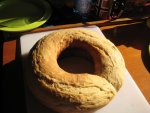
 
I haven’t baked bread using an Origo stove but baking bread at sea on an ocean passage is one of life’s great pleasures. Of course you can get by on Ryvita etc but why would you want to? And what else are you going to do on passage? Cooking eating and sleeping are part of the rhythm of sailing longer distances.
 
I haven’t baked bread using an Origo stove but baking bread at sea on an ocean passage is one of life’s great pleasures. Of course you can get by on Ryvita etc but why would you want to? And what else are you going to do on passage? Cooking eating and sleeping are part of the rhythm of sailing longer distances.

100% agree. I made bread many times on our recent trip. The I put the dough in a covered bowl on top of the fridge compressor. The result was a great treat during a night watch.
Allan
 
Making it on the move would be more difficult. I wish you luck..

I've not made bread on board myself (if it's up to me, I just use those nitrogen-packed part-baked baguettes) but two of my regular crew enjoy the challenge of doing proper cooking and baking while under way. I'm certainly happy to enjoy the results of their efforts :p

Mixing the dough, kneading, and first rising take place all in a big bowl, so there's no flour and mess on the worktop:

aKuuKTwl.jpg


On a warm day (here crossing back from Alderney to the Solent) the second rising can happen in the sun:

9Fx2XQxl.jpg


Alternatively, tucked behind the cooker while something else is in the oven and the warmth is rising up the back:

D4DKV7tl.jpg


I believe this was while sailing on a gentle broad reach across Christchurch Bay:

kutn4R0l.jpg


Pretty decent result. Made some excellent toast.

PBSe50Tl.jpg


Can't help with how to bake it over a spirit stove, but I'm definitely a fan of bread on boats in fine conditions. As John says, what else are you going to do?

Pete
 
Instead of bread, with yeast that needs to rise in a warm spot, you could try baking powder biscuits. Much simpler if you are just looking for something bread like to enjoy. You can even make them in a covered pan on a burner, rather than needing an oven.
 
Last edited:
Instead of bread, with yeast that needs to rise in a warm spot, you could try baking powder biscuits. Much simpler if you are just looking for something bread like to enjoy. You can even make them in a covered pan on a burner, rather than needing an oven.

Soda bread also doesn't need yeast.

Best to practice making it at home first. I tried to make some the other day and it was horrible. I don't know what I did wrong but it ended up in the bin.
 
If OP is asking about cooking bread on an alcohol burner then use a largish saucepan with lid. Use some sort of stand to lift the dough off the bottom. Perhaps a thermometer or experimentation to get flame intensity correct. Bake the dough in small pieces for faster cooking like bread rolls or horse shoe shape. Give it a try perhaps at home first. good luck ol'will
 
We have made lots of great recipes, including bread, using the Omnia oven on an Origo two burner stove (checkout the free and very 70's looking recipe book for the Omnia). The setting for the burner(s) needs a bit of trial and error but usually a low setting (2) will suffice.
 
Why not use a Breadmaker?

You'd need quite a small inverter for a small bread maker (and maybe the motor running for a short while depending on the size of your battery bank)


http://caravanersforum.com/viewtopic.php?t=39322
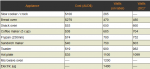
My initial reaction was that it’ll take too much power. Depending on the boats battery and charging system it MIGHT be manageable. However on many boats, the batteries barely keep up with the demands already placed upon them with plotters and autopilots and fridges running so much of the time. The link you’ve given says much the same thing in many of the responses.

The advantage of a bread maker is convenience and time. My argument would be that time is one of the things you’ve usually got lots of when on passage. It’s really not difficult to make bread. So why use a bread maker and use all those precious battery amps?

Each to their own though.
 
John

I agree with the point you make regarding time on a yacht so it is something pleasant to do (I love the smell of baking bread)

But bread makers take very little power. There is the initial kneading for about 15 mins (from memory) Then it basically sits idle for 1 1/2 hours (with a brief kneading half way through) And then it bakes for about 40 minutes. (The baking would be the most power consuming - about 450W)

Annotation 2019-08-29 120848.png

https://www.rpc.com.au/information/faq/power-consumption/cooking-appliances.html
 
John

I agree with the point you make regarding time on a yacht so it is something pleasant to do (I love the smell of baking bread)

But bread makers take very little power. There is the initial kneading for about 15 mins (from memory) Then it basically sits idle for 1 1/2 hours (with a brief kneading half way through) And then it bakes for about 40 minutes. (The baking would be the most power consuming - about 450W)

View attachment 80019

https://www.rpc.com.au/information/faq/power-consumption/cooking-appliances.html

I understand that completely. (I did some research before commenting). But 450 watts for 40 minutes is 30Ah of battery energy. It’s doable for a good setup but might not be for many. And the alternative is so easy....
 
Top