lustyd
Well-Known Member
Looking for advice on building a helm pod to take a MFD, two instruments, a/p control and possibly remote mic charger. I've researched pretty thoroughly and it looks like making is the only sensible option as those on the market are either completely impossible to buy in the UK, no longer made, or designed by someone who hasn't seen a real yacht. Many of them are also 8" deep so presumably also designed to take a CRT TV set?
Anyway...I feel the only sensible option for materials on a homemade one will be GRP. A helm pod is certainly too large for 3d printing on any normal unit. As such I'm looking for advice on building the moulds mainly or any design tips from those who've done it before.
What material(s) for the plugs? I'm thinking wood, but then what's the best way to make it smooth for taking the mould?
Mould resin - do I really need a second type of resin?
Thickness - how thick should I make the finished product?
Any thoughts greatfully received!
Anyway...I feel the only sensible option for materials on a homemade one will be GRP. A helm pod is certainly too large for 3d printing on any normal unit. As such I'm looking for advice on building the moulds mainly or any design tips from those who've done it before.
What material(s) for the plugs? I'm thinking wood, but then what's the best way to make it smooth for taking the mould?
Mould resin - do I really need a second type of resin?
Thickness - how thick should I make the finished product?
Any thoughts greatfully received!


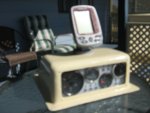
 ), there’s a danger of it warping so that the flat face is no longer flat and becomes difficult to flush-mount the instruments. When I re-made my starboard pod to take the new plotter (keep the moulds!), I put the front face-down on a smooth worktop with a weight inside so that it would set perfectly flat, and the new plotter fitted into it far better than the old one had.