Lofran cayman

sailaboutvic

Well-Known Member
Joined
26 Jan 2004
Messages
9,972
Location
Northern Europe
Visit site
Some thing to be aware of .
I removed the windlass to service it only to find the bottom part as worn away , about 2 mm from the outer edge. , Where sea water gather on the rubber grommet ,
I'm now in the process of given it several coats of epoxy filler once that's done I plain to build a lip of epoxy Along the bottom edge .
It's only 4season old so a bit pee off to say the less ,
 
Electrolytic corrosion is a known problem with these windlasses. When I installed mine I carefully put a sheet of PET, cut from a lemonade bottle, between the body of the windlass and the stainless plate it's mounted on. The studs were screwed into the alloy body with copious Duralac. Further, I used shrink sleeving and nylon washers on the studs to electrically isolate them from the mounting plate. I threw away the useless rubber mat that it was supplied with - as you say it just collects sea-water.
About 10 years on, to date there's no visible corrosion on the windlass.
 
Mine is set on the grp deck the SS plate is under the grp so they not touching .
Duralac was used on all the stud .
There was no visible signs untill I removed the windlass , only then I could see all three sides have corroded at a angle .
Be worth checking your any longer and the studs have no metal to screw into .
A cover is used when the windlass isn't in use, and it's flush out with fresh water offen .
I suprise after 4 years the amount of Corrosion.
 
Not surprising. The Lofrans service instructions require removal of the windlass every year - sure sign there is a potential problem. Nothing was done on mine on my charter boat until i removed it after 10 years and the corrosion was so bad, the corner where one studs was located had disappeared altogether. Everything was seized to the point that I could not get it apart, so bought a new unit. Etch primed and painted the bare aluminium bottom face, removed all the fastenings and applied Duralec before replacing, and left off the rubber pad and instead used a piece of chopping board.

Just removed the Lewmar in my current boat (because the motor blew) and not corrosion anywhere - all stainless. Lofrans is a far superior product in terms of performance, pity they don't make it even better by having a stainless housing.
 
By "these windlasses", do you mean all modern or electric windlasses, or only Lofran models, please?

A surprising number. Lewmar and Lighthouse (probably others) use stainless - but you do pay more.

Windlass are commonly made from cast aluminium components held together with stainless steel bolts or studs. Many are installed during commissioning of the new yacht and the commissioners seem unaware of corrosion and duralac with inevitable consequences. As Tranona points out windlass should be serviced annually (that's what is says in most instruction manuals) and servicing commonly includes taking the windlass apart, checking the oil (and replacing if necessary), cleaning the unit and greasing the shaft. At this point (with a new windlass) the educated owner would notice the absence of Duralac but will have it handy as he is intelligent and will be prepared for all eventualities. He will offer protection at this point and all will then be well and good. Servicing is not particularly difficult - though installations are made on the assumption that owners are actually not intelligent individuals but intelligent monkeys as only a monkey will be able to worry their way into the locker to dismount the device. Some windlass are easy to take apart, we have a Maxwell which can be withdrawn from its home in a few minutes, circlip, bayonet fitting and release power cables( if too short) - but then I installed it myself.

The final insult is that windlass, generally, all use electric motors the casing of which is made from mild steel. Ideally this should have been over painted when new with some serious protection (the paint, gloup, people use (or used) in the UK to protect their cars from the winter salt) - after a year it may already have started to corrode and you are at the top of a slippery slope (at the bottom of which you need to buy, at least, a new motor).

Surprisingly windlass are very forgiving and last quite long - sailaboutvics has lasted 4 years already :)

Serviced annually and you can expect the windlass to last 20 years or more.

The other aspect to look out for - has the windlass been installed with the chain being retreived close to our touching the motor. Windlass can commonly be swung so that chain retrieval is far away from the motor - but this is not an issue for installers - they will have changed company before the complaints roll in.

How do I know all of this - I have this fetish over ground tackle and I am appalled at the way windlass are installed, no duralac, chain retrieved rubbing over the motor casing. People know of my fetish and I am asked to help with windlass servicing - I have learnt to attend such events with an angle grinder (and expecting tears (or some foul language) from the owner).

Get your instruction manual out - and go and service your windlass - you can then look forward to a happy and long relationship with her (it - the windlass).

Take care, stay safe

Jonathan
 
I have to hold my hands up and say I didn't remove mine last winter but did the year before so most of the corrosion happen in the last two years ,
It not too late to save mine but another year and I reckon it wouldn't had been too late .
I'm now plainning to epoxy the bottom half .
 
A surprising number. Lewmar and Lighthouse (probably others) use stainless - but you do pay more.

Windlass are commonly made from cast aluminium components held together with stainless steel bolts or studs. Many are installed during commissioning of the new yacht and the commissioners seem unaware of corrosion and duralac with inevitable consequences. As Tranona points out windlass should be serviced annually (that's what is says in most instruction manuals) and servicing commonly includes taking the windlass apart, checking the oil (and replacing if necessary), cleaning the unit and greasing the shaft. At this point (with a new windlass) the educated owner would notice the absence of Duralac but will have it handy as he is intelligent and will be prepared for all eventualities. He will offer protection at this point and all will then be well and good. Servicing is not particularly difficult - though installations are made on the assumption that owners are actually not intelligent individuals but intelligent monkeys as only a monkey will be able to worry their way into the locker to dismount the device. Some windlass are easy to take apart, we have a Maxwell which can be withdrawn from its home in a few minutes, circlip, bayonet fitting and release power cables( if too short) - but then I installed it myself.

The final insult is that windlass, generally, all use electric motors the casing of which is made from mild steel. Ideally this should have been over painted when new with some serious protection (the paint, gloup, people use (or used) in the UK to protect their cars from the winter salt) - after a year it may already have started to corrode and you are at the top of a slippery slope (at the bottom of which you need to buy, at least, a new motor).

Surprisingly windlass are very forgiving and last quite long - sailaboutvics has lasted 4 years already :)

Serviced annually and you can expect the windlass to last 20 years or more.

The other aspect to look out for - has the windlass been installed with the chain being retreived close to our touching the motor. Windlass can commonly be swung so that chain retrieval is far away from the motor - but this is not an issue for installers - they will have changed company before the complaints roll in.

How do I know all of this - I have this fetish over ground tackle and I am appalled at the way windlass are installed, no duralac, chain retrieved rubbing over the motor casing. People know of my fetish and I am asked to help with windlass servicing - I have learnt to attend such events with an angle grinder (and expecting tears (or some foul language) from the owner).

Get your instruction manual out - and go and service your windlass - you can then look forward to a happy and long relationship with her (it - the windlass).

Take care, stay safe

Jonathan
All this has really put me off Lofran winches. My Leroy Somer, sadly they no longer make for the yacht market, does not specify any servicing other than greasing the clutch cones and is still going strong after 22 years. What other winches currently on the market are maintenance free?

Www.solocoastalsailing.co.uk
 
Should not put you off. Provided you follow the advice and particularly protect the bottom face, they are far and away the best windlass at their position in the market. No other particular servicing required over other brands, and far superior to their main competitors, Lewmar and Quick. You need to jump quite a lot in price to get "better", for example a Maxwell. Lofrans are the preferred brand for the charter market where they get far more use than any private owner would give them.
 
All this has really put me off Lofran winches. My Leroy Somer, sadly they no longer make for the yacht market, does not specify any servicing other than greasing the clutch cones and is still going strong after 22 years. What other winches currently on the market are maintenance free?

Www.solocoastalsailing.co.uk

Windlass makers to whom I speak comment that most complaints on windlass are as a result of not checking the gearbox for oil and not cleaning and greasing the shaft - neither are very onerous. The big problem is accessing the windlass itself. This latter has nothing to do with the windlass, nor the maker, but how it was installed.

All windlass are designed roughly the same way and all have the same potential service points.

Again the problem of using stainless steel components in an aluminium casting is a very simple fix - use Duralac, or similar - though why this is not underlined and (where relevant) completed at manufacture - I don't know.

I'd not argue with Tranona except to comments that Lofran might be popular in the charter fleets because they are cheaper (which Is a point Tranona makes) and I suspect they enjoy longevity because charter fleet operators regularly service their windlass and possibly make sure they are orientated correctly from the outset (as the consequences of it being wrong are expensive).

There is simply no excuse, apart from laziness and the installation being made at the convenience of the installer, for the fall of the chain to rub on the motor.

The corrosion that is mentioned on this thread, independent of using stainless in an aluminium casting, might be a function of installation (again). When you retrieve chain it is covered in seawater and if that seawater is continually showering the windlass (as opposed to the fall of the chain being as far away from the windlass as is possible) then possibly the corrosion is 'preferential'. However it is impossible to expect a windlass to be kept dry and their longevity - 20 years is not unusual - is an indication that despite being ignored - they are robust.

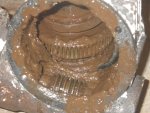
This is the gearbox of an unserviced windlass after about 15 years. As far as I can ascertain it is lubricated with seawater, rust and mud (maybe even some oil). You can just see the ball bearings at the top of the picture. It worked perfectly - though for how much longer I don't know. I say it worked perfectly - it worked - I don't know how close to perfectly.


IMGP4771.jpeg

It had to be cut out (not an easy task in itself,, because the stainless bolts holding it together had corroded into the aluminium casting. I say cut out - the windlass itself was cut up leaving the fibreglass to which it was attached - intact. Removal was prompted by an update of components, the windlass did look a bit tired.

It underlined to me the abuse that windlass enjoy and that they are so robust and its why when asked to help - I take an angle grinder.

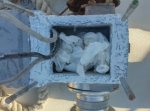
We use a Maxwell - when we downsized the chain Maxwell invested the time to discuss the issues (same tensions in the rode as for 8mm but using a windlass sized for 6mm) - easier for me as they are local - and came up with (what I thought) a neat answer. We have only had it for about 4 years - so its is not yet 'run in' :). I installed myself which means I had a number of boxes of the shiny new kit and was able to play with the disassembly and assembly before it was installed. I made another chain recently for a trimaran (see pic below), again 6mm x 100m - he too bought a Maxwell, identical to ours (they too enjoyed the 'custom' and personalised sizing recommendations.).

This business in Australia also use Maxwell windlass

Home - Norman R. Wright & Sons

In common with many items - people buy local. (One of the Directors also bought 'my' chain for his Ovni.

I learnt subsequently that the project, what windlass to offer when someone down sizes chain, was a major discussion at Maxwell involving their technical staff and CEO - as I spoke to the latter subsequently on a different topic and he knew all about the application and recommendations.

I confess, sheepishly, we did have a problem - we were transitting the coast and the windlass would not retreive (not such a problem with 6mm chain). I contacted Maxwell over the weekend, they replied by return with a series of points to check and with a PDF attachment of the manual. It was all my fault - one of the power cables was loose. But I was impressed to learn they run a 24hr/365 help line (including Xmas etc) as they reason most people use their windlass at weekends and holidays and that's when people are more likely to need help. One person is tasked, on a rota, to be 'on call' - and is presumably one reason Maxwell might be more expensive.

My fix was easy, just a spanner.

Yes - I'm a fan of Maxwell.

image1.jpeg

Take care, stay safe

Jonathan
 
Jonathan I agree with the points you made re the way these windlass are installed.
Before this boat we had a new Dufour 385 and trying to remove that windlass after just one year of use was so hard I give in, until one day when a seals went and I had no option .
That lermar windlass was fitted in such a way it took two days to remove and nearly did my back in bending inside the boat to split the gearbox from the top half as it was the only way to remove it from the boat.
Only then did I find the oil filler , so I can understand why some people think there isn't any where to change the oil .

In this case and why I made this posting is because I truly feel the corrosion in my case isn't the installation,
When I installed it plenty of Duralac was paste on the four stud , the windlass needed the chain to be at the very less horizontal to the bow roller,
so it couldn't go back into the anchor locker so I fitted it on the deck ,
the SS plate which it's bolt's to is underneath the GRP deck , the chain drop is in line with the gypsy in other word it doesn't touch the body .
So in this particular case it as nothing to do with two different metal touching .

As the windlass is open to being washed with sea coming over the deck it as a canvas cover which is used every time even while at anchor unless there any storm in which case its left off in case some thing happens.
The chain is now readly to be replace as is got very rusty and leave a mess so we wash with fresh water quite a lot , having a water maker fresh water isn't a problem.

So why the bottom edge should had worn away at a angle from the other edge in so little time I'm a bit lost , ( it wasn't this bad last time it was remover 2 years ago .)

Some one mention the rubber grommet which he remove ,
Im now planning to do the same , I thing the problem may be that sea water gather around it and sink under windlass which has a hollow bottom and eating away at the aluminium,
I also plain to seal the windlass to the deck with a seal that can be remove without too much problem next year to stop water trap under it.
Some one posted that his lofran hasn't a problem , I strongly suggest it's remove and check as unless I removed mind I also would had tho all was OK.
 
Last edited:
Your original post is the reason for the forum, not only to ask questions but to relate real life experiences. You live the dream (and the occasional nightmare) and I am grateful you describe what happens during the dream.

I'm not exactly sure of the specific of the 'bottom edge' of the windlass so cannot comment - but was not suggesting there was any fault on your part. Missing one annual service for an item that might last 15-20 years with no service - should make no difference. Removing the windlass 1 year ago would not have altered the fact there seems to be an issue with corrosion.

You have a sensible plan - good luck.

No need to ask you to update us - I know you will.


Now - as we are talking about ground tackle - any idea how long you chain has lasted. You live at anchor - your experience is valuable.

Based on the experiences of others (in the Med and in N America) then 1,200. days (or nights) at anchor is common

Take care, stay safe

Jonathan
 
Your original post is the reason for the forum, not only to ask questions but to relate real life experiences. You live the dream (and the occasional nightmare) and I am grateful you describe what happens during the dream.

I'm not exactly sure of the specific of the 'bottom edge' of the windlass so cannot comment - but was not suggesting there was any fault on your part. Missing one annual service for an item that might last 15-20 years with no service - should make no difference. Removing the windlass 1 year ago would not have altered the fact there seems to be an issue with corrosion.

You have a sensible plan - good luck.

No need to ask you to update us - I know you will.


Now - as we are talking about ground tackle - any idea how long you chain has lasted. You live at anchor - your experience is valuable.

Based on the experiences of others (in the Med and in N America) then 1,200. days (or nights) at anchor is common

Take care, stay safe

Jonathan
Sorry J if I given you the impression that you suggested an bad installation problem .
Just bad posting on my part .
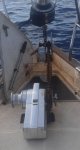
Photo of how it was fitted . You can also see the mess the chain making .

I been working on it over the week end , making a new base out of marine ply then grp the ply to seal it , it also will rise the windlass hight and give the chain a bit of a slope towards the bow .

Hopefully I finish it to day and post photo

My biggest grape with people who post for help is them not posting back and let others know how they got on , so of course I will report back .

What I should had done was taken a photo before I started working on it , but at the time I wasn't going to post any thing , it's only after working on it I thought about posting to maybe others can keep an eye on theirs .
Any way back to work .
 

Attachments

  • 20210907_091514~3.jpg
    20210907_091514~3.jpg
    398.9 KB · Views: 24
Sorry J if I given you the impression that you suggested an bad installation problem .
Just bad posting on my part .
Photo of how it was fitted . You can also see the mess the chain making .

I been working on it over the week end , making a new base out of marine ply then grp the ply to seal it , it also will rise the windlass hight and give the chain a bit of a slope towards the bow .

Hopefully I finish it to day and post photo

My biggest grape with people who post for help is them not posting back and let others know how they got on , so of course I will report back .

What I should had done was taken a photo before I started working on it , but at the time I wasn't going to post any thing , it's only after working on it I thought about posting to maybe others can keep an eye on theirs .
Any way back to work .

No problems Vic.

I can see the problem with the rust. I don't suppose re-galvanising is an easy option - as you need the chain to live at anchor

I'm being picky but you chain has a 1/4 twist between gypsy and slotted roller. If you use a swivel this would be easy to untwist (might even happen - automatically).

I agree - people raise an interesting query - members offer a real cross section of advice (often not relevant because the OP does not give enough information) - and then we never hear how the OP assesses the information - so we don't learn how others handle the problem - very frustrating! But then we do offer our advice voluntarily.

And there was a thread on what do liveaboards do ...... :)


On a separate issue - how is the eye?

Take care

Jonathan
 
No problems Vic.

I can see the problem with the rust. I don't suppose re-galvanising is an easy option - as you need the chain to live at anchor

I'm being picky but you chain has a 1/4 twist between gypsy and slotted roller. If you use a swivel this would be easy to untwist (might even happen - automatically).

I agree - people raise an interesting query - members offer a real cross section of advice (often not relevant because the OP does not give enough information) - and then we never hear how the OP assesses the information - so we don't learn how others handle the problem - very frustrating! But then we do offer our advice voluntarily.

And there was a thread on what do liveaboards do ...... :)


On a separate issue - how is the eye?

Take care

Jonathan
Lunch time ..
Well done spotting the twist, that an old picture and when taken the anchor was. Hanging over the bow while I was doing another job ,
As you rightly said with a Kong swivel it intange it self especially as there a small bit of chain between the swivel and the anchor.
Any problems the whole lot gets dropped in the dinghy.
We actually in our winter marina now , after the accident follow be three more blows we decided we had enough for this year , normally it around Dec we head in ,
So last week in Oct is early for us ,
Maybe age is catching up with us.
Plus we got no end of jobs to do .

Eye isn't any worst or better , still seeing a type of spider web , I been told that's can last up to 8 months I also can feel a V in the corner of my eye bone , so probably chipped a bit of bone too,
Which is another reason to marina up early , get it all looked at again.

Going back to the chain I have looked into sending it away but it had to go to Rome and the transport cost plus Gav don't add up so it does look like a new chain .

I been told I need to get my ass into gear and finish off so clothes can get hang out ,
Few more hour and job should be finish ,
Post photos later .
 
It's taken almost five days on and off but at last it's finish .
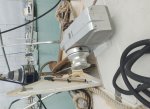
The closes photo I have before starting was after I applied a thin layer of white epoxy so to explore all the low spots and you can see the whole bottom has been eaten away and not just by the studs.

Ended up epoxy two sheet of 18mm marine ply to gather ,
then give them 9 coats of epoxy and finished off adding a colour to the last two coats .

The base of the windlass , I used an epoxy filler to make it flat again .

I used sikiflex to seal the windlass to the base to stop any water getting underneath .
Not a professional job but working on my knees on the pontoon laying up GRP ,
using what tools I had to hand ,
it turned out ok .Title (1) (1).jpg
 

Attachments

  • FullSizeRender.jpg
    FullSizeRender.jpg
    25.2 KB · Views: 19
Last edited:
  • Like
Reactions: Ink
Vic,

Great thread and I hate to steal it

BUT

Your experiences are not unique, or not restricted to the manufacturer of your windlass. Sadly it is common place (as you underline with your description of your removal of you previous windlass and my picture of a gear box).

Windlass don't cost quite as much as our auxiliary diesels - but we would never ignore a service of our Diesel engines (would we?) so why not remove the windlass and give it a check - every year.

This does not excuse the mix of aluminium and stainless - but its a cheap fix (Duralac) nor does it excuse corrosion of critical components. So if you have a story - name and shame. Checking the oil and cleaning the shaft is really not onerous (at which time an owner might see corrosion and be able to 'manage' the damage). (If everyone took the obvious advice I would not be very popular with windlass makers - :) - I'm not optimistic that many will take notice :( ).

Thanks Vic, keep up the running commentary on 'the dream'.

Really sorry to hear about the eye - I hope the 8 month comment is wrong.

Take more care, stay safe

Jonathan
 
Vic,

Great thread and I hate to steal it

BUT

Your experiences are not unique, or not restricted to the manufacturer of your windlass. Sadly it is common place (as you underline with your description of your removal of you previous windlass and my picture of a gear box).

Windlass don't cost quite as much as our auxiliary diesels - but we would never ignore a service of our Diesel engines (would we?) so why not remove the windlass and give it a check - every year.

This does not excuse the mix of aluminium and stainless - but its a cheap fix (Duralac) nor does it excuse corrosion of critical components. So if you have a story - name and shame. Checking the oil and cleaning the shaft is really not onerous (at which time an owner might see corrosion and be able to 'manage' the damage). (If everyone took the obvious advice I would not be very popular with windlass makers - :) - I'm not optimistic that many will take notice :( ).

Thanks Vic, keep up the running commentary on 'the dream'.

Really sorry to hear about the eye - I hope the 8 month comment is wrong.

Take more care, stay safe

Jonathan
Your quite right , which is why I decided to post,
if I didn't remover the windlass the problem would had only came to light when the windlass fell apart, by which time it would had been to late .
I hoping the repair I did will get me a few more years out of it.
Strongly suggest people start dismantle the windlass from the deck and check them out , although if my windlass on my last boat is an example of professional installation I think for some removing them will be a task that will put them off .
 
Top